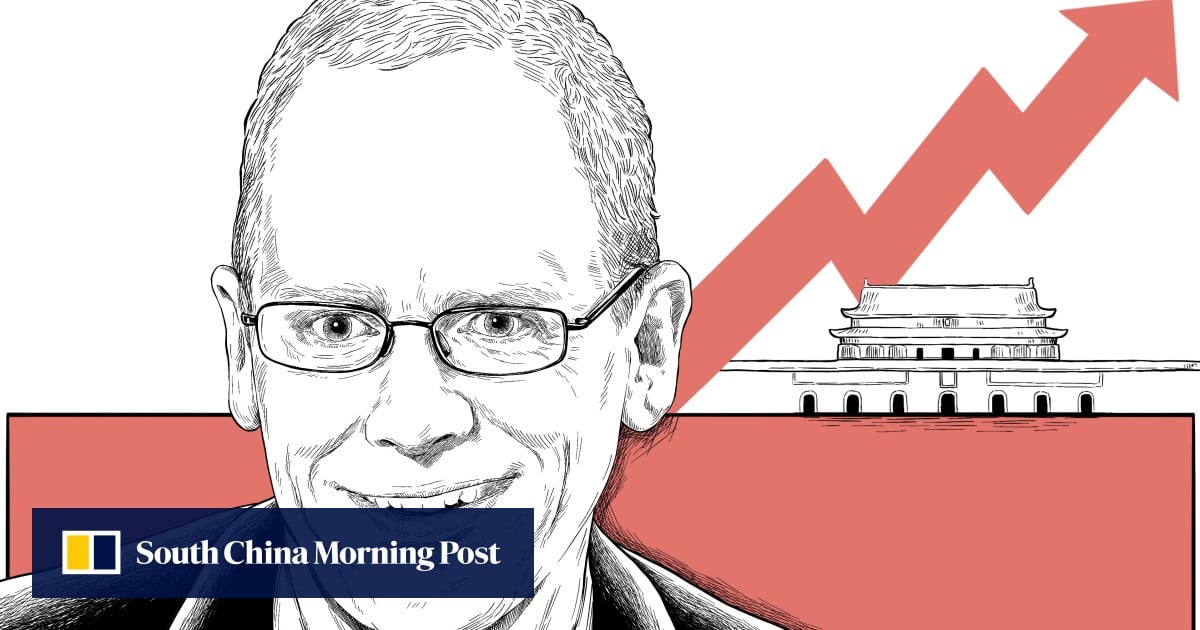
Andrew Tilton, chief Asia-Pacific economist at Goldman Sachs, speaks to the South China Morning Post about the long-term future of China’s economy after the “two sessions” in Beijing and ahead of an expected Xi-Trump summit – all during an oil crisis sparked by the US-Israel war against Iran.
What impact will the oil shock arising from the Iran war have on the growth of Asian economies this year?
Advertisement
Asia is greatly affected by the war as the vast majority of oil and gas exported from the Persian Gulf in normal times goes to Asia. We’ve raised our inflation forecasts more than a percentage point on average since the start of the conflict and cut growth forecasts throughout Asia.
We think Japan, South Korea and China are relatively well insulated – they have significant strategic oil reserves and can afford to subsidise retail fuel prices. In these places we’ve made only small adjustments to our growth forecasts. This means the burden of adjustment to lower energy supply from the Middle East will fall more on other countries.
Advertisement
Several economies in South and Southeast Asia with lower incomes per capita – including but not limited to India, Thailand, the Philippines and Vietnam – rely significantly on foreign energy and are already taking measures to reduce demand or give some end users priority over others. A few have already had to narrow the focus of subsidy programmes to make them fiscally sustainable. In some cases central banks may have to raise interest rates to keep currencies from depreciating. Otherwise, the cost of imported goods could rise more generally. These actions will slow growth.
Will the impact of the Iran war impede China’s efforts to achieve its annual economic growth target? In that sense, do you think China needs more stimulus?