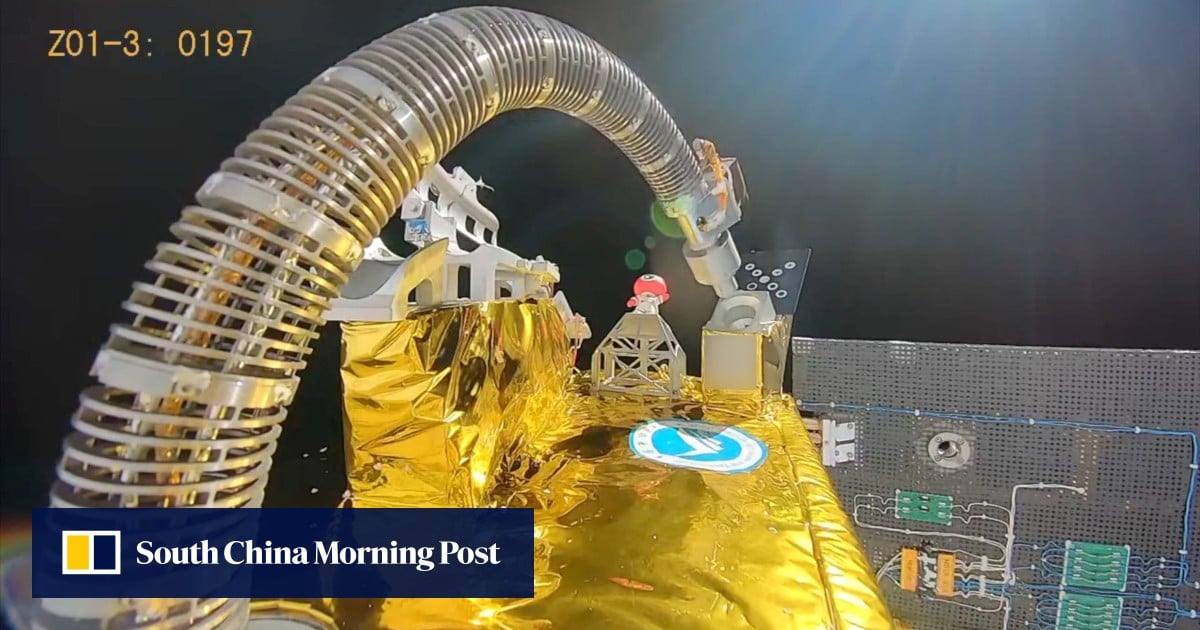
A Chinese commercial satellite has completed a refuelling test in low Earth orbit using a flexible “octopus tentacle” robotic arm, advancing efforts to extend spacecraft lifespans and develop in-orbit servicing abilities.
The arm can curl, twist and wrap around objects to work in tight, complex spaces, with a nozzle-like tip at one end designed to line up and connect with a target port.
Advertisement
It is made of a series of linked spring-like tubes with motors that pull on cables, bending its joints to guide the tip into place, according to the Tsinghua Shenzhen International Graduate School, which led the arm’s design and development.
It is unclear if the Hukeda-2 docked with another satellite.
To refuel another satellite, the Hukeda-2 would have to dock precisely with a port as both satellites hurtled around Earth at about 27,000km/h (16,800mph), a major challenge that the developers likened to “threading a needle in space”.
Advertisement