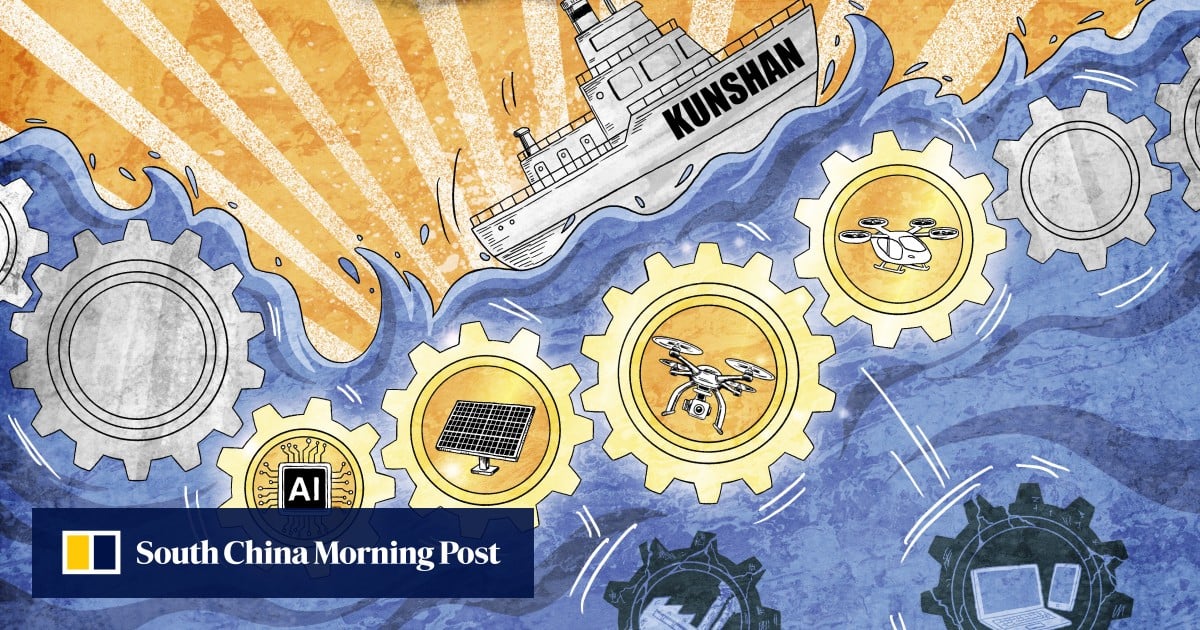
As China undergoes a sweeping economic transition, its regions are also in the process of embracing change. The powerhouses of yesteryear must adapt or risk falling behind, as traditional industries become less reliable growth drivers and new sectors take prominence. In this series, we explore three representative areas of the country as they attempt to navigate this rapidly changing environment.
After a 900km (559-mile) journey at the end of last month’s Chinese New Year holiday, 24-year-old Ma Xuan stood outside the gates of a Foxconn factory in Kunshan in the quiet of early morning, his luggage at his feet.
But the spark that once drew millions of migrant workers to Kunshan – a city in China’s eastern province of Jiangsu long dubbed “Little Taipei” – is flickering, as old technology dreams fade and new ones emerge.
Advertisement
“A decade ago, every young person coming to Kunshan hoped to get into Foxconn, but now it is just not the ‘golden bowl’ it used to be,” Ma said.
Ma, who hails from central China’s Henan province, is a small part in a massive machine that is being rebuilt. For three decades, Kunshan, a county-level city that is part of Suzhou, was home to around 100,000 Taiwanese residents and a supply chain that produced one-third of the world’s laptops – making it the ultimate symbol of cross-strait economic integration.
Advertisement
Now young people are all looking elsewhere – either to the local firms or back inland