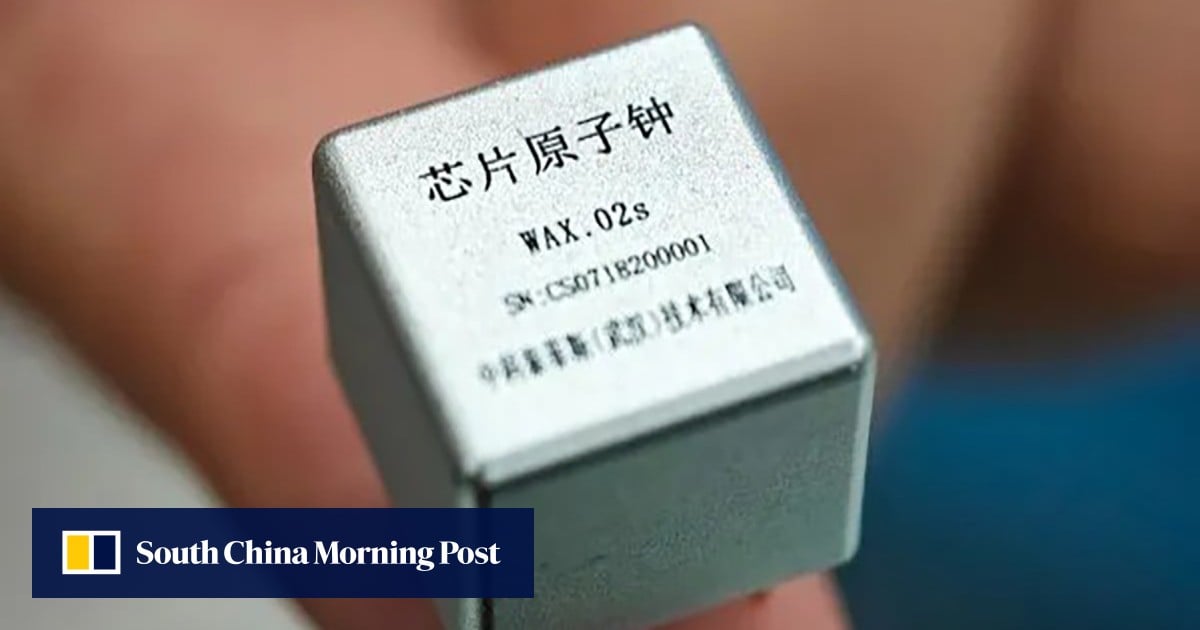
Developed by a research team led by Professor Chen Jiehua from Wuhan University’s Satellite Navigation and Positioning Technology Research Centre, the clock only loses a second every 30,000 years, according to the official newspaper Changjiang Daily.
Advertisement
The device measures just 2.3 cubic cm (0.14 cubic inch), less than one-seventh the size of the leading US models and about the size of a fingernail.
“Even if traditional atomic clocks are miniaturised, the minimum volume limit is still several hundred cubic centimetres and the minimum power consumption is at least several watts,” Chen told the newspaper.
Advertisement
According to Chen, the US has produced a 17 cubic cm product, but his team’s clock has a comparable performance even though it is much smaller.