Unlock the Editor’s Digest for free
Roula Khalaf, Editor of the FT, selects her favourite stories in this weekly newsletter.
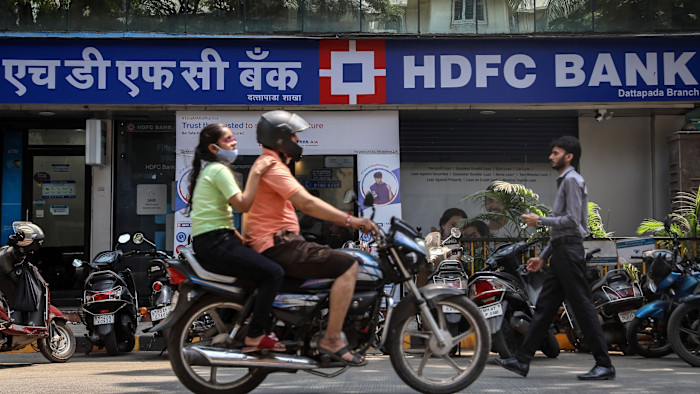
The chair of HDFC Bank has resigned suddenly because of “ethical differences” in a move that raised questions about the governance of India’s largest private lender.
A former ministry of finance bureaucrat who was appointed as non-executive chair of the bank in 2021, Atanu Chakraborty quit after the market closed on Wednesday.
“Certain happenings and practices within the bank, that I have observed over the past two years, are not in congruence with my personal values and ethics,” he wrote in his resignation letter.
Chakraborty did not elaborate on the differences.
The Reserve Bank of India, which regulates HDFC, sought to calm fears of any deeper problems at the bank, declaring in a statement that “there are no material concerns on record as regards its conduct or governance”.
HDFC’s share price slid by 8.5 per cent on Thursday morning, but it pared its losses after the RBI’s intervention, trading down 3.5 per cent at Rs814.
In 2023, HDFC Bank merged with its housing finance company, HDFC Ltd, creating a financial sector behemoth with a market capitalisation of $133.6bn, the highest among Indian banks.
With assets of $419bn it is India’s second-largest bank overall, trailing only the $715bn assets of the State Bank of India, a public sector giant.
Chakraborty’s interim replacement, Keki Mistry, a former company executive who was serving on the HDFC board, told analysts that there were “no material matters at this point of time”. He said that in discussions with Chakraborty, “no specific happenings or practices” were brought to the bank’s attention.
As Mumbai’s financial circles tried to make sense of Chakraborty’s exit, a former banker said that the chair and HDFC’s executive leadership were “not getting along for some time”.
Analysts at Jefferies said it was a “surprise move” by Chakraborty. They expressed relief over Mistry’s appointment but added: “Clarity on [the] issues is needed.”
Deven Choksey, managing director of DRChoksey FinServ in Mumbai, said the appointment of Mistry was “a strong firefighting move” because of his “deep institutional memory and credibility”.
“Trust is the most expensive asset on a bank’s balance sheet,” said Choksey. “While the financials remain robust, the market will now wait for governance evidence.”
India’s banking and financial sector has seen a flurry of M&A activity over the past few years. International institutions, especially from Japan and the Middle East, bought stakes in several high-profile deals last year.