Even for a nation almost inured to tragedy, the attack on a drug rehabilitation centre in the heart of Kabul ahead of the Islamic holiday of Eid al-Fitr was horrific.
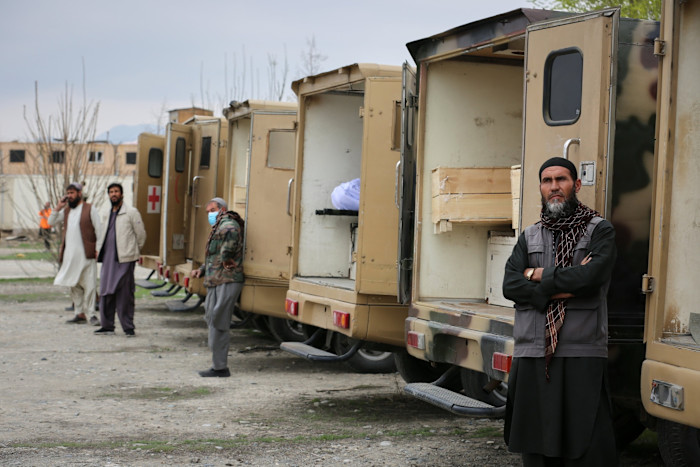
The air strike, which Taliban officials said was carried out by Pakistan and killed more than 400 people, left the Afghan capital reeling. Rescue workers were still searching for bodies in the rubble of the drug treatment facility days later and relatives were anxiously waiting for news.
But fears of immediate escalation in the conflict between the two Asian neighbours eased on Wednesday when Islamabad, which denies bombing the hospital, and Kabul both announced temporary pauses in hostilities.
Previous ceasefires between Pakistan and Afghanistan have had little lasting impact, but the pause for the Eid festival, which both said would run to early next week, marked a success for the diplomatic efforts of Saudi Arabia, Qatar and Turkey.
Pakistani officials and the Taliban said they paused fighting after requests from the three “brotherly” Islamic nations.
“Pakistan offers this gesture in good faith and in keeping with the Islamic norms, Attaullah Tarar, Pakistan’s information minister, wrote in a post on social media site X. “However, in case of any cross-border attack, drone attack or any terrorist incident inside Pakistan, [strikes] shall immediately resume with renewed intensity.”
Zabihullah Mujahid, a spokesman for the Taliban government, said on X that Afghanistan appreciated the constructive efforts of Saudi Arabia, Qatar and Turkey, but would “respond decisively” to any threat to its security, sovereignty or the lives of its citizens.
Ihsanullah Tipu Mehsud, an analyst with The Khorasan Diary, an Islamabad-based platform tracking militancy in south and central Asia, said the ceasefire was a positive development.
“It’s a good first step to set the ground for more serious engagement,” Mehsud said. “Since last year, there was a complete diplomatic breakdown between both nations.”
But he cautioned that the diplomatic breakthrough could prove shortlived. “Pakistani authorities remain focused on a singular goal: the total cessation of Pakistani Taliban attacks within Pakistan,” Mehsud said, referring to the group Tehreek-e-Taliban Pakistan (TTP), which has launched hundreds of attacks against Pakistani forces in recent years.
The attack on the Omid Drug Rehabilitation Facility, in which Afghanistan said 408 people were killed, follows months of diplomacy brokered by Qatar, Turkey, Saudi Arabia and — just last week — China.
The bombing, the third to hit the Afghan capital in recent weeks, is the single deadliest strike in clashes that began in late February after Pakistan attacked alleged militant camps in eastern Afghanistan.
Before Monday’s strikes on Kabul, at least 88 civilians had died and 115,000 more had been displaced in Afghanistan, according to the UN. Pakistan says its forces have killed more than 680 Afghan Taliban members and allied militants since then, but that it has lost more than a dozen soldiers and four civilians in cross-border firing.
Pakistani officials have rejected any further direct talks until the Taliban vows to crack down on the TTP and Baloch separatist militants on Afghan soil that have killed 4,000 people in Pakistan since 2021, according to officials. International observers say these groups operate out of Afghanistan with the consent of the Taliban. The Taliban denies the presence of these groups in Afghanistan.
China, a security and economic partner of Pakistan, has grown closer to the Taliban as Chinese mining companies explore Afghanistan’s gold, gemstones and coal reserves. Wang Yi, the foreign minister, called his Afghan and Pakistani counterparts last week about their dispute.
“The situation is creating a new source of potentially explosive entity on China’s borders,” said Zhu Feng, a professor of international relations at Nanjing University. He said the conflict could quickly spiral out of control to the point at which international intervention would probably be ineffective. “So that’s why China is also very concerned.”
China’s foreign minister has previously framed engagement between Beijing and Kabul as a way to suppress cross-border militant activity that it fears could foster unrest in the Xinjiang region.
“If Afghanistan destabilises further or Taliban’s grip is loosened, China fears that the Uyghur militants who are now kept under the wraps would regroup and move towards Badakhshan [close to the Chinese border],” said Stanly Johny, the India-based co-author of The Comrades and the Mullahs: China, Afghanistan and the New Asian Geopolitics. “That’s why China has been trying to mediate between the two.”
Hours after Monday’s attack, China’s foreign ministry spokesperson called on both sides to “engage face to face as soon as possible”.
Qatar, which has close relations with the Taliban, has also sought to broker talks.
In early March, Qatari Prime Minister Sheikh Mohammed bin Abdulrahman al-Thani made clear the stakes when he said the fighting between Afghanistan and Pakistan sent a “threatening signal for the entire region” amid the US-Israeli war raging in Iran.
Past interventions by Saudi Arabia, which shares a mutual defence pact with Pakistan, and by Qatar failed to defuse tensions for long.
Looming over the conflict is Pakistan’s frustration that its arch-rival India is increasingly close to the Taliban. “Pakistan is furious that the Taliban have asserted their autonomy and sought to build better ties with India,” said Johny.
On Tuesday, India’s external affairs ministry was quick to declare its “unwavering support” for the Taliban. “Pakistan is now trying to dress up a massacre as a military operation,” it said in a statement.
After Monday’s attack, some Afghans were ready for outright war.
“If the Islamic emirate declares jihad, all Afghans are ready to take action against Pakistan and fight them. We are ready to go to war if it is announced,” Eftekhar Ahmad, a relative of one of the victims, told Afghanistan’s TOLOnews.
Additional reporting by Wenjie Ding in Beijing