Stay informed with free updates
Simply sign up to the Mining myFT Digest — delivered directly to your inbox.
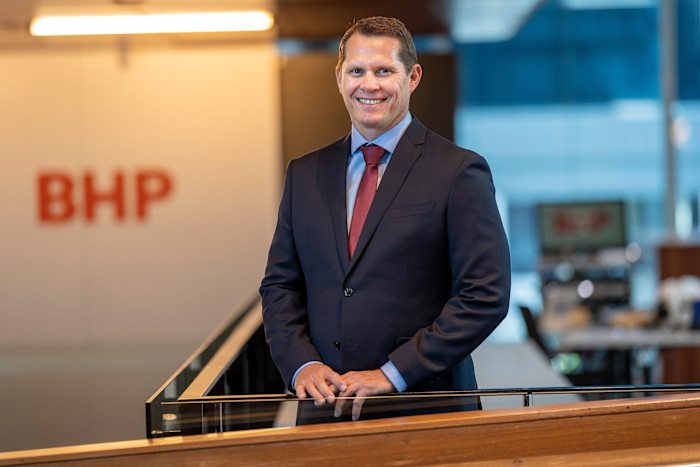
Brandon Craig’s career straddling BHP’s old and new worlds — its long-standing cash cow of iron ore and the high-growth areas of copper and potash — paved the way for his elevation to the chief executive role.
The world’s largest miner on Tuesday said Craig would succeed Mike Henry, who has led BHP since 2020 and presided over a reshaping that includes reducing its exposure to coal, oil and gas. He will be the miner’s first Australian chief executive for 13 years since Marius Kloppers.
One of Henry’s first moves as CEO was to appoint Craig — who has been with BHP since 1999 but first joined its executive ranks in 2020 — to run its powerful iron ore operation during the pandemic. Craig led a streamlining that made it one of the industry’s most efficient operations.
Four years later, Henry moved him to the company’s Americas operations, bringing copper and potash — the future-facing commodities championed by BHP — into Craig’s realm.
Andy Forster, a fund manager at Argo Investments, which owns BHP shares, and who has travelled with Craig on investor trips, said he left a meeting with him a month ago thinking he was “guaranteed” to be the next leader of BHP.
“I don’t think he’s going to go for radical change,” said Forster. “He’s a safe pair of hands.”
Nonetheless, Craig has an extensive in-tray to ensure BHP maintains its momentum.
Copper
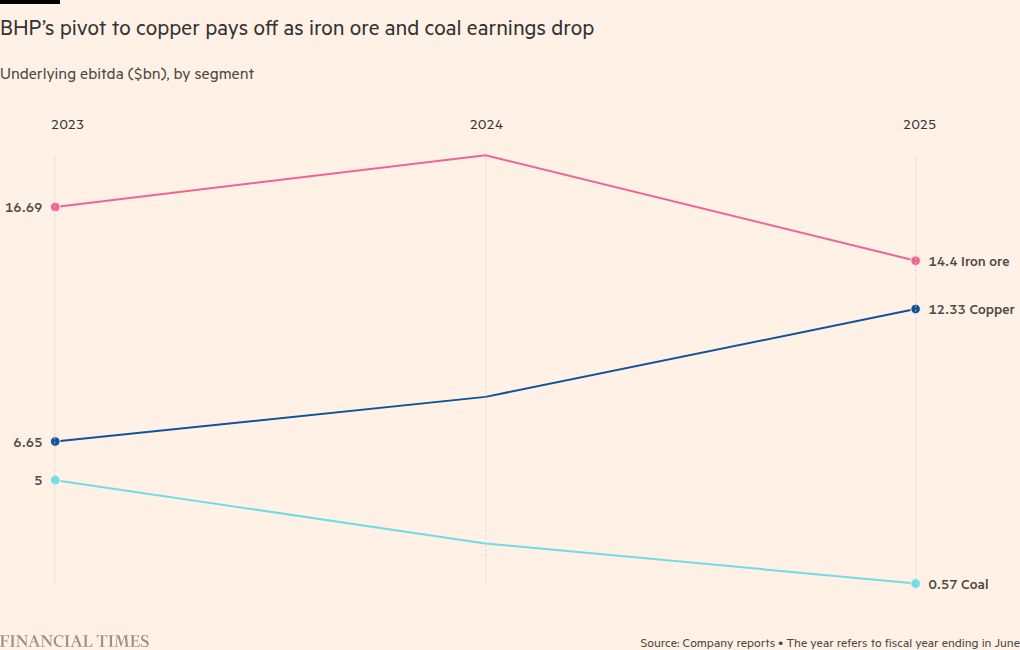
Last month, BHP reported the red metal accounted for 51 per cent of its earnings in the first half of its financial year, overtaking iron ore for the first time. The company is the world’s largest copper developer, producing 2mn tonnes a year in Chile, Peru and South Australia.
Craig has been instrumental in upping the ante. That has included an acquisition in the Vicuña project in the Andes, which it owns with Canada’s Lundin Mining, and pushing ahead with the long-gestated Resolution project, a joint venture with Rio Tinto to mine copper in Arizona, which has gained traction during US President Donald Trump’s second term.
Execution of those long-term projects, as well as the expansion of its copper operations in remote South Australia, could prove to be critical to Craig’s era as the metal is key to the build-out of AI data centres and renewable energy infrastructure.
Mergers and acquisitions
BHP has argued it is disciplined when considering takeovers, but Henry’s era has also been defined by two botched attempts to land a blockbuster deal to buy Anglo American.
Those attempts kick-started a wave of consolidation activity as the sector’s biggest companies looked to fortify their portfolios. Rio Tinto chief executive Simon Trott, who like Craig earned his stripes in the red dirt of Western Australia’s Pilbara, held unsuccessful talks with Glencore over a takeover after being appointed to the role.
Craig reverted to the BHP line that any deal large or small would need to be extremely attractive. “It would have to be incredibly compelling to stack up against the balance of options we have in the business,” he said on Wednesday, when asked about M&A.
Yet Craig ruled out a break-up of the company’s structure — something Trott has pursued at Rio to cut costs — arguing that cash-generative mature assets such as coal and iron ore can fund investment in high-growth development projects in copper and potash.
“I’m still a big believer in that diversified model,” he said.
China
China has been the profit engine for Australia’s miners in the past decade owing to rampant demand for iron ore, a key steelmaking ingredient. Miners remain highly exposed to the slowing pace of construction and rate of industrial growth in the world’s second-largest economy.
However, BHP also has a particular issue to solve in tough negotiations with China Mineral Resources Group, the state’s central buyer of iron ore.
BHP has maintained that demand from its customers in the country should remain strong for years to come. But reports that certain grades of BHP iron ore have been restricted in China have added pressure to the Australian company’s growth profile.
Craig will set off on a two-week global tour with Henry to meet shareholders and customers. China is one of the key stops.
On Wednesday, he told reporters that discussions with CMRG were significant and that it would be “really important to strengthen our relationships with our customers, particularly in China”.
Australia vs Americas
When Craig reeled off a list of locations where the future of mining looked bright, he said the governments of Chile, Argentina, the US and Canada had created the conditions to entice companies such as BHP to make long-term investments.
Notably absent was Australia, where the company is headquartered and listed. Craig was not shy in criticising the country’s energy and labour policies and said he would actively lobby the government to change them.
He singled out the Queensland government’s move to raise royalties on coal miners as an example of “the rules of the game” being changed. In the past, he has also highlighted corporate tax rates and net zero policies.
“Australia has to compete,” he said. “There is a shift in the gravity of the business.”