Good morning and welcome back to FirstFT Asia. In today’s newsletter:
Pakistan and Afghanistan pause hostilities
The AI craze taking China by storm
Li Ka-shing’s growing cash pile
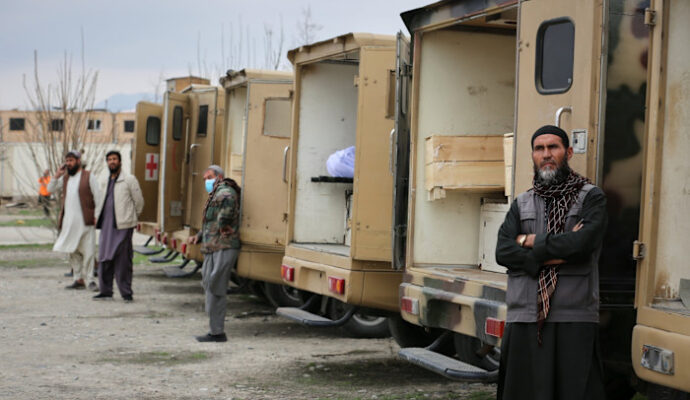
We start with conflict between Pakistan and Afghanistan, after the neighbouring countries announced a temporary pause in hostilities yesterday for the Islamic holiday of Eid al-Fitr.
What’s happening: The pause eased fears of an immediate escalation in the conflict, following an air strike on a drug rehabilitation centre in Kabul on Monday night that Taliban officials said was carried out by Pakistan and killed more than 400 people. The attack left the Afghan capital reeling — rescue workers were still searching for bodies in the rubble of the drug treatment facility days later and relatives were anxiously waiting for news.
Previous ceasefires between Pakistan and Afghanistan have had little lasting impact, but the pause for the Eid festival, which both said would run to early next week, marked a success for the diplomatic efforts of Saudi Arabia, Qatar and Turkey.
Beijing’s concern: China, a security and economic partner of Pakistan, has grown closer to the Taliban as Chinese mining companies explore Afghanistan’s gold, gemstones and coal reserves. Chinese foreign minister Wang Yi called his Afghan and Pakistani counterparts last week about their dispute.
“The situation is creating a new source of potentially explosive entity on China’s borders,” said Zhu Feng, a professor of international relations at Nanjing University. He said the conflict could quickly spiral out of control to the point at which international intervention would probably be ineffective. “So that’s why China is also very concerned.”
China’s foreign minister has previously framed engagement between Beijing and Kabul as a way to suppress cross-border militant activity that it fears could foster unrest in the Xinjiang region.
Here’s a deeper look at what’s driving the conflict — and the prospects for diplomacy.
Here’s what else we’re keeping tabs on today:
Economic data: New Zealand publishes fourth-quarter GDP figures. Malaysia reports February inflation and trade data.
Monetary policy: The Bank of Japan is expected to keep interest rates on hold when its two-day policy meeting ends today.
US-Japan relations: Prime Minister Sanae Takaichi faces one of the toughest tests of her five-month premiership when she visits the White House after Donald Trump urged Tokyo to send warships to the Strait of Hormuz.
Thai politics: Parliament is expected to vote for caretaker Prime Minister Anutin Charnvirakul to remain in power after his conservative Bhumjaithai Party cruised to a surprise victory in last month’s election. (Bloomberg)
Alibaba results: The Chinese technology giant reports third-quarter earnings.
Five more top stories
1. Iran has inflicted “extensive damage” to the site of the world’s largest liquefied natural gas facility in Qatar, after vowing retaliation for an earlier attack on its South Pars gasfield. Analysts said the attack on Ras Laffan Industrial City, which had previously been shut down by an Iranian drone strike in the first week of the war, had the potential to cause a “lasting global gas shortage”.
Shipping market: The Middle East war has turned container shipping into a “wild west”, according to removal companies and customers.
Maga divided: Almost three weeks into the war against Iran, Donald Trump has new antagonists — from within his political movement.
2. Federal Reserve chair Jay Powell has acknowledged that the Iran war will raise inflation as a fresh jump in oil prices sent short-term US borrowing costs to the highest level since last summer. His comments came as the US central bank left interest rates on hold at 3.5 to 3.75 per cent for the second meeting in a row.
3. British officials are concerned that China is exploiting the UK’s freedom of information legislation to collate unclassified data that risks revealing sensitive information. Government figures believe Beijing may be behind a significant proportion of recent requests relating to the UK’s defence and national security.
Europe-China relations: A planned EU tax on small parcels will not stem the flood of cheap Chinese goods entering the bloc, a senior official has warned.
4. Two vessels heading for energy-starved Cuba carrying Russian oil and fuel are due to arrive as early as next week in defiance of Trump’s energy embargo, according to maritime intelligence companies. If the ships arrive, they will be Cuba’s first energy shipments in three months.
Russia’s ‘shadow fleet’: Russia is considering sending armed naval patrols to protect its ships following attacks on its “shadow fleet” of oil tankers.
Venezuelan oil: The US has relaxed sanctions on Venezuela’s state-owned oil group Petróleos de Venezuela.
5. Bank of America has pitched clients a bet against European companies including Deutsche Bank and Partners Group, arguing they are among the “most exposed to private credit shocks”. The US bank told clients that European stocks exposed to private credit had 30 per cent “downside risk” compared with US peers. Read the full story.
News in-depth
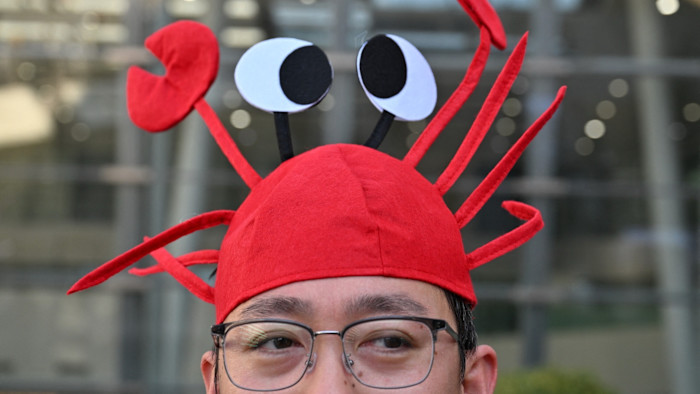
OpenClaw, a new AI tool, has taken China by storm. The open-source platform is used to create assistants that can do everything from browsing the web and sending messages to executing commands on a computer. It has become so popular in China that “raising a lobster” — a nod to its crustacean logo and the time needed to install and train the AI agents — has become a buzzword. But Beijing has urged caution, warning about data breach risks tied to OpenClaw.
We’re also reading . . .
Chart of the day
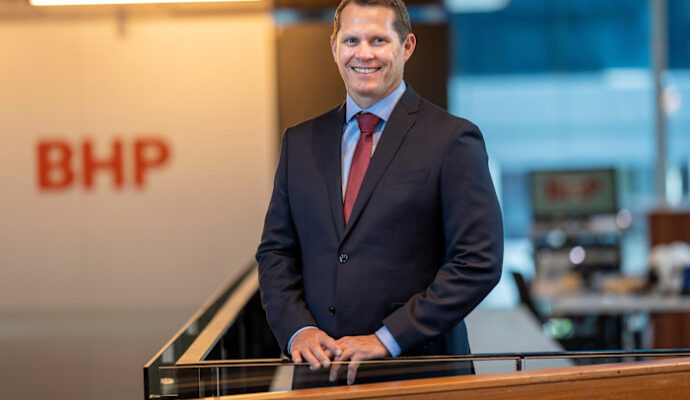
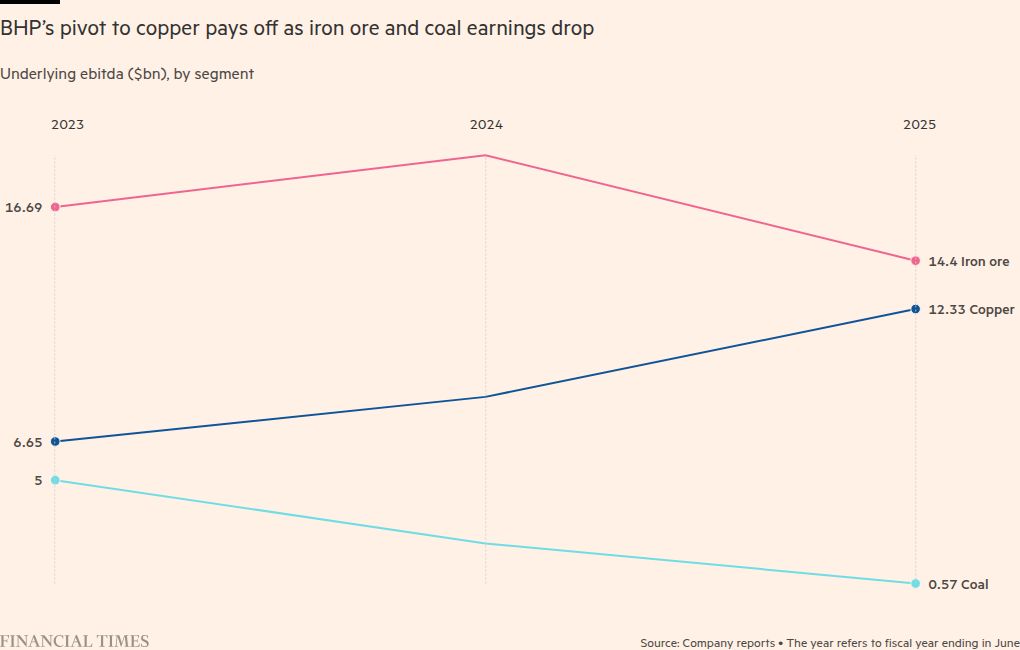
BHP named Brandon Craig as its new chief executive as the world’s largest mining company continues to hone its growth strategy around copper and potash. The Australian company’s incoming CEO must also navigate a wave of consolidation activity in the industry while managing pivotal relationships with customers in China.
Take a break from the news . . .
With Hong Kong Art Week fast approaching, here is a guide to the city’s best under-the-radar art spaces.