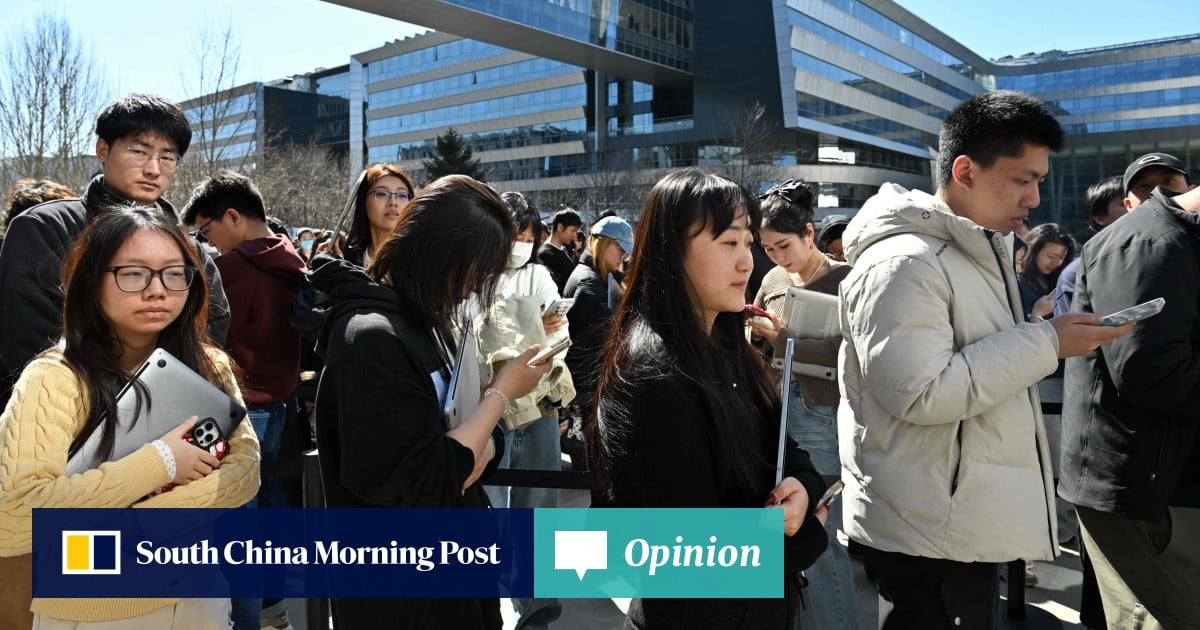
In China this month, people have been lining up on streets to install an AI programme on their computers. Some had travelled from other cities. Others had waited for hours for engineers to set it up for them. There were even “birth certificates” given out upon installation.
The programme is OpenClaw. Its logo is a red lobster. Chinese internet users quickly coined a phrase for the phenomenon:
raising lobsters.
The scene looks quirky, even amusing. But beneath the spectacle lies a revealing moment in the global AI race. It reflects technological enthusiasm, corporate strategy and the risks that accompany every new digital gold rush. OpenClaw represents a shift in how artificial intelligence interacts with computers.
For years, most AI tools functioned as conversational assistants. You ask a question, the system responds. But AI agents such as OpenClaw operate differently. Instead of answering questions, they execute tasks. With the right permissions, the software can browse the internet, organise files, send emails, analyse data or run code on a user’s machine. In theory, it becomes a digital employee working tirelessly in the background.
The concept has
captured the public imagination. In China, the technology has quickly evolved from a niche developer tool into a mass-market curiosity. Tech companies have wasted no time
capitalising on the moment. Tencent quickly launched an alternative called WorkBuddy while ByteDance introduced ArkClaw. Baidu is offering OpenClaw through its ecosystem. Each promises an AI workforce capable of handling tasks from document management to customer service.
The strategy is strikingly familiar to anyone who has followed the history of the internet. At first, the service is free, easy to install and
heavily promoted. Engineers host installation events. Coupons are distributed for cloud services. Trial credits are generous. The goal isn’t immediate profit but dependency. As every task consumes tokens and processing resources, users become tethered to the underlying cloud infrastructure. The real product isn’t the assistant. It’s the hardware powering it.
South China Morning Post