Unlock the Editor’s Digest for free
Roula Khalaf, Editor of the FT, selects her favourite stories in this weekly newsletter.
The Middle East war is close to triggering a global food shock worse than that unleashed by Russia’s 2022 full-scale invasion of Ukraine, experts have said, as fertiliser shortages threaten food production on multiple continents.
Iranian attacks have knocked out swaths of Middle Eastern production of urea, the world’s most widely used nitrogen fertiliser, while gas shortages have forced fertiliser producers across south Asia to cut output.
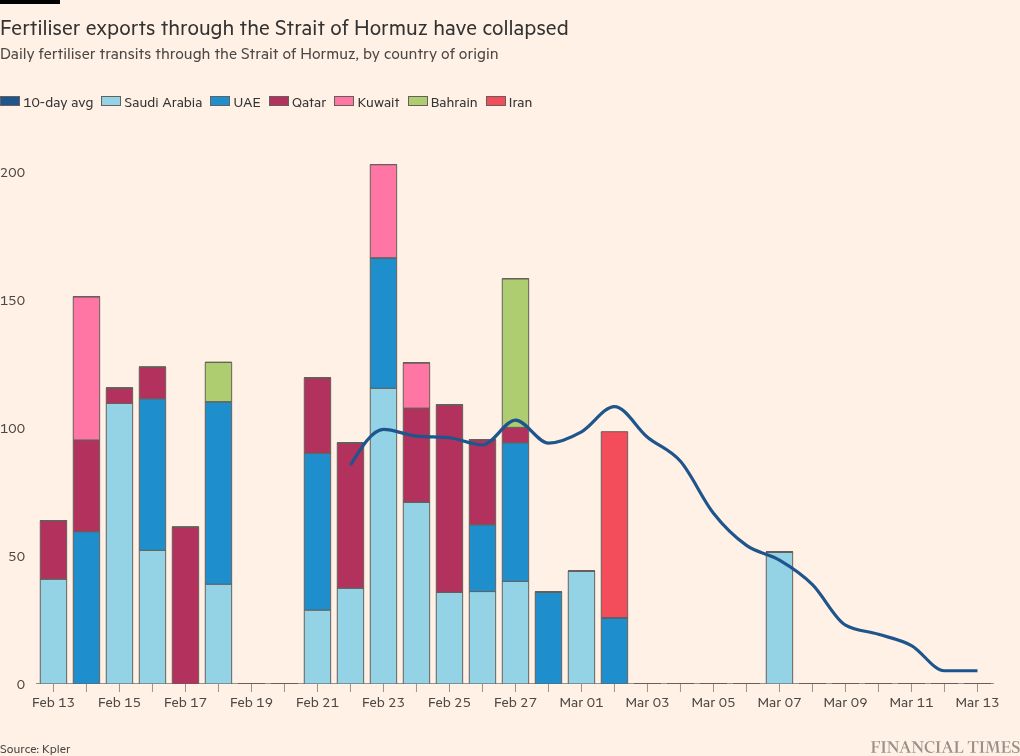
That means that of the 2.1mn tonnes of urea — the world’s most widely used nitrogen fertiliser — that would normally have been loaded for export over the past two weeks, about half has been disrupted.
At the same time, more than 1.1mn tonnes of fertiliser and fertiliser inputs, including 570,000 tonnes of urea, is currently stuck in the Gulf, either being loaded or already on ships, according to Kpler data.
Nitrogen fertilisers, which underpin about half of global food production, are made from ammonia using natural gas, which has soared in price since the war began last month.
The shortages have begun during the northern hemisphere’s planting season, leading industry executives to warn of lower harvests for staples such as rice.
If the disruption continues, “this will be much worse than 2022”, said Veronica Nigh, senior economist at The Fertilizer Institute, a US-based trade group. “The longer the conflict goes on, the more dire the situation will become.”
The Middle East sits at the centre of global fertiliser and energy supply chains. About a third of global urea exports pass through the Strait of Hormuz, according to CRU. About 45 per cent of global sulphur exports — a key input for phosphate fertilisers — are also shipped through the vital waterway, which has in effect closed.
Qatar’s fertiliser company QAFCO shut its 5.6mn-tonne-a-year urea plant last week after liquefied natural gas operations at nearby sites owned by QatarEnergy halted because of the war.
India has ordered fertiliser plants to reduce gas consumption to about 70 per cent of normal levels because of shortages. Plants in Pakistan and Bangladesh have halted output. In Pakistan, one of the country’s largest fertiliser producers, Agritech Limited, had halted urea production, said people familiar with the matter.
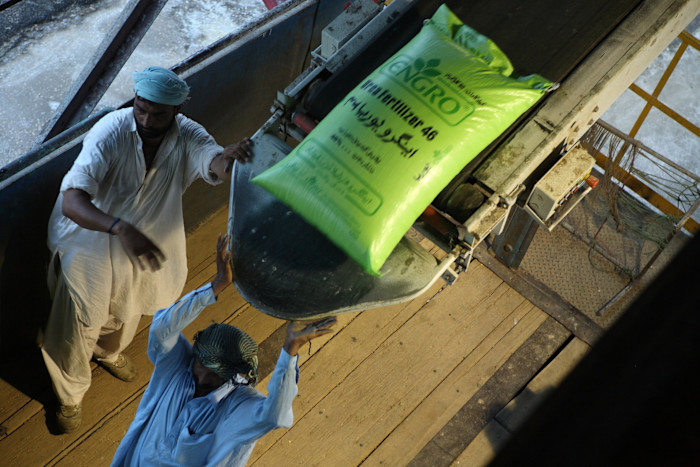
Prices of crop nutrients have already soared, with the cost of urea up more than 40 per cent since the conflict began, according to CRU.
Unlike the 2022 crisis — which initially centred on Ukrainian grain shipped through the Black Sea and was later compounded by energy and fertiliser costs — the current disruption is hitting several parts of the food system at once. The world was facing “a far worse situation than 2022”, said Chris Lawson of CRU.
Food and energy price inflation has become a political flashpoint, with researchers identifying an unprecedented wave of protests in 2022.
The global urea market totals about 196mn tonnes a year, of which only 57mn tonnes is traded internationally. That means disruptions to export flows in one part of the world can quickly ripple through fertiliser markets, Lawson warned.
He said the situation could soon escalate, as producers can operate only while they have storage capacity for unsold cargoes. Long disruptions could force more plants to shut, potentially permanently. Restarting ammonia and urea facilities can take weeks because they require careful control of temperature and pressure.
“Even a temporary spike in fertiliser prices can leave lasting scars on global food production,” said Alvaro Lario, president of the UN’s International Fund of Agricultural Development.
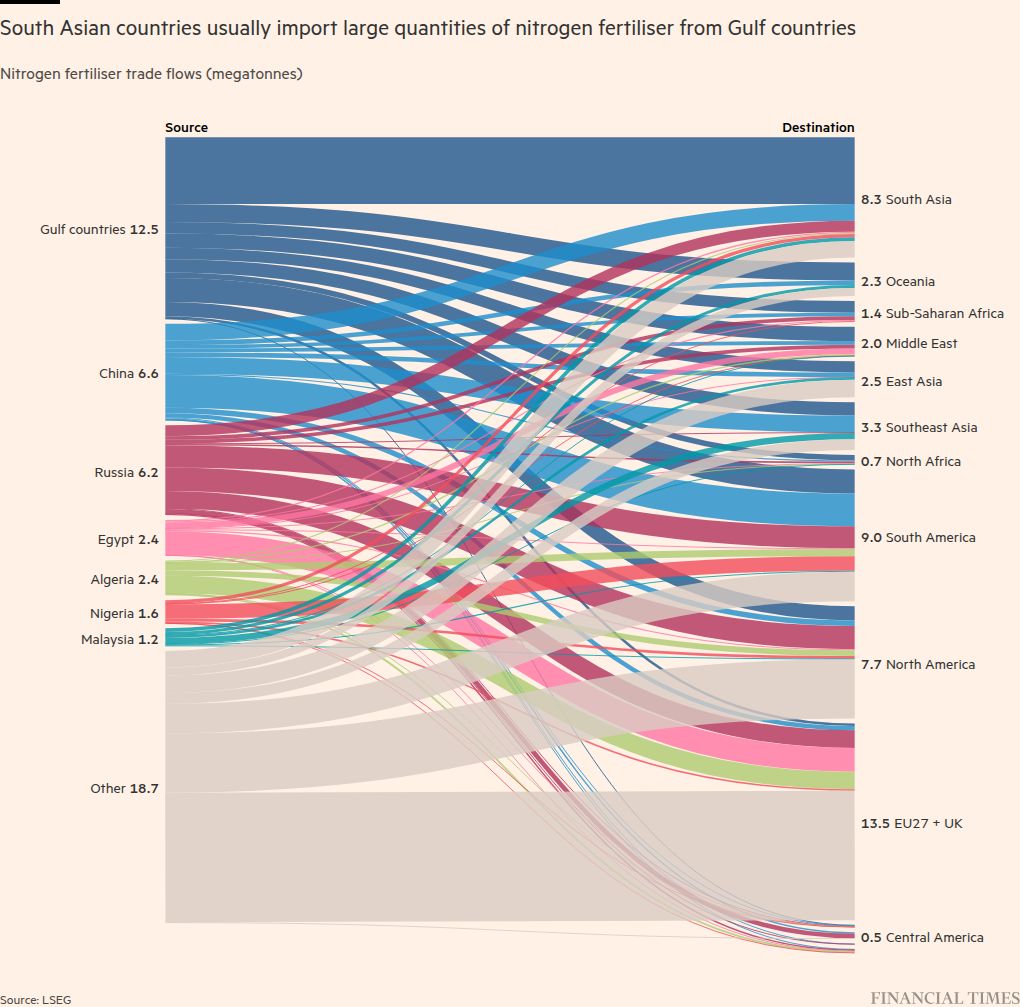
South Asia was particularly vulnerable, Lawson warned, as countries such as India, Bangladesh and Pakistan import vast quantities of LNG from the Gulf to produce fertiliser.
Pakistan depends almost entirely on LNG imports from Qatar and the UAE, while Qatar alone accounts for more than 40 per cent of India’s LNG imports and roughly two-thirds of Bangladesh’s.
India’s fertiliser industry is also heavily exposed to gas markets: all 32 of its ammonia plants run on natural gas.
Economists say consumers may face higher food prices well before fertiliser shortages affect harvests. Higher fuel and power prices pushed up the cost of moving, processing and cooking food, said Raj Patel, a food systems scholar at the Lyndon B. Johnson School of Public Affairs.
“All of this means there is definitely going to be more hunger this year,” Patel added.
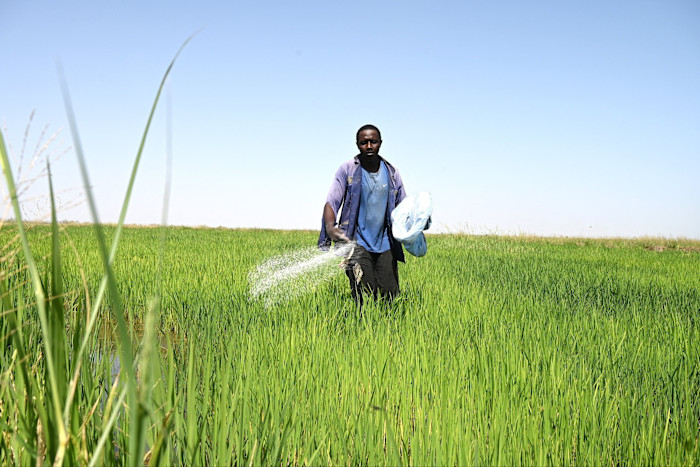
Alzbeta Klein, chief executive of the International Fertilizer Association, said: “Some regions may be disproportionately affected, particularly those with large numbers of smallholder and subsistence farmers — notably parts of Africa and South Asia.
“At the same time, countries that rely heavily on imported fertilisers are more exposed to potential affordability and availability pressures, and these are geographically spread well beyond those regions.”
Data visualisation by Martin Stabe