It was a Tuesday, and I was three, when the walls decided they could ripple. The ground growled a warning, which rose and rose, before vibrations turned to flows and our house forgot it was solid. Seconds that felt like minutes, that felt like hours. Under my father, thrown across us. Then it stops.
He’s kicking the door down, its frame warped. “Quick!” Then we’re sheltering in the park opposite. We are not alone. Other families emerge — one, miraculously, dressed immaculately — drawn to the openness that is soon to be filled with neat rows of temporary housing with corrugated rooftops.
I realised then, with a clarity I have failed to forget, that invisible forces stand poised to touch us. And given the right conditions, concrete can quiver, plates can pirouette and bookshelves can bounce. From time to time, I have tried to express my wonderment but found that my words ring hollow. And being far from confident that my memories are what they claim, I have taken to saying only this: my family lived through the Kobe earthquake of 1995.
Sixteen years later, Kobe ceased to be the site of “Japan’s greatest crisis since the war”. These photographs explore the events that eclipsed it in the Japanese imagination: the earthquake, tsunami and nuclear disaster that struck the Tohoku region on March 11 2011 and came to be remembered as “3.11”.
It begins at 2.46pm. The Sanriku Coast lurches east, sending the wise sprinting west to high ground. The ensuing wave does not crash — it rises and flows, rises and flows. Its onset is swift, but its passing is slow. The water keeps rising, 14-storeys high, coaxing houses from firm foundations. Towns become lanterns, floating ablaze, atop the same waters that spiral and spill into the Fukushima Daiichi Nuclear Power Plant. Power lines are severed. Backup generators flood. Three reactors can no longer be cooled. They announce their failure with profusions of smoke, forever twinning the name “Fukushima” to “Chernobyl”.
These photographs are taken from Picturing the Invisible, a book and exhibition published to mark the 15th anniversary of Japan’s triple disaster. Here you will encounter three of the eight artists in the book, all working with photography in the wake of 3.11. Their work is eclectic, but they share a common conviction: the disaster has not yet passed into history.
Even today, thousands of people are labouring to decommission the Fukushima Daiichi Nuclear Power Plant, a task expected to take another 30 years and cost $96bn. Thousands more work to decontaminate the surrounding countryside, making it fit for people to live there once again. Tens of thousands remain displaced from their homes. Many are unable to return. More choose not to: content with their adopted homes or concerned that life in Fukushima is not as safe as the government claims. Their trust in the state was bruised by its mis-steps and battered by reports which grimly concluded that the meltdowns were “made in Japan”: for example, the independent investigation commissioned by the Japanese parliament concluded that the disaster’s root causes could be found in a culture of cosy collusion between government, regulators and the nuclear industry. Some still fear that the safety standards introduced in Fukushima have been unduly influenced by this culture and refuse to either visit the prefecture or buy its produce, posing an economic obstacle for its fisheries and farms.
Despite these difficulties, life in the affected territories goes on. No one knows how long it will continue. The evacuation orders which once covered 12 per cent of Fukushima Prefecture now cover less than 3 per cent, but those who have come back are old. Take Yamakiya District in Kawamata. Just over 300 of the 1,252 residents who evacuated in 2011 have returned. Most of them are aged 65 and above. “No matter, we can keep going for 20 years,” one farmer told me. He passed away suddenly last year, but his dream of rebuilding his hometown lives on.
Lieko Shiga
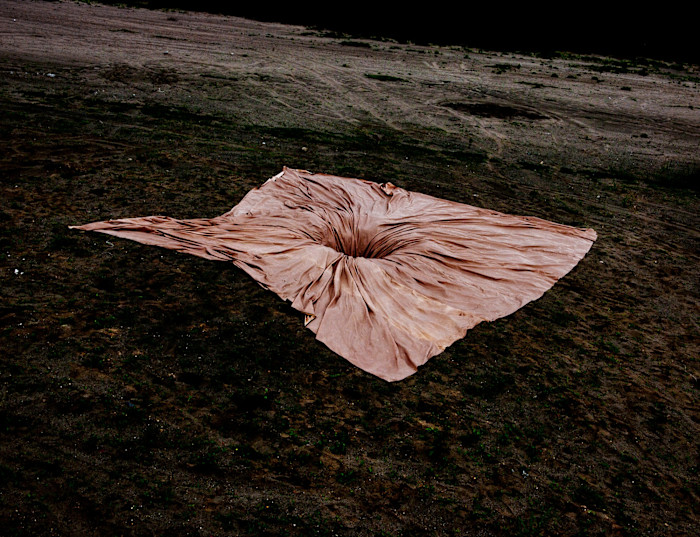
The photobook Picturing the Invisible is organised around three themes: the depiction of our ties to specific places and pasts; the effort to make radiation visible; and the desire to document the road to reconstruction. The question of how to picture the bonds that bind us is most directly addressed by Lieko Shiga, who describes her subject as “the spirit or history” of her village.
Shiga left Tokyo in 2008 to search for a new home. She wandered north along the coast until she happened across the rural village of Kitakama, and something compelled her to stay. It was this something that Shiga set out to photograph in her series Spiral Shore. Taking up residence as the village photographer, she immersed herself in Kitakama’s rhythms. Over time, she came to carry the village in her heart, and its stories became the grammar of her work. Eschewing Photoshop, Shiga staged monumental photographs in the surrounding countryside, returning to themes of spirals and sinkholes in works that seemed to prefigure (and later echo) the disaster.
The image above, “Spiral Shore 28” (2013), is typical of Shiga’s work in its ability to suggest the sheer scale of the disaster remembered as 3.11, while avoiding the voyeurism of disaster photography. Few who witnessed the tsunami could fail to be reminded of the vortexes that consumed whole towns, or the homes carried out to sea by the water’s implacable retreat. One cannot help but be moved by the care and dedication that Shiga and the villagers of Kitakama invested in staging this piece of land art on the very ground that was swept by the wave.
Yoi Kawakubo
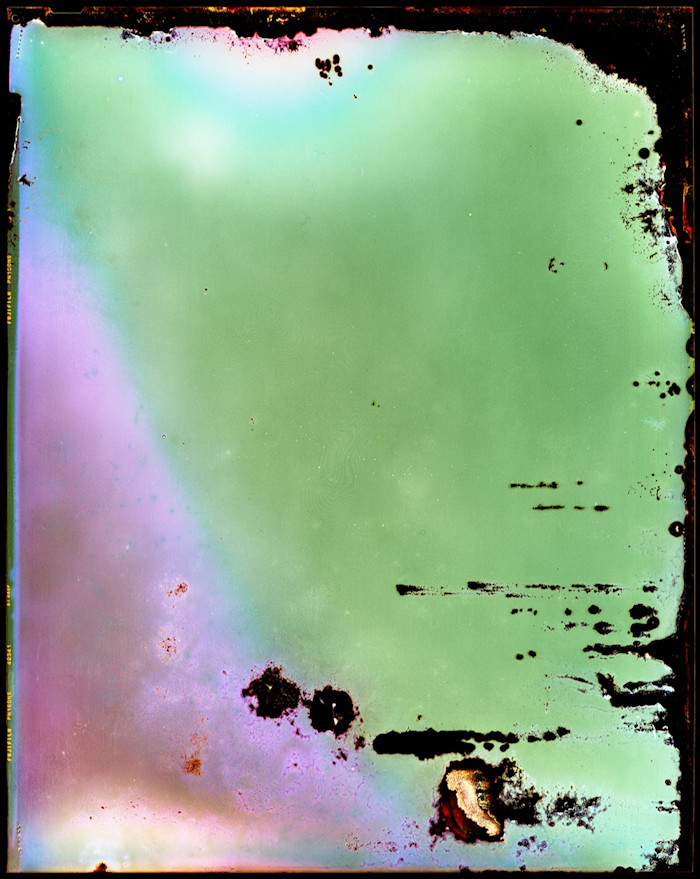
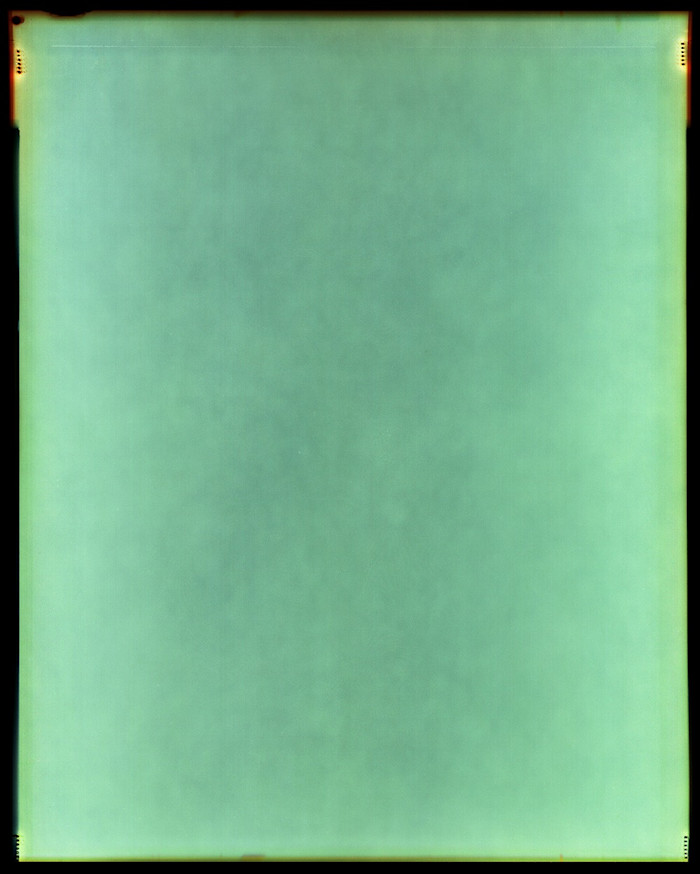
Yoi Kawakubo’s works look more like abstract paintings than photographs. But the texture of their luminous surfaces betrays an inhuman hand.
Look closely at “If the Radiance of a Thousand Suns were to Burst at Once into the Sky V” (2019), and you will not see brushstrokes but burn-like blotches, spidery fissures and neat networks of Newton rings: a pattern of concentric circles, alternately dark and bright, which readers may recognise from old Polaroids. And in the corner of the frame, we find a Fuji film serial number in place of the artist’s signature.
To produce these works, Kawakubo donned personal protective equipment, ventured into the nuclear exclusion zone, and buried large-format silver halide film in the soil. Returning three to six months later, he disinterred and developed the film. The result is a prismatic pentaptych, produced by the ghostly touch of radiation. Each piece is monumental: standing two metres tall and 1.5 metres wide, they invite viewers to lose themselves in their sibylline surfaces.
Giles Price
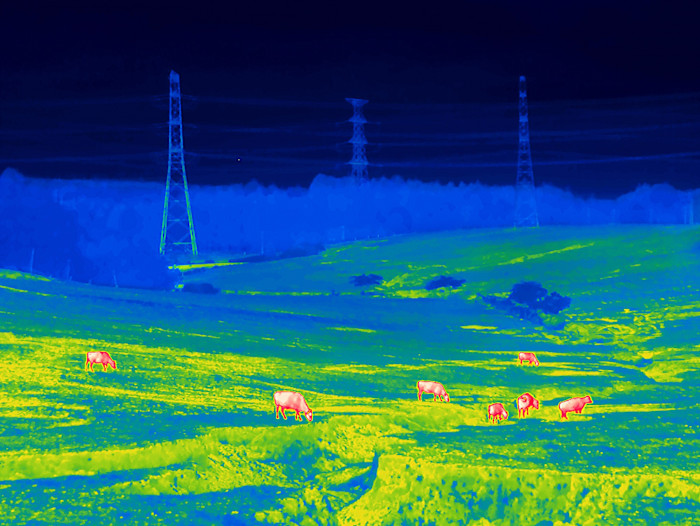
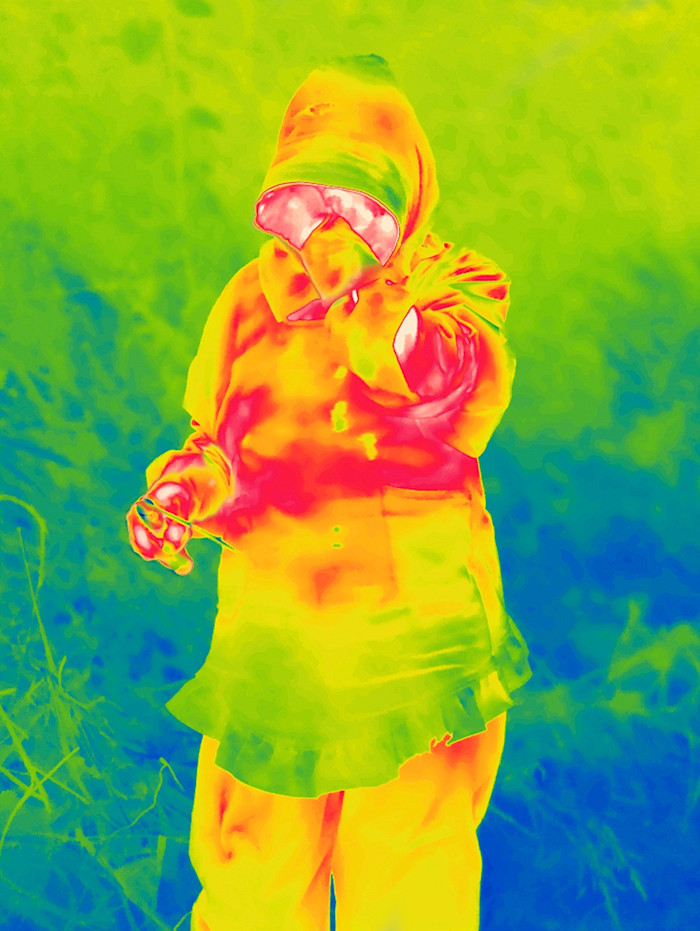
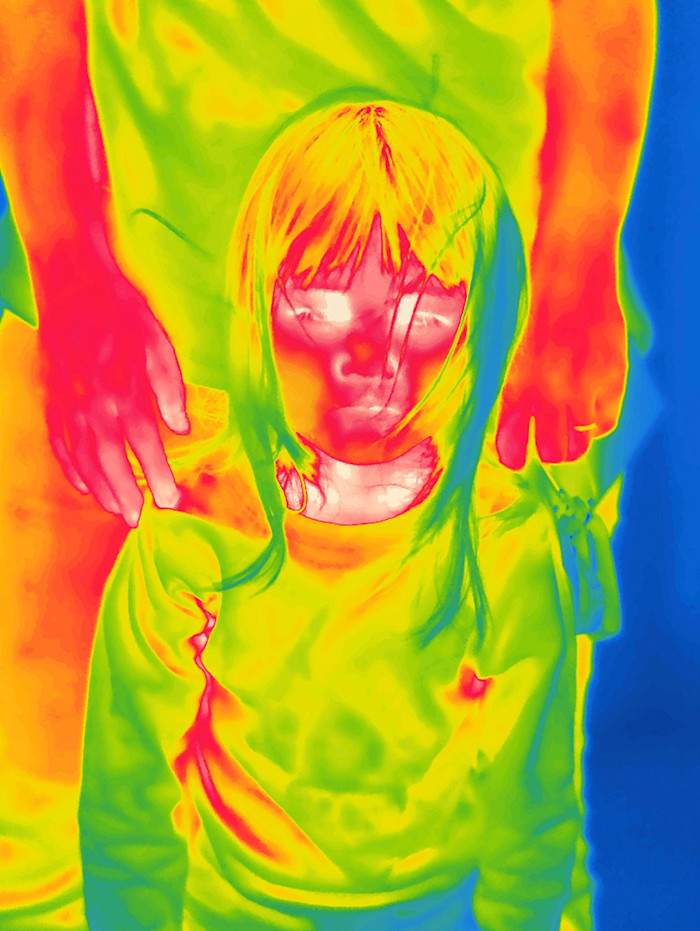
The British photographer Giles Price’s work shares Yoi Kawakubo’s vivid palette but is focused on the theme of recovery. In the untitled works above, from his project Restricted Residence (2017), he documents residents’ return to Namie and Iitate. These two heavily contaminated villages in Fukushima Prefecture were both evacuated for six years but declared safe for human habitation on March 31 2017.
Price focuses on the psychological experience of living with radiation. Using thermal imaging, he bathes the villages in midnight blues and lurid greens, evoking how an invisible presence can render a familiar landscape unhomely.
Price’s interest in toxicity and contamination stems from his own history. A restless teenager, he joined the Royal Marines at 16 and was sent to northern Iraq and Kurdistan during the first Gulf war. He was one of the few commandos to carry a pocket camera, and the resulting photographs are now part of the Imperial War Museum’s collection. By the time Price was 20, however, exposure to toxic residues had destroyed his bowel and he was discharged from the military. He then went on to study photography at the University of Derby.
Makoto Takahashi is executive director of the McQuillan Institute and editor of “Picturing the Invisible”, published by Fw:Books; fw-books.nl. The exhibition is at Messums West, Tisbury, near Salisbury, from March 14-28
Find out about our latest stories first — follow FT Weekend Magazine on X and FT Weekend on Instagram