South-east Asian nations are girding for a Middle East oil shock by telling citizens to work from home, implementing four-day weeks and promising increased spending on energy subsidies.
The sometimes drastic measures highlight deep concerns about the impact of the US and Israel’s war against Iran on economic growth and fiscal sustainability in a region of more than 700mn people that depends heavily on the Middle East for oil and gas.
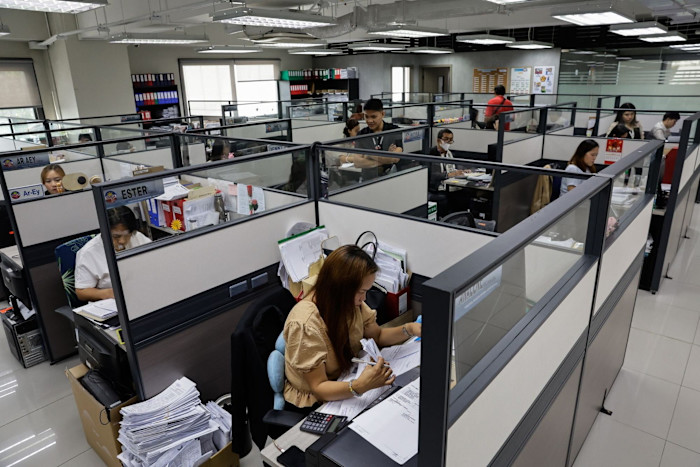
Philippine government officials should “limit official travel to essential functions only, as part of efforts to conserve energy amid the crisis in the Middle East”, the presidential office announced on Tuesday, just days after ordering many offices to implement a four-day week.
Thailand’s government has directed staff at most government agencies to work from home, while Vietnam has called on companies to encourage remote working and on the public to prioritise car pooling or cycling. Indonesia has pledged to raise spending on fuel subsidies.
The concerns about supplies of oil and gas come at a time when some of the region’s largest economies are already slowing. The oil price has jumped since the start of the Iran conflict, hitting around $119 per barrel on Monday before falling back to around $90.
Sustained higher oil prices could widen budget deficits considerably for governments that subsidise fuel. They will also add to inflationary pressures, potentially forcing central banks to hold off on interest rate cuts that could boost growth, economists say.

“Policymakers would be feeling much more comfortable if we were in a situation where all cylinders were firing and every sector was generally doing quite OK. But instead what we are seeing is unevenness of growth,” said Brian Tan, an economist at Barclays Investment Bank. “On the fiscal side, it’s certainly adding pressure to a lot of economies.”
Tan said regional growth had been driven by select sectors such as AI and data centres, and did not create enough jobs or boost wages. The Asian Development Bank estimates south-east Asia’s GDP grew at 4.5 per cent last year and that growth will slow slightly to 4.4 per cent in 2026.
In Indonesia, the region’s largest economy, an over-reliance on commodities, a shrinking middle class and declining purchasing power are weighing on growth. Thailand, the second largest, has been struggling with high household debt, an ageing population and a decline in tourism.
Indonesia, which subsidises fuel prices, is seen by analysts as the most at risk due to President Prabowo Subianto’s expensive social welfare policies. Since coming to power in October 2024, Prabowo has prioritised economic expansion over fiscal discipline, relying on welfare policies to boost consumption.
Jakarta’s fiscal deficit hit 2.9 per cent last year — close to a self-imposed limit of 3 per cent — and analysts say it will breach that cap if it maintains current fuel subsidies in the face of higher oil prices.
Before the US and Israel launched strikes on Iran, Prabowo’s government had budgeted for energy subsidies of Rp210tn ($12.4bn) this year, assuming oil prices would average $70 per barrel.
Finance minister Purbaya Yudhi Sadewa said this week the budget for fuel subsidies would be increased. “After a month, we can better predict where oil prices are going and we can decide appropriate policy,” Reuters quoted him as telling reporters. “We’re smart enough. Any adjustment we do will not disrupt economic growth.”
Lavanya Venkateswaran, senior Asean economist at OCBC, said Indonesia did not have much room to manoeuvre. “They will necessarily need to make some adjustments somewhere, either a bigger cutback in expenditures or just increasing retail prices,” she said.
Neighbouring Malaysia also subsidises fuel prices and could take a hit to its fiscal balance if it does not pass higher oil prices to consumers, analysts say. Kuala Lumpur has promised to maintain subsidies for now.
The immediate concern for much of the region, however, is securing oil supplies. Most countries rely on the Middle East for imports of petroleum products. Only Malaysia and Brunei are net exporters of oil and gas.
The bigger economies, including Indonesia and Thailand, produce oil and gas but not nearly enough to meet their demand. Indonesia has said a quarter of its crude oil imports pass through the Strait of Hormuz, where shipping has almost halted since the start of the war in Iran. Thailand sources half its oil and LNG imports from the Middle East.
Panic buying has already begun in parts of the Philippines, Indonesia, Thailand and Vietnam. Oil stocks in the region vary: Thailand has enough for 95 days while Indonesia — the most populous country in the region — has only around 25 days.
The Vietnamese government said it had “directed and urged refineries and the entire national petroleum supply chain . . . to focus on resolving difficulties, finding new sources of petroleum, and maintaining production and business operations to ensure continuous supply to the market”.
While higher oil prices and efforts to cut back on fuel usage threaten economic activity, fear of stoking inflation may keep central banks from cutting interest rates.
“Some central banks might even be forced to hike rates by the end of the year,” OCBC’s Venkateswaran said, but added the region’s economies were much more stable than they were during the 1997 Asian financial crisis, when many experienced economic and political turmoil.
“There is definitely more structural resilience,” she said.