Unlock the Editor’s Digest for free
Roula Khalaf, Editor of the FT, selects her favourite stories in this weekly newsletter.
Japan used to be known for its world-beating technologies — like early electronic wallets — that never made it in the outside world; the so-called Galapagos syndrome. A financial equivalent, until recently, was the trading house: conglomerates active in holding and trading commodities among other activities. Now, Europeans are looking to co-opt Japan’s playbook.
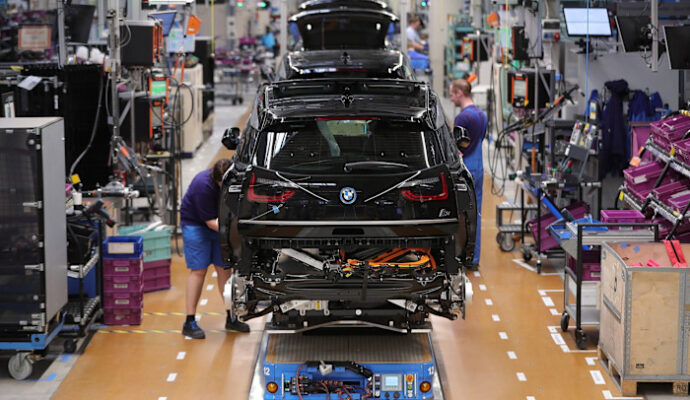
Germany is the latest acolyte. Industrial behemoths including carmaker BMW and munitions manufacturer Rheinmetall want a Japanese-style trading house, backed by Berlin, to secure supply of critical raw materials.

Japan, as a resource-poor island nation, worked out the importance of self-reliance long ago. It was also ahead of the pack in heeding the dangers of China’s stranglehold on the production and refining of critical minerals. A territorial dispute in 2010 prompted Beijing to halt exports. Tokyo learned its lesson. Since then, reliance on China has dropped from around 90 per cent of critical minerals imports to around 60 per cent.
The solution, in Japan’s case, includes both state agencies and private companies. Powerful trading companies, which have attracted investors like Warren Buffett, both own and trade commodities; Mitsubishi Corp, for example, invested $600mn in an Arizona copper mine earlier this year. That also gives them access to troves of data on production and shipment flows.
State agencies, such as Japan Organization for Metals and Energy Security, fill in the gaps by providing long-term money: building capacity and refineries can be dirty work, requiring heavy permitting, and takes time. JOGMEC works with the trading houses and others to ensure a resilient supply of these minerals as well as oil and natural gas.
Half of JOGMEC’s $11bn in spending went on investments and loans in 2023. It joined forces with Sojitz, another trading house, to invest in Australia’s Lynas Rare Earths — via equity and loans — and late last year began receiving Australian ore that had been refined in Malaysia.
European countries already match Japan with a patchwork of institutions tasked with ensuring resilience. Germany itself already works with JOGMEC via its Federal Institute for Geosciences and Natural Resources, has a €1bn German Raw Materials fund, and is set to play a leading role in the EU’s stockpiling initiative. The UK’s Critical Minerals Strategy is similarly well stocked with domestic lending and strategic bodies and supplemented with a host of multilateral institutions from the G20 to the International Energy Agency.
The Japanese model is not without flaws; trading houses’ holdings and investments in fossil fuels, for example, don’t incentivise them to push for renewables. Still, Germany is at least looking in the right direction. The US, building its own position in critical minerals, is doing so via stake-building in specific domestic companies. That takes longer and involves relying on a handful of companies – hardly a recipe for resilience.