Unlock the Editor’s Digest for free
Roula Khalaf, Editor of the FT, selects her favourite stories in this weekly newsletter.
When in 2008 a 43-year-old former Pakistani air force pilot published his debut novel about the mysterious plane crash that killed military dictator General Zia ul-Haq, he was praised for his “deliciously anarchic” take on history. He went on to repeat the trick with two further books, albeit to less acclaim.
But two decades of writing in and about his volatile country appear to have ground Mohammed Hanif down. His excellent new historical novel spares no institution, from the army to the cleric class, in its quippy takedowns. Yet its portrait of a Pakistani village in the late 1970s is almost relentlessly bleak.
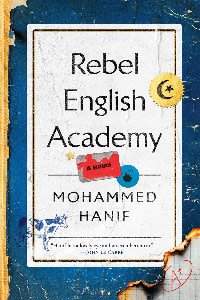
Rebel English Academy is set during the rapid descent of a semi-socialist Pakistan into neither its first nor last period of military dictatorship. In 1979, the army’s hanging of leftist prime minister Zulfikar Ali Bhutto precipitates mysterious changes in the wryly named OK town, in the Punjab province.
Sir Baghi (“rebel” in Urdu), a closeted gay communist English teacher who stopped volunteering his critiques of the government after being subjected to brutal torture, is reluctantly drawn into a citywide drama when a widow on the run arrives at his door. She is Sabiha Bano, a former track runner who hides out in Sir Baghi’s academy after her husband’s death in a suspect fire.
What follows is a blood-flecked tale of local intrigue buffeted by much larger forces. The story of Sabiha and Sir Baghi is intertwined with that of Captain Gul, a military intelligence officer who dreams of merry encounters with global leaders, from the Shah of Iran to Indira Gandhi. His daytime mission, however, is to root out, and stamp out, support for the hanged Bhutto, who some believe to be alive and biding his time.
“Bhutto’s not really hiding somewhere in OK town, not in Asia’s largest vegetable market, not in the cornfields, not at OK Potato Cold Storage. He is hiding in the best place of all. In people’s heads. They hanged their man; they hoped that they wouldn’t have to but they did. Now his mission is to bury the idea. To smash its hideout, to raze it to the ground.” The novel asks: how do you kill an ideology? The answer, in a dictatorship, involves gratuitous violence and local espionage.
Hanif’s debut, the Man Booker-longlisted A Case of Exploding Mangoes, was part of a wellspring of Pakistani anglophone fiction that erupted in the first decade of this century, along with novels by Kamila Shamsie, Mohsin Hamid and Daniyal Mueenuddin. But Hanif, who was born in a village to parents who couldn’t read and joined the air force at 16 before leaving to study and work as a journalist in the UK, was hailed as understanding a side of the country his more elite peers hadn’t witnessed, or didn’t understand.
Two decades on, his eye for the notable in the mundane has not weakened. Nor has his irreverence. In Rebel English Academy, Hanif’s military officer is often drunk and always lascivious; the town’s Imam tries to make a religious argument for securing a second wife, only to be put in his place by his first one. One-liners abound. They are often good. In the Rawalpindi jail where Bhutto was held before his hanging, “All prisoners but one are asleep in their cells, restless, dreaming of their victims or their loved ones, which in most cases are the same people.”
Hanif tracks in graphic detail abuses of power in police stations, marriages and mosques. When Gul learns of the drugged rape of a woman, facilitated by the victim’s husband, he swells with both desire and anger. Such depictions of the worst kinds of violence are littered casually throughout the text. The intent seems to be to scream: this is happening everywhere, all the time.
As with other English language writers from the subcontinent, Hanif’s storytelling has come under pressure — from reviewers like myself — to represent an entire nation. He has said that he has no interest in explaining Pakistan. And yet, here is a man who pays attention: with Rebel English Academy, Hanif retains his title as the best anglophone chronicler of life in the country he loves so fiercely.
Rebel English Academy by Mohammed Hanif Grove Press UK £16.99/Grove Atlantic $28, 320 pages