Maiko Todoroki, head of Japan’s biggest nanny provider, first truly felt the value of the kind of services offered by her mother’s company when she suffered from postnatal depression.
The cavalry arrived, in the shape of her mother Noriko Nakamura and a nanny who both travelled from Japan to her home in the UK, and a local maternity nurse. Nakamura was founder and chief executive of Poppins, a nanny agency that she set up in 1985 and which has become one of the biggest nursery operators in Japan.
“I managed to get out of feeling very sad and crying. I realised how important this support is and knew that this wasn’t available in Japan,” says Todoroki, speaking in her pristine white office in Tokyo, sipping tea from a Harrods mug.
The 50-year-old chief executive of Poppins is urging the nation’s first female prime minister Sanae Takaichi to deliver policies to help mothers and harness the power of educated women in the world’s most aged population.
Policies under debate such as tax deductions for babysitting and housekeeping would support women caring for children and elderly parents to overcome cultural resistance around the outsourcing of care duties, Todoroki argues. “What is stopping people from using babysitters is not just the money. It’s the unconscious bias of ‘no, no, no, I am supposed to do that, as a mother’.”
Takaichi’s appointment, followed by her recent resounding election victory, has raised expectations of a boost for senior female executives by delivering more measures that relieve them of caring responsibilities.
Such policies are vital if leaders such as Todoroki are to become less rare and for Japan to address its status as the worst G7 country for gender equality. Only 8.6 per cent of chief executives across corporate Japan are women, according to research group Teikoku Databank. The situation is worse among companies listed on the prime section of the Tokyo Stock Exchange where 13 out of 1,643 corporations had female bosses in 2024, according the latest figures.
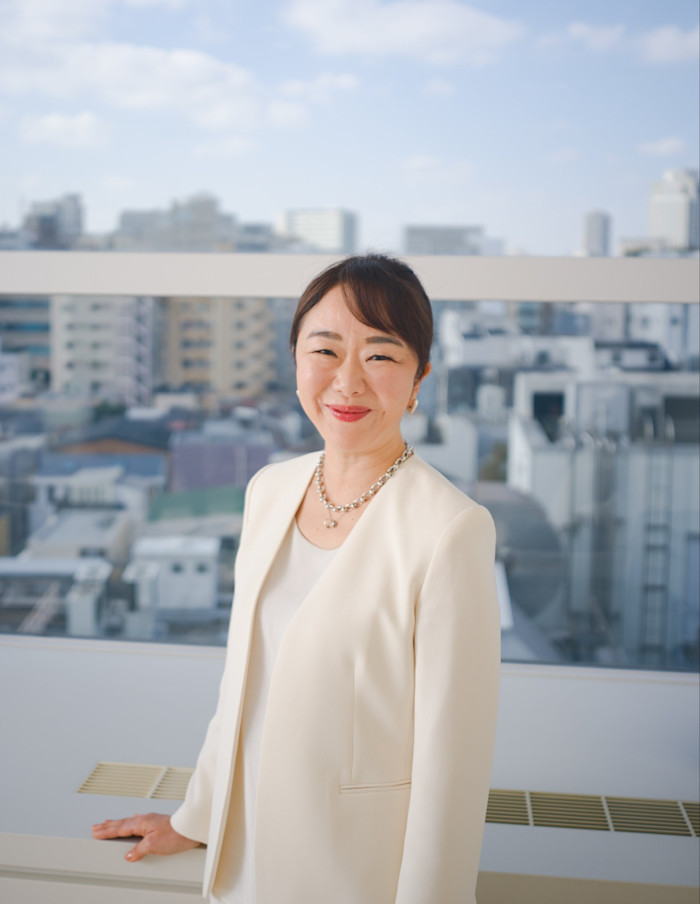
Todoroki’s mother founded Poppins after wishing for a Mary Poppins-style helper to enable her to pursue a career.
Her daughter had not planned on taking over. At 12, she went to boarding school in the UK before studying at King’s College London, and pursuing a career in Europe. “[Poppins] was her business and dream that she was very, very good at. I was abroad, thinking I have my separate life,” says Todoroki.
Then the failing health of her grandfather, who sent her newspaper clippings weekly to sustain her link to Japanese culture and language, drew Todoroki back to Asia. The idea that she might take over the business only took root after she presented a case study on Poppins to fellow MBA students at Insead in Singapore in 2005. Why was she not considering the move, they asked.
Todoroki joined the family business in 2012 when it was still private and revenues were a fifth of the ¥34bn ($218mn) achieved in 2025.
More stories from this report
She had to deal not only with the challenge of patriarchal Japan’s rigid gender norms and long hours but also living in the shadow of her “bossy” mother, she says, who was nicknamed “Formula 1” by employees, for wanting everything done immediately. After a “few dark years being the daughter”, she became chief executive in 2018 with her mother as chair for five years.
Under Todoroki, Poppins has raised operating profit by 80 per cent, more than trebled customers to 43,000 and the employee headcount is up by half to 6,000. She also made the bold decision during the Covid-19 pandemic to boost in-home care services, and has used her position to advocate for change.
As Poppins grew, she says, it needed her softer leadership style as a more patient listener and mediator to manage staff retention challenges.
Under the late prime minister Shinzo Abe, Japan tried through its “womenomics” policies to tackle the rapidly shrinking labour force by boosting women’s participation.
While female workforce participation in Japan has risen to 76 per cent from 64 per cent in 2012, many women are working part-time in low-paid jobs despite being well educated.
“The actual chore of looking after children, the house or elderly people — that still falls on women,” says Todoroki. “They are only participating with 10 per cent of their skillset or their time, which is such a shame . . . those women, if they came out, would be like [waking] a sleeping giant.”
Takaichi’s rise to the job of prime minister will not necessarily translate into progress for women. Her comments that she would “work, work, work, work, work”, for instance, sparked concern that she will reinforce Japan’s long-hours culture, a big barrier to women’s workforce participation.
The rise of anti-immigration sentiment in Japan is also a big challenge for the childcare industry, increasingly dependent on workers from the Philippines, Thailand and elsewhere. Takaichi’s Liberal Democratic Party has been criticised for letting foreigners enter via a patchwork of visas without a comprehensive immigration policy.
Todoroki explains that Poppins recently spent three years training migrant workers to speak Japanese and to provide care services to its standards — by which time their visas had expired.
“I’ve been training people for the Philippines, rather than for clients,” she comments. Japan has extended the time of stay allowed for nursing-care workers but visas have yet to be deregulated in the same way for childcare, she adds.
“We need to make sure [foreigners] want to come here,” says Todoroki, who sits on the regulatory reform committee of one of Japan’s two biggest business lobbies, the Association of Corporate Executives.
Todoroki looks after her mother, who is suffering from ill health. Carers take on practical tasks so she can provide emotional care.
“I realised I can’t be the main caregiver. This is probably a myth in Japan, again, that the family needs to look after your parents,” she says. “I’m the only person who can hold her hand, talk about history and what we did together . . . all that sort of thing is more precious than helping her walk properly.”