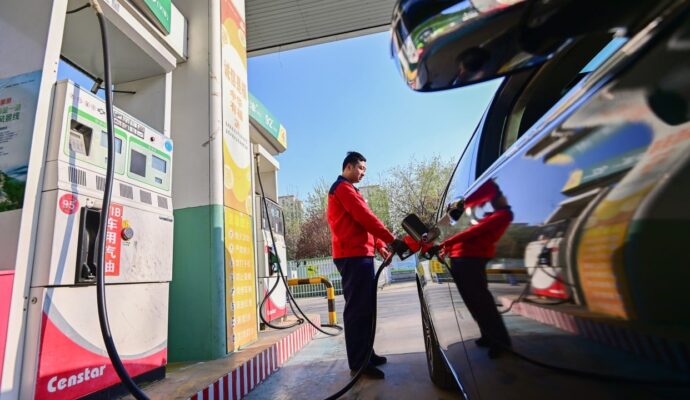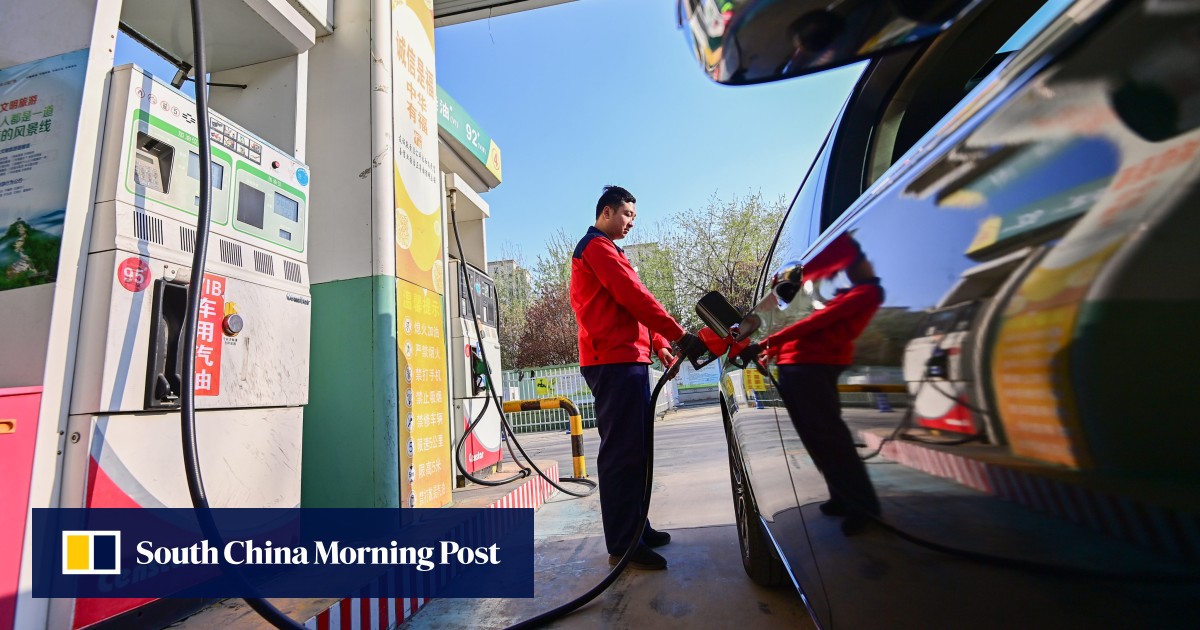
Rising energy costs driven by Middle Eastern geopolitical tensions may provide some relief to China’s years-long struggle with weak prices, but analysts warn that a spike in oil prices could spark a scenario in which stagnant economic growth collides with rising inflation, hindering the nation’s economic recovery.
“Rising oil prices [could] lead to stagflation, which helps increase the inflation rate but also leads to a decline in economic growth and an increase in unemployment,” said Su Jian, an economics professor at Peking University.
Su, who is also director of the university’s Centre for National Economic Research, pointed to two previous oil crises – during the 1973 Yom Kippur war, and after the Iranian revolution and subsequent Iran-Iraq war in the late 1970s and early 1980s – that triggered stagflation in oil-importing nations.
Advertisement
Higher costs have historically forced factories to cut production and lay off workers, while prices for goods continued to rise even as economies slowed, he noted.
Advertisement
Oil prices rose further on Wednesday. Brent crude – one of the leading benchmarks for the global crude oil commodity market – traded above US$84 per barrel, up 16 per cent since Friday, before hostilities escalated. And West Texas Intermediate crude, a key United States oil benchmark, had risen 15 per cent to above US$77.