Good morning. I suppose celebrations are even more crucial in a fragile world. Happy Holi — wishing you lots of colours, sweets and the love of friends and family.
In today’s newsletter, the US imposes 126 per cent duties on Indian solar products. But first, the impact of the Middle East conflict on India.
A tough spot
The fallout from the US and Israel’s attack on Iran — and Tehran’s subsequent retaliation — has reached India. The most immediate risks are economic. Oil lies at the centre of India’s vulnerability to external shocks, with crude purchases accounting for the lion’s share of the country’s import bill. Brent crude, which had already risen 7 per cent over the weekend, jumped more than 13 per cent yesterday. That surge will have a direct bearing on India’s balance of payments.
More worrying is the prospect of supply disruption. In the past couple of months, India has eased off Russian oil and pivoted to the Middle East for supplies. Half of India’s oil now transits through the important Strait of Hormuz waterway, reportedly closed by Iran’s military at present. If the stand-off persists, the consequences will ripple through corporate balance sheets and damp retail demand.
The events of the weekend are already taking a toll on markets. Indian equities were deep in the red yesterday, trading 2 per cent down. Energy, construction and travel companies were some of the worst affected. Adani Ports fell 3.3 per cent, Reliance closed down 2.6 per cent, while IndiGo Airlines and Larsen & Toubro lost more than 6 and 5 per cent, respectively.
US President Donald Trump has reportedly said military escalations against Iran could continue for at least four weeks. A sustained restriction of oil supply will significantly strain the Indian economy. Inflation, which has been well contained in the last several quarters, is likely to inch upwards. The rupee declined 0.3 per cent against the dollar yesterday to 91.57, very close to a record low.
The weekend’s events have also exposed India’s geographic vulnerabilities. Airport disruptions were a stark illustration. With the Middle East’s airspace closed, Air India had to cancel more than 300 flights. The other route, westward and flying over Pakistan, has been inaccessible since Operation Sindoor last year. Overnight, India’s connectivity to Europe and North America became longer, costlier and operationally uncertain.
India’s immediate neighbourhood remains jittery. Until days ago, analysts expected Pakistan’s military tensions with Afghanistan to dominate regional headlines. That now looks secondary. The centre of instability has shifted westward — even as India’s immediate periphery remains fragile. Nepal heads to the polls on Thursday, and Bangladesh has just sworn in a new government, with whom India has to initiate a new relationship in order to assuage local anger and build bridges with an old ally.
The timing of the attacks was also politically awkward for India’s chief diplomat, Prime Minister Narendra Modi, who just two days before the strikes was in Tel Aviv waxing lyrical about close India-Israel ties before being blindsided by the military offensive. Opposition parties have slammed it as a mistimed visit that threatened India’s neutral stance and placed New Delhi in a difficult position. India has deep defence ties with Israel, energy dependence on the Gulf countries and historic ties with Iran. On Monday, Modi wrote on social media that he has spoken to the leaders of UAE, Bahrain, and Saudi Arabia, as well as Israel’s leader Benjamin Netanyahu, but made no mention of Iran.
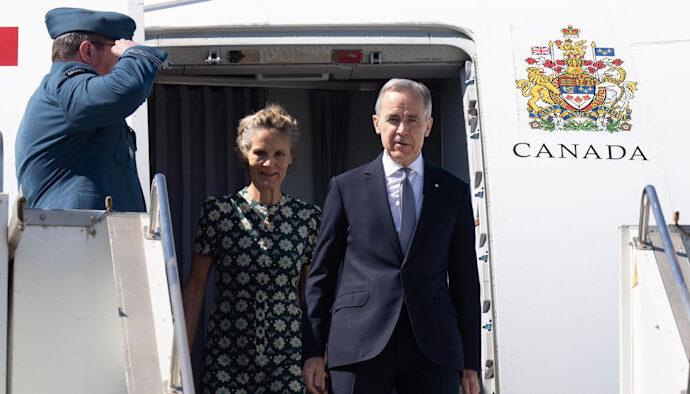
Yesterday’s events were more encouraging, though overshadowed by the Middle East war. Modi met Canadian Prime Minister Mark Carney, and the two countries agreed to seal a trade deal by the end of the year. This visit is especially significant since it is the first after the diplomatic rupture between New Delhi and Ottawa over the killing of a Canadian citizen.
Trump’s unpredictability has forced India to rapidly hedge its bets and rebuild relationships with middle powers such as Canada, Japan, Brazil and the EU. India’s response to how things unfold this week will determine if its size and economy is a reasonable bulwark against global events.
How do you think India will be affected by the events in the Middle East? Hit reply or email us at [email protected]
Recommended stories
Why now? Donald Trump’s shifting arguments for striking Iran.
Dubai’s expats are driving to Oman and Saudi Arabia to secure flights out.
From backer to enemy — how Pakistan turned on the Taliban.
Survivor’s guilt, overwork and AI: inside Amazon’s mass lay-offs.
Anthropic is to sue the Trump administration after it was labelled a security risk.
The FT has lunch with one of my favourites: the singer Ali Sethi.
Solar eclipse
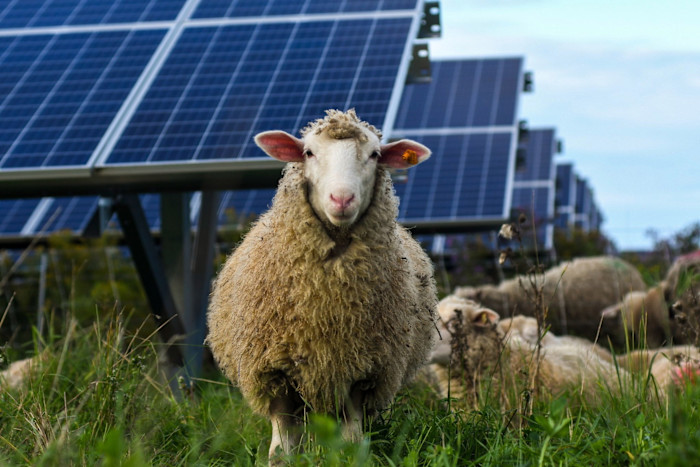
The US commerce department has slapped a 126 per cent tariff on Indian solar products after two Adani Group companies withdrew from an anti-subsidy investigation. Mundra Solar Energy and Mundra Solar PV were mandatory respondents in the probe, which has so far ruled that the companies had unfairly benefited from a host of support schemes provided by the Indian government, especially those related to the import of capital goods at concessional rates.
These duties come on top of the 15 per cent umbrella tariffs introduced by the Trump administration. Indonesia and Laos have also been targeted, facing duties of 104 per cent and 80 per cent, respectively. In another ruling next month, US authorities will determine whether exporters from these three countries sold products in the US at prices lower than their production costs.
For Indian manufacturers, this is one more in a long list of frustrations as they try to penetrate an important market. India’s exports of solar components to the US have grown more than 800 per cent between 2022 and 2024, according to official US data. Analysts expect that the new tariffs will force companies to drop prices in India in order to move their stock while they look for other export markets. The sector, which has been projected to grow 16 per cent annually in the next four years, will see a significant setback on account of this action.
The decision by the two companies to withdraw from the probe is especially puzzling, as the US administration had amended the period of investigation after a request from the Indian government and the Adani Group. Other Indian organisations, such as Waaree Energies, continued to co-operate with the probe. But at the very least, the sector should have put up a united front and worked on a joint strategy to deal with the investigation. I reached out to the companies to understand why but they have yet to respond. A final ruling is expected by July 6, but the prognosis is not good.
Go figure
Consumption figures in the Indian economy seem to finally be turning around, going by the recently reported increase in the amount of goods and services tax collected. Here are the highlights for February.
8.1%
Annual rise in GST collections
Rs1.83tn
Total collection (INR)
Rs 20tn
Total collection to date in FY26
Quick question
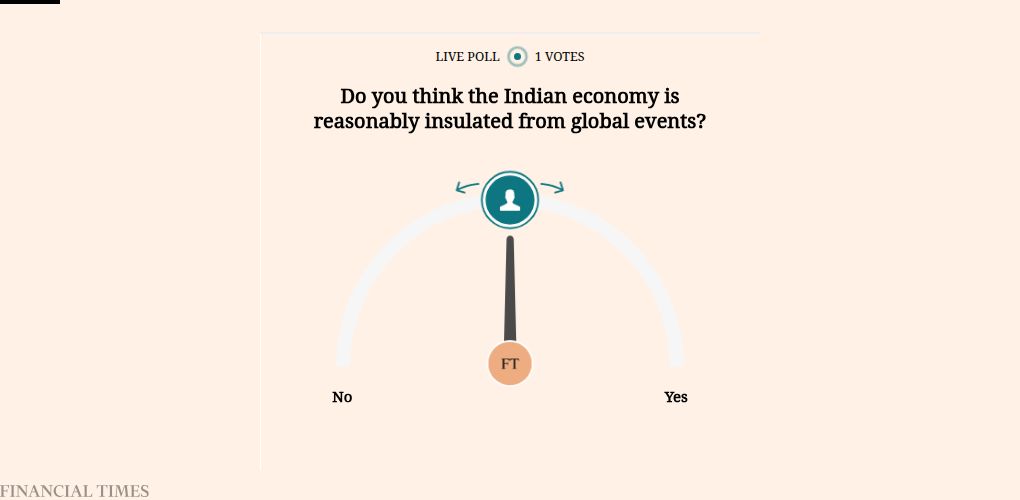
Do you think the Indian economy is reasonably insulated from global events? Tell us here.
Buzzer round
On Friday, we asked: what connects the Raffles Hotel, Manhattan Club, Trader Vic’s and Harry’s Bar?
Answer — they are all birthplaces of iconic cocktails.
Aniruddha Dutta was first with the right answer, followed by Ranjan Kumar Sinha and Prasanna Venkatesh. Congratulations! Not too many replies this week, I guess this was a tough question.
Thank you for reading. India Business Briefing is edited by Tee Zhuo. Please send feedback, suggestions (and gossip) to [email protected].