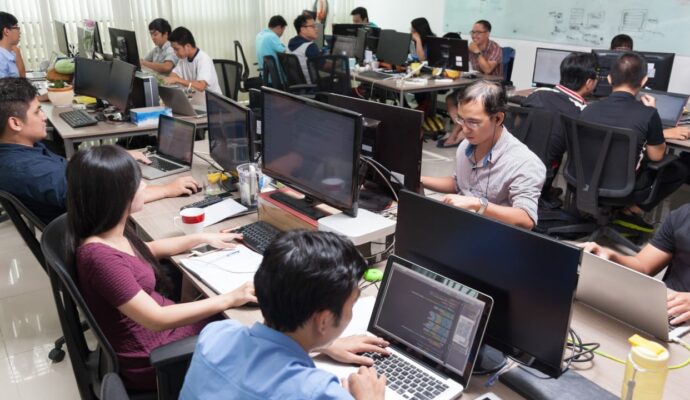
They are young, intensely competitive, and unapologetic about 80-hour work weeks. Welcome to the United States’ new generation of tech founders.
Gen Z’s start-up class is reframing “millennial hustle culture” by shifting from side gigs and personal branding to a more rigid office grind, while looking to China for inspiration. It’s for this reason that US artificial intelligence start-ups are openly embracing 996, the controversial 9am to 9pm, six-day-a-week schedule popularised by Chinese tech companies.
“We have so many companies that are building pretty much the same products in AI; their only leverage is how fast they’re growing, how fast they’re building,” said Nicole Levin, who is the platform lead at San Francisco-based venture capital firm Pebblebed.
Advertisement
For 996 advocates in the US right now, the logic is clear: long hours are the path to getting ahead in the AI “gold rush”.
Its critics, however, argue that the time spent in the office may be more performative than productive. Years after China reaffirmed that 996 violated labour laws following worker deaths and accusations of “modern slavery”, the under-30 cohort in Silicon Valley, San Francisco and even New York appears captivated by it.
Advertisement
In the early days of the internet boom, Chinese start-ups worked long hours under pressure to show results to venture capital firms backing them. As time went on, companies such as China’s Alibaba and ByteDance, the owner of TikTok, became associated with the unwritten 996 standard in a bid to gain a technological edge and show dedication.
China’s culture of overworking then came under scrutiny after the deaths of employees who had been working long hours in tech. Fledgling start-up founders also embraced the gruelling schedule in the hope that long hours would lead to the success of their businesses.