The world’s two largest brewers faced starkly diverging realities in China in 2025 and rather than it being about taste or popularity, the contrast appears to largely boil down to a shift in the nation’s drinking habits, sparked – in part – by the economic downturn.
During the year, Budweiser Brewing APAC, the Asian subsidiary of the Belgian beer giant Anheuser-Busch InBev, posted its biggest decline in profit growth since 2020, with the company’s CEO Yanjun Chen stating last week, “Our performance in China in 2025 was below our potential.”
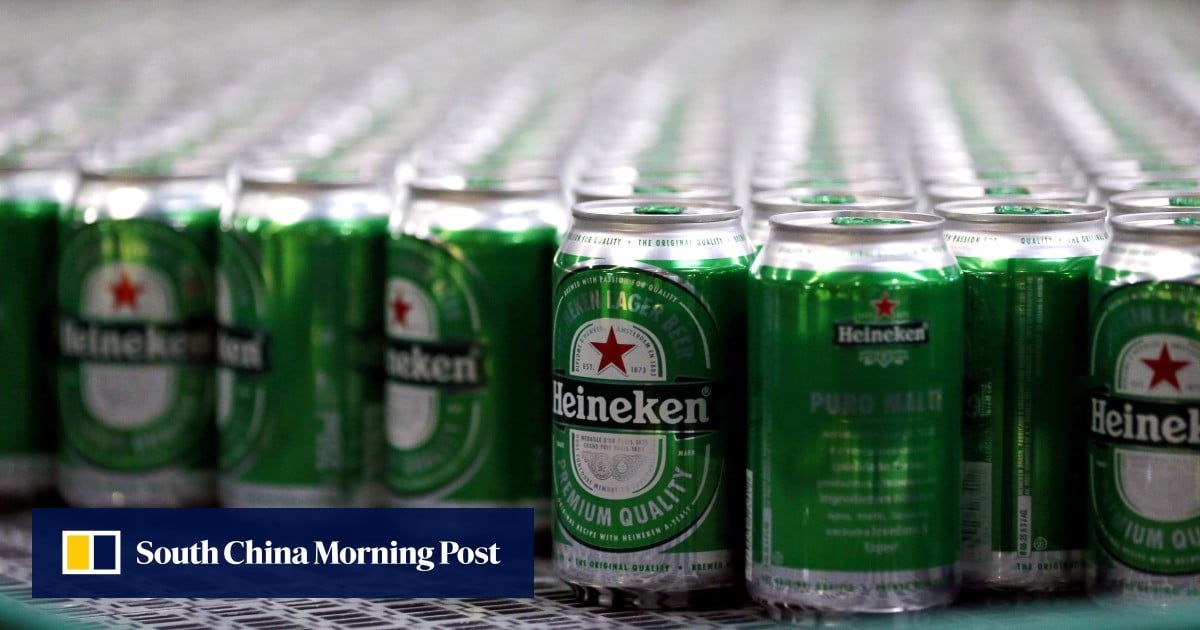
Conversely, just one day earlier, Heineken – the world’s second-largest brewer – said China was one of the top three contributors to Heineken’s net profit in 2025. Its CEO Dolf van den Brink called its China operation “an absolute success story”.
Advertisement
A large part of the divergence reflects a structural shift in how Chinese consumers drink beer – more at home and less in bars and restaurants, analysts say.
Both brands primarily target China’s premium beer segment but with different approaches, said Richard Lin, chief consumer analyst at SPDB International, an investment bank.
Advertisement
Entering China in 1995, Budweiser for years focused on channels like bars, pubs and high-end restaurants, where margins are higher, Lin added. According to data from Euromonitor, Budweiser APAC’s share of China’s premium beer market was close to 50 per cent in 2015.