Durst, who founded the non-profit International Lunar Observatory Association (ILOA), was publishing on China’s astronaut training as early as 1980, when the country’s human space flight ambitions were still little known to the outside world.
He died at his home in California last month, shortly after attending a workshop in Chiang Mai, Thailand.
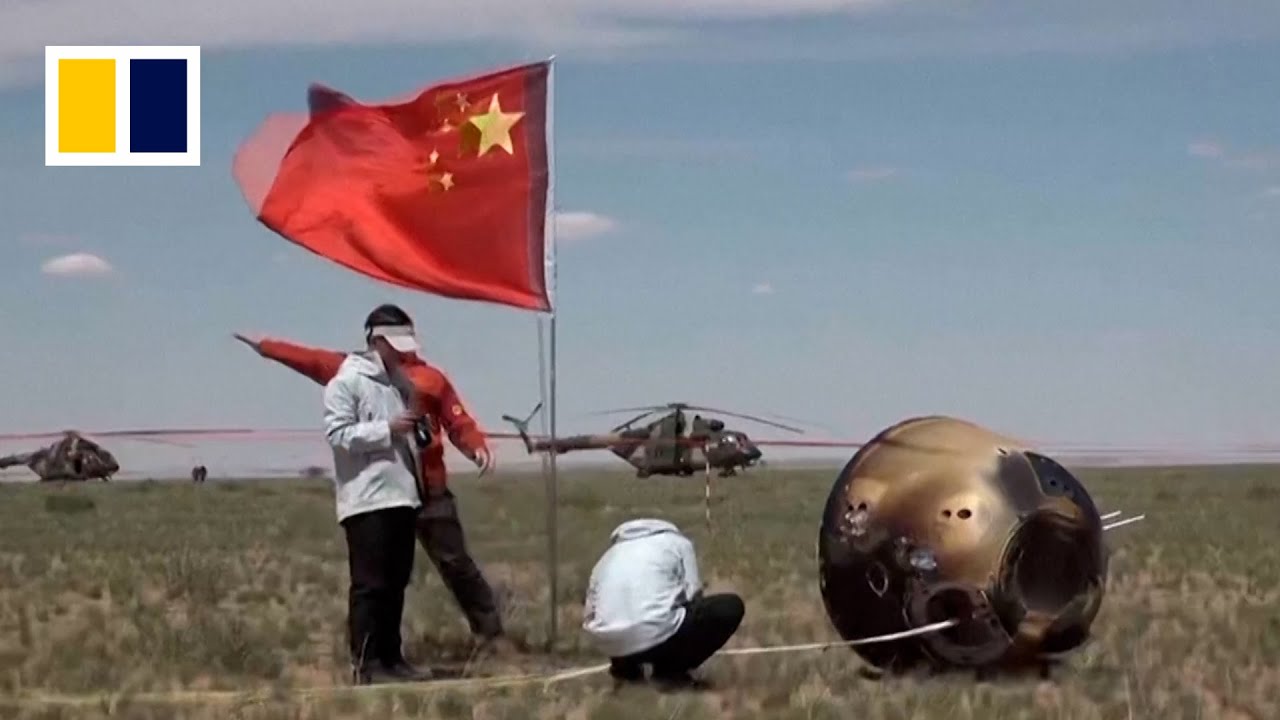
01:57
China’s Chang’e-6 mission returns to Earth with first samples from moon’s far side
China’s Chang’e-6 mission returns to Earth with first samples from moon’s far side
Advertisement
“The telescope will stand as Steve’s final, major space legacy, and it’s both poignant and profoundly fitting,” said Quentin Parker, director of the University of Hong Kong’s Laboratory for Space Research, a key international partner in the project.
“Steve was a proud and patriotic American,” Parker said. “He loved his country, its pioneering spirit and its long history of trailblazing achievements in space.”
Advertisement
But he also invested time, energy and both political and financial capital in building constructive, practical collaborations with China’s space community “at a time when doing so was neither straightforward nor fashionable in some Western circles – and is increasingly difficult today”, Parker added.