Good morning. The Bangladesh National Party won a landslide victory in the general elections. Its leader, Tarique Rahman, who returned after 17 years in exile, will be sworn in today. New Delhi seems ready to work towards a reset of ties with its neighbour. We will keep an eye on the developments in the coming months.
Separately, India and France are hoping to sign a $35bn deal for the purchase of more than 100 Rafale jets. Prime Minister Narendra Modi is meeting French President Emmanuel Macron later today.
AI agenda
AI is the theme of this week in New Delhi, with more than 100 countries participating in the AI Impact Summit that began yesterday. In the course of the week, India is hoping to get global participants to sign a “Delhi Declaration” that focuses on using AI technology to solve real-world problems. (Or “People, Planet and Progress” as our alliteration-loving government puts it.) Previous summits centred on discussions on the risks from the technology and the regulatory frameworks needed to keep it safe.
The summit is heavyweight. Prominent attendees include the leaders of France, Brazil, Spain, Switzerland and the Netherlands. Heads of several large technology companies are in attendance, with Sam Altman of OpenAI, Sundar Pichai of Google, Dario Amodei from Anthropic and Microsoft’s president Brad Smith leading the pack. Nvidia’s Jensen Huang was a last-minute dropout.
This week’s events are quite a show of India’s diplomatic prowess, as it positions itself as a leading power in the global south. In that, the summit is already a success. It is in the actual business of AI that the country has so far been less successful. Although the government has set out an AI mission, much of it is still lip service. There is no central body driving comprehensive programmes for educating and training people and funding technological innovations. The country’s spending on research and development has slipped over the past decade to under 0.7 per cent of GDP, a paltry sum compared with China’s over 2.5 per cent or the US’s more than 3.5 per cent. Much of India’s allocation goes towards defence research, leaving limited funds for civilian technological innovation. In 2022, the electronics ministry was responsible for just 2 per cent of the government’s R&D expenditure.
The private sector has also been slow on AI. As recently as last year, some senior industry figures questioned whether India needed its own large language models, dismissing the AI surge as chip-driven hype. While there are promising efforts in regional-language AI systems, India remains well behind the US and China in frontier model development, semiconductor capability and foundational research ecosystems.
That is the summit’s paradox. India can successfully convene global leaders and champion AI for development. But convening is not the same as competing.
If the AI Impact Summit is to be more than diplomatic theatre, India must follow it up with domestic action: a central coordinating body with authority; a credible plan, more funding and a countrywide skills drive. India cannot credibly aspire to be an AI leader in the global south while remaining dependent on external tech ecosystems.
Do you think India will catch up with the leaders in AI? Hit reply or email us at indiabrief@ft.com
Recommended stories
The hunt for Byju’s missing millions.
Investors are now reluctant to “buy the dip” after AI scares.
China could win the geopolitical game by default, writes Cornell University’s Eswar Prasad.
EU cross-border banking deals jump to highest since 2008 crisis.
MIT Sloan tops FT Global MBA Ranking for the first time.
A new study finds intermittent fasting is no better than dieting.
Level playing field
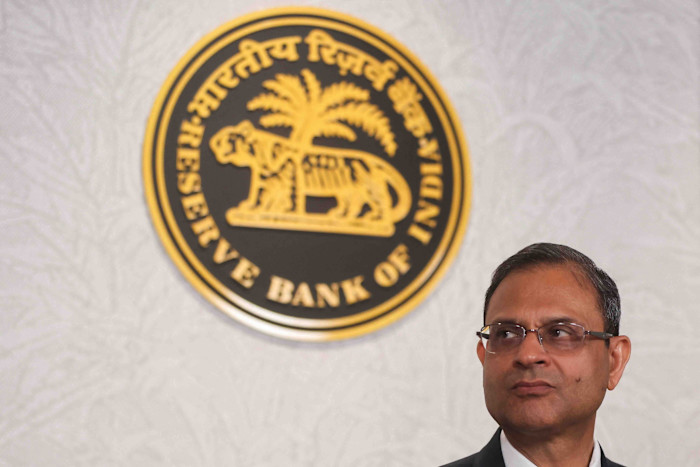
The Reserve Bank of India has now published final guidelines allowing domestic banks to finance acquisition deals. The rules are far more generous than draft guidelines had indicated, with the central bank allowing Indian banks to deploy up to 20 per cent of their eligible capital base to these kinds of deals. The draft rules had capped this at 10 per cent. Domestic banks can lend up to 75 per cent of the acquisition value and acquisition finance can be used for the purchase of both listed and unlisted companies. Several other use cases are also now open, such as increasing a shareholder’s existing holding in the company and financing IPOs, among others.
These sweeping new changes level the playing field for acquisition finance in India, in which only non-banking finance companies, private credit funds and foreign banks were earlier allowed to participate. The core banking sector was kept out of this in order to curb risk to balance sheets.
The new rules, which come into effect on April 1, will help expand India’s deal-financing market. The entry of traditional banks will increase competition among financing institutions, which will potentially reduce borrowing costs and expand funding access for corporate transactions. For large Indian banks, exclusion from acquisition financing had meant missed opportunities in providing end-to-end solutions for corporate clients.
This is also significant for corporate India, which will now have access to a cheaper pool of capital to help accelerate consolidation and strategic expansion. Deals in India are still rather small compared with global peers. Improved financing depth will help scale domestic M&A activity. Overall, this is a win-win for banks, corporates and the broader deal ecosystem.
Go figure
India’s wholesale price inflation came in at a 10-month high, according to data released by the government yesterday. However, both wholesale and consumer price rises are still well within the central bank’s expectations. India has changed the base year to 2024 for calculating consumer price inflation. Here are some key figures for January.
1.81%
Wholesale price inflation
1.4%
Wholesale food inflation
2.75%
Retail inflation
Quick question
Do you worry that artificial intelligence will take your job within the next five years? Tell us here.
Buzzer round
On Friday, we asked you to name the musical comedy with an iconic scene involving two dogs eating a bowl of spaghetti?
The answer is the Walt Disney classic Lady and the Tramp.
Vivek Kumar was first with the right answer, followed by Aniruddha Dutta, Mahithi Pillay and Ranjan Kumar Sinha. Congratulations!
Thank you for reading. Today’s India Business Briefing is edited by Mure Dickie. Please send feedback, suggestions (and gossip) to indiabrief@ft.com.