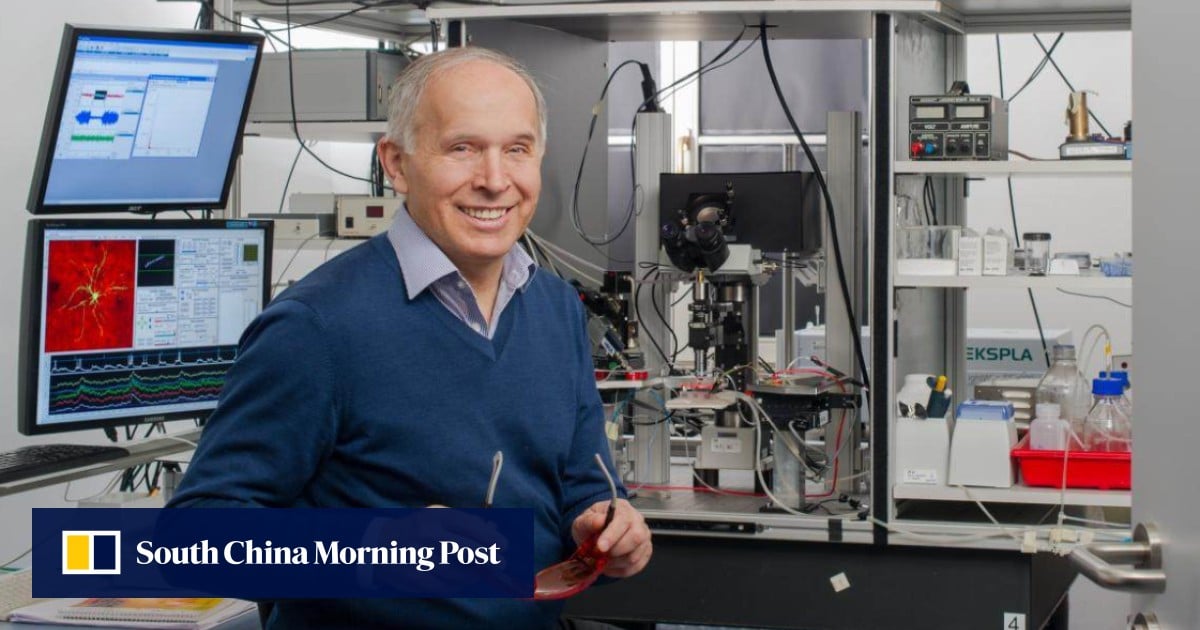
Konnerth pioneered the in vitro brain slice patch-clamp recording method – a technique that has become a cornerstone of modern neuroscience – and made fundamental discoveries in synaptic transmission and plasticity.
Advertisement
The technique uses a glass microelectrode to form a seal against the surface of a brain cell, preventing electricity from leaking away and allowing scientists to measure the electrical currents moving through a single “gate” in the cell’s membrane.
In 1989, Konnerth – working with Bert Sakmann, Frances Edwards and Tomoyuki Takahashi – helped transform the technique from concept to a standard method. They extended its use from isolated cells to neurons still connected within slices of brain tissue. This breakthrough laid the foundation for modern slice electrophysiology.
Advertisement
In 2003, he and his team introduced an imaging method that, for the first time, enabled scientists to watch entire networks of brain cells in action, seeing every individual cell at once. This technique is now widely used to study how the brain controls behaviour.