Beijing has issued a central directive to dismantle the administrative walls dividing China’s electricity sector, signalling a decisive shift towards a unified national power market designed to support the country’s energy security and green transition.
The goal is to evolve from a collection of isolated provincial markets into an effective and open national energy market, ensuring a high-level, dynamic balance between power supply and demand, according to the State Council’s new guidelines issued on Wednesday.
Advertisement
To achieve this ambition, the document outlined a road map for the next decade with two steps: to “basically” establish a unified national power market by 2030 and to have the system “fully in place” by 2035.
By 2030, China aims for market-traded electricity to hit 70 per cent of its total power consumption. Central to this vision is the full-scale formal operation of a nationwide spot market, allowing for the buying and selling of power, supported by synchronised technical standards and a market-based pricing mechanism that ensures fair competition across provincial lines.
Advertisement
By 2035, Beijing envisions the full realisation of a mature, unified national power market, which would allow for better integration of interprovincial and local trading, thereby enabling the optimal allocation of energy resources on a national scale.
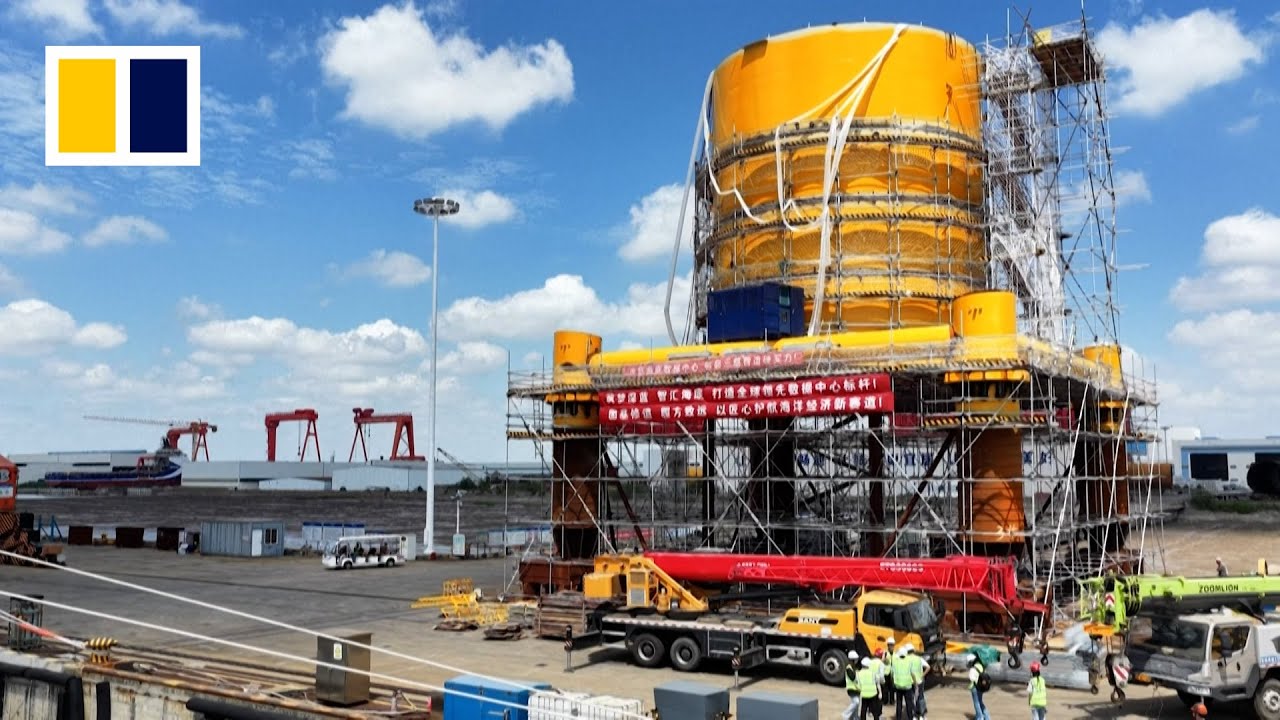
China trials underwater data centres to solve energy woes
China trials underwater data centres to solve energy woes