Good morning and welcome back to FirstFT Asia. In today’s newsletter:
China’s dangerous air encounters near Taiwan
Can Takaichi change Japan’s constitution?
Wall Street’s anything-but-tech trade
Chinese fighter jets carried out unusually dangerous manoeuvres near Taiwanese F-16 aircraft during military exercises that the People’s Liberation Army conducted around Taiwan in December.
What to know: The manoeuvres included a J-16 fighter firing flares at a Taiwanese aircraft during the exercise, according to people familiar with the incidents and a Taiwanese defence ministry report shared with the US military. One person briefed on the incidents, which occurred on December 29, said the “risky and provocative” acts followed a pattern of aggressive behaviour towards China’s neighbours in recent months.
In another episode that occurred north-west of Taiwan, a Chinese J-16 flew just underneath a Chinese H-6K bomber, in a “piggybacking” tactic designed to disguise the presence of the fighter jet from Taiwanese radars. “When they were discovered, the Chinese pilot flipped his plane on its side and flashed the missiles under its belly,” said one person briefed on the encounter.
Go deeper: People familiar with the December incidents suggested that PLA pilots were being pushed to do things beyond normal training, in a possible sign that President Xi Jinping’s military purges might be disrupting the PLA command. Read the full story for expert insights on China’s dangerous air manoeuvres.
Here’s what else we’re keeping tabs on today:
Economic data: China publishes CPI and PPI inflation figures for January. The US reports monthly employment data.
Reserve Bank of Australia: Andrew Hauser, deputy governor of Australia’s central bank, will participate in a fireside chat at the Australian Chamber of Commerce and Industry and Business Sydney business leaders’ lunch.
Five more top stories
1. Indonesia is preparing to send up to 8,000 troops to Gaza in support of US President Donald Trump’s peace plan for the conflict-ravaged region. The country, which has the world’s largest Muslim population, is the first nation to publicly commit soldiers to the mission. Here are more details.
2. Howard Lutnick said he visited Jeffrey Epstein’s island with his family in late 2012 as the US commerce secretary was grilled at a Senate hearing by lawmakers on his contacts with the late sex offender. Documents released recently by the Department of Justice revealed he had more extensive contacts with the financier than previously thought.
More Epstein news: The disgraced financier paid $100mn to Victoria’s Secret boss Les Wexner in 2008 after the retail billionaire claimed Epstein stole hundreds of millions of dollars from him, according to a report by US prosecutors.
3. Tsuyoshi Hasebe will become the new chair and group chief executive of Nikkei as Japan’s largest business-focused media company — the owner of the FT — adapts to the rise of generative AI and rapid change in its domestic and international markets.
4. Paramount has sweetened its $108bn hostile bid for Warner Bros Discovery, offering shareholders an additional “ticking” fee that will compensate them if regulators delay completion of the transaction. The move raises the stakes of Paramount’s high-profile battle with Netflix for control of one of Hollywood’s most coveted content libraries.
5. Bangladesh will be able to export garments made with US material to America tariff-free in a big win for the world’s second-biggest garment producer, giving it an advantage over competitors in India. Here’s more on the deal.
News in-depth
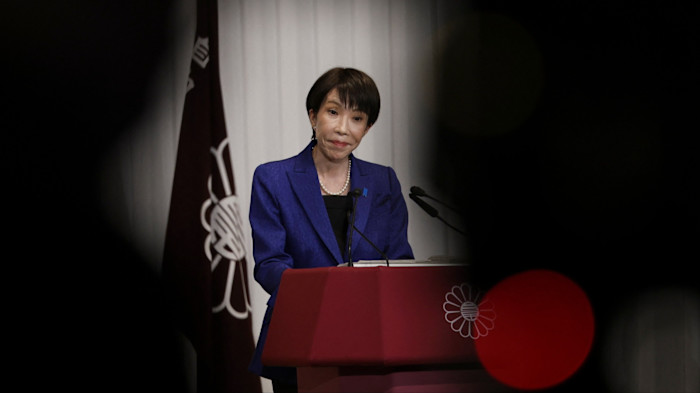
Japan’s Prime Minister Sanae Takaichi wasted little time this week celebrating her record electoral victory before declaring her ambitions to tackle something even greater: amending the country’s constitution. What changes is she likely to target? And is such an undertaking realistic? Read more in today’s explainer.
We’re also reading . . .
Icicle weighs IPO: The owners of the Chinese luxury retailer are exploring a listing in either Hong Kong or Paris, people with knowledge of the situation said.
Data centres in space: Elon Musk’s desire to put computer infrastructure into orbit is central to his $1.25tn plan to merge SpaceX with xAI.
Takaichi landslide: What the Japanese PM’s stronger political mandate means — and doesn’t mean — for growth, inflation and financial markets.
Is this the way the world ends? Romantic relationships with AI models will not heal the disconnect between young men and women, argues Sarah O’Connor.
Chart of the day
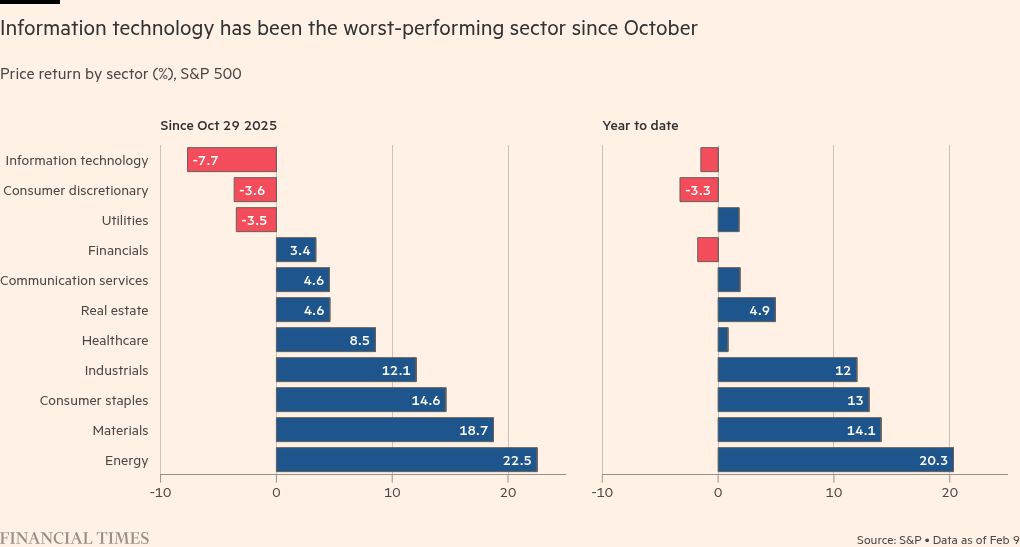
Investors have piled into supermarkets, energy companies and manufacturers this year in an anything-but-tech trade that has powered a violent rotation beneath the surface of the US stock market.
Take a break from the news . . .
A growing body of research suggests the shingles vaccine could also prevent and slow the progress of cognitive decline, writes science commentator Anjana Ahuja.