Unlock the Editor’s Digest for free
Roula Khalaf, Editor of the FT, selects her favourite stories in this weekly newsletter.
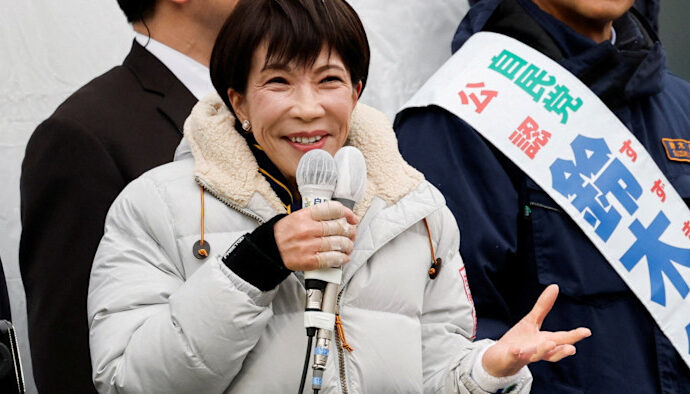
Voters in Japan headed to the polls in an election that has transformed national politics and appears on course to hand a historic power boost to the country’s first female prime minister.
Sunday’s election to the lower house of parliament follows the shortest campaign in Japan’s postwar period. It is being fought in February for the first time in 36 years, with large parts of the country under a record amount of snow that affected participation.
At 4pm, four hours before polls closed, voter turnout was 21.6 per cent, according to the internal affairs ministry, compared with just over 24 per cent at the same time of day during the last general election in 2024.
Early voting rates, however, have been higher than in previous elections, with about 20 per cent of the electorate casting their ballots by the end of Friday.
The unexpected decision by Prime Minister Sanae Takaichi to dissolve parliament on January 23 unleashed an intensive two-week battle between her ruling Liberal Democratic Party, the newly formed Centrist Reform Alliance and an array of fast-growing populist parties.
The ratio of female candidates, at 24.4 per cent, is a record high.
Polls suggest that Takaichi’s brand of blunt populism and pledges of wholesale change to her party and to Japan have won widespread support from an electorate hungry for a break with the traditional model of leaders.
“She represents the kind of politics and leadership Japan should have,” said Masahiro Kitano, a 62-year-old business owner in Tokyo. “I’m now looking forward to Japan’s future, I’m excited about it.”
Although Takaichi is on track to increase the LDP’s control of parliament, political analysts said the margin of victory would depend on voter turnout, the impact of bad weather in rural constituencies and whether younger urban supporters of Takaichi voted.
“I’m quite energetic, so I was happy to put on a coat and walk here,” said Yoshie Kato, an 82-year-old who lives in a retirement home in Tokyo. “But quite a lot of others in the home are staying in because of the snow.”
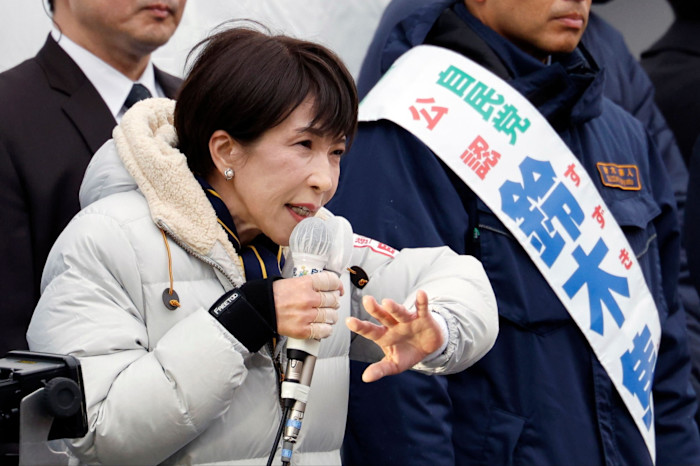
Apart from providing a clear mandate for Takaichi’s rightwing policies after the LDP selected her to lead the party in October, a big win on Sunday would revitalise the LDP after years of scandal and falling support.
The election has been called against a backdrop of inflation, economic strain for many households, rising levels of immigration and scepticism in bond markets that Japan’s finances can take the strain of Takaichi’s plans to increase government spending. Ahead of the weekend, the yen tumbled to about ¥157 against the dollar.
“Hope can’t be born from a politics that has remained hunkered down and defensive for decades,” Takaichi told a rally in Iwate prefecture on Friday.
During the campaign, she has criticised her own party’s under-investment in the economy and the tendency of corporate Japan to spend money overseas as the domestic population shrinks.
Yoshihiko Noda, co-leader of the CRA, the largest opposition party in parliament, is offering a moderate option to voters nervous about Takaichi’s hardline nationalism.
Speaking at the CRA’s final rally in Tokyo on Saturday evening, Noda said “people need to think about what comes next after the wild enthusiasm” for Takaichi, warning that she could change the nation’s pacifist constitution if she secured a large majority.
Maki Sugawara, a part-time nursing care worker in Kanagawa prefecture, said on Sunday she had voted for the leftist Social Democratic Party because of Takaichi’s plan to increase defence spending and “the fact that [the LDP] are still conservative, discriminating against foreigners and not raising wages”.
On Thursday, US President Donald Trump, who met Takaichi shortly after she became prime minister in October, endorsed her on X, saying she was a “strong, powerful and wise leader”.
Heading into the election, the LDP held 199 out of 465 seats in the lower house and governed through a coalition with the Japan Innovation Party.
Analysts said a realistic target for the LDP would be to achieve a “stable majority” of 244 seats, which would give it leadership of all lower-house committees.
A bigger victory of 261 seats would give it majorities on all those committees and hand substantial parliamentary powers to Takaichi.
About two-thirds of the lower-house seats are selected in single-seat districts. The remainder are allocated through a proportional representation system.