The favourites ahead of Thailand’s election this weekend want to do something many winners before them have failed to do: translate success at the polls into power.
South-east Asia’s second-largest economy has been mired in a decades-long cycle of political paralysis, with the country’s conservative royalist-military establishment blocking a series of reformist parties from forming a government.
This year, the progressive People’s Party is the frontrunner in early elections on Sunday, according to opinion polls. But Prime Minister Anutin Charnvirakul, a staunch supporter of the monarchy and military, is expected to continue to hold power, according to analysts.
“In Thailand, the winner doesn’t get to govern unless the winner is someone the establishment wants,” said Thitinan Pongsudhirak, a political analyst at Chulalongkorn University.
“Elections only partially count. There are powers beyond the electoral arena that call the shots on who gets to govern.”
The People’s Party’s previous incarnation won the 2023 election but was blocked over its calls to amend the country’s harsh royal defamation law.
Breaking that cycle and restoring political stability would be crucial to build credibility after a series of governments that lacked a popular mandate, analysts said. The turmoil has also damaged the economy, which has lagged behind its peers in south-east Asia and which experts say is in dire need of structural reforms.
Thailand has faced electoral subversion for years. Former premier Thaksin Shinawatra’s party won the 2019 polls but former general Prayuth Chan-ocha, who had seized control in a military coup, remained in power. Other election winners — including Thaksin and his sister Yingluck — were toppled in coups or by the constitutional court. The country has had three prime ministers since the 2023 election.
The People Party’s sustained popularity presents the biggest challenge to the conservative establishment that controls the country’s most powerful institutions.
Veerayooth Kanchoochat, one of the three prime ministerial candidates from the People’s Party, said the Thai people “would not tolerate” another attempt to disregard the election results.
“In the past two elections, the prime minister position has been stolen,” he told the FT. “More and more people feel that we need some fundamental changes.”
<div data-o-component="o-expander" class="o-expander o-expander__info-box" data-o-expander-shrink-to="hidden" data-trackable="clip-info-box" data-o-expander-collapsed-toggle-text="Show video info” data-o-expander-expanded-toggle-text=”Hide video info“>
With no single party expected to win a simple majority, the election will trigger the start of negotiations on forming a ruling alliance. Analysts say Anutin, who only took office in September, is likely to continue ruling through a coalition government between his Bhumjaithai Party and the Shinawatras’ populist Pheu Thai Party.
Following the 2023 polls, conservative parties joined hands with the Shinawatras — their old rivals — to block the People’s Party’s predecessor, Move Forward, from power.
That party was later dissolved and several of its leaders banned from politics for 10 years over their calls to reform the lèse majesté law, which criminalises insults to Thailand’s king and royal family and carries a maximum sentence of 15 years in prison.
The People’s Party has dropped the controversial proposal, which the constitutional court has ruled amounted to attempting to overthrow the country as a constitutional monarchy. But it was still pushing for more general reforms, said Veerayooth.
“Without reform to existing and long-term problems such as corruption, education and bureaucratic inefficiency, we can’t move forward,” he said.
Analysts said the People’s Party would need a considerable margin of victory to have a realistic shot at governing. In 2023, Move Forward won 151 of the 500 seats in Thailand’s lower house, making it the largest party in parliament.
“The party is definitely the frontrunner in terms of popularity, but it’s still unclear whether that will translate into constituency wins nationwide,” said Napon Jatusripitak, a visiting fellow at the Iseas-Yusof Ishak Institute.
Some experts say a similarly big win may be less likely this time.
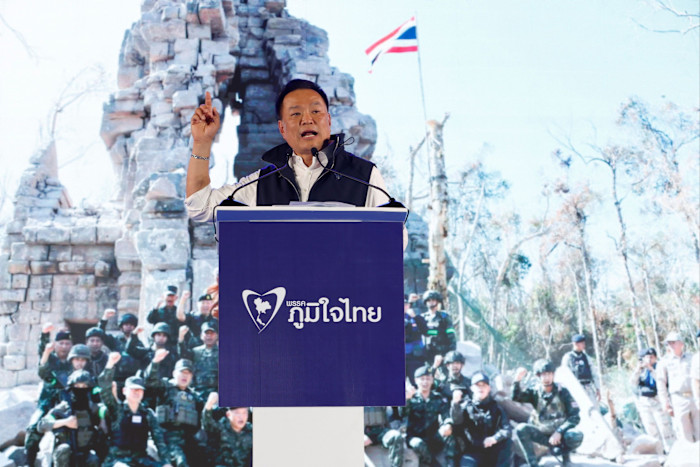
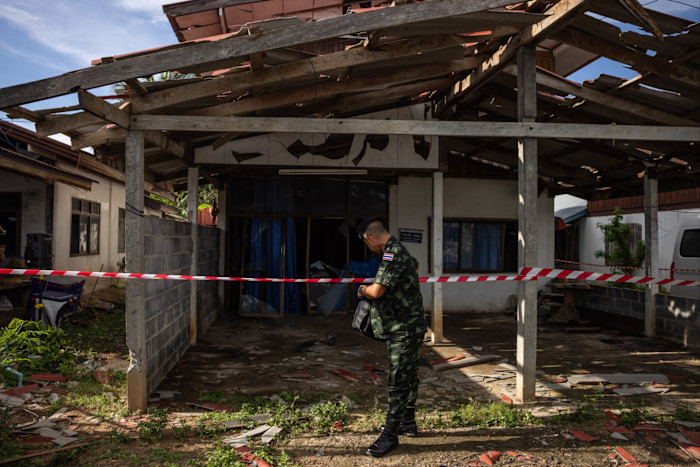
Anutin has been gaining ground on a wave of nationalistic sentiment following a border conflict with Cambodia that flared repeatedly last year, casting the pro-military Bhumjaithai as the protector of the country.
That had made the People’s Party particular vulnerable, as it had advocated in the past for reform of the Thai military and to abolish military conscription, Napon said.
Bhumjaithai came third in the previous election, with 70 seats. It has also benefited from recent defections from other parties as it has projected itself as the standard-bearer of conservative factions.
“We will have more support than the last election for sure,” Sihasak Phuangketkeow, Thailand’s foreign minister and another prime ministerial candidate for Bhumjaithai, told the FT. He added that the party was aiming for 130-150 seats.
Unlike the previous contest, the military-controlled senate will not have a say in picking the prime minister. This time, Thais will also be voting in a referendum on whether to begin the process of amending the 2017 military-drafted constitution.
For many Thais, the opportunity for change would be welcome.
“If you choose the same old parties, things will remain the same,” said 33-year-old Bangkok resident Peerapong Boonkijworaseth, who added he planned to vote for the People’s Party.
“If we deny the democratic system, no one is going to come here and invest.”
Thavaree Pongpirom, 45, who runs a satay stall on the outskirts of Bangkok, also expressed hopes for change.
“Young people are capable of many things. It’s going to be ridiculous if they are [blocked],” she said.