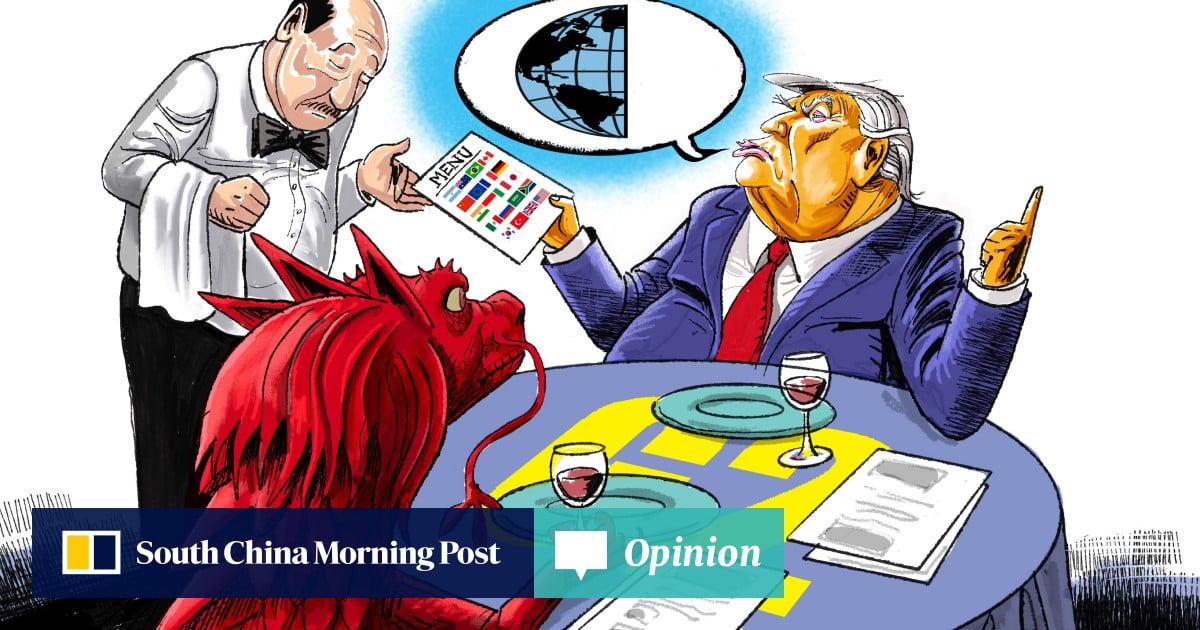
At Davos, US President Donald Trump declared he had “always had a very good relationship with President Xi” Jinping, calling the Chinese leader “an incredible man”, “highly respected by everybody”. Trump also praised TikTok’s decision to transfer parts of its US business to a consortium of US investors, thanking Xi on social media. This broadly friendly rhetoric is likely to be a signal of Washington’s keen interest in finalising a trade deal with the world’s second-largest economy.
Trump’s effusive praise for Xi stood in stark contrast to his dismissive, if not contemptuous, remarks for European allies.
So far, the Europeans have averted a full-scale crisis over Greenland through negotiations that reportedly include considerations such as giving America pockets of Greenland territory as sovereign military bases in the Arctic, a new theatre of geopolitical rivalry. For all the recent transatlantic tensions, the Nato security alliance is likely to persist.
Advertisement
Trump’s foreign policy orientation in his legacy years signals a potential openness to a Group of Two (G2) global order. Given America alone is not in a position to check China’s rise, most notably in cutting-edge technologies and manufacturing capacity, Trump’s administration appears to be quietly shifting to accommodate the possibility of a global “condominium” with China.
Despite a reputation for unpredictability, Trump has made his strategic goal crystal clear: a reassertion of American hegemony through coercive diplomacy and when necessary – as in Venezuela – brute force. Firmly of the Jacksonian foreign policy tradition, Trump has little patience for multilateral alliance-building or the niceties of international law.
Advertisement
This orientation is reflected in the latest US National Security Strategy, which omits specific mention of “great power rivalry”. Nor does it explicitly portray China as a rival or threat. The more recently released national defence strategy also signals a less supportive policy towards allies, who are advised to “take the lead against threats” that more directly affect them while the US offers “more limited support”.