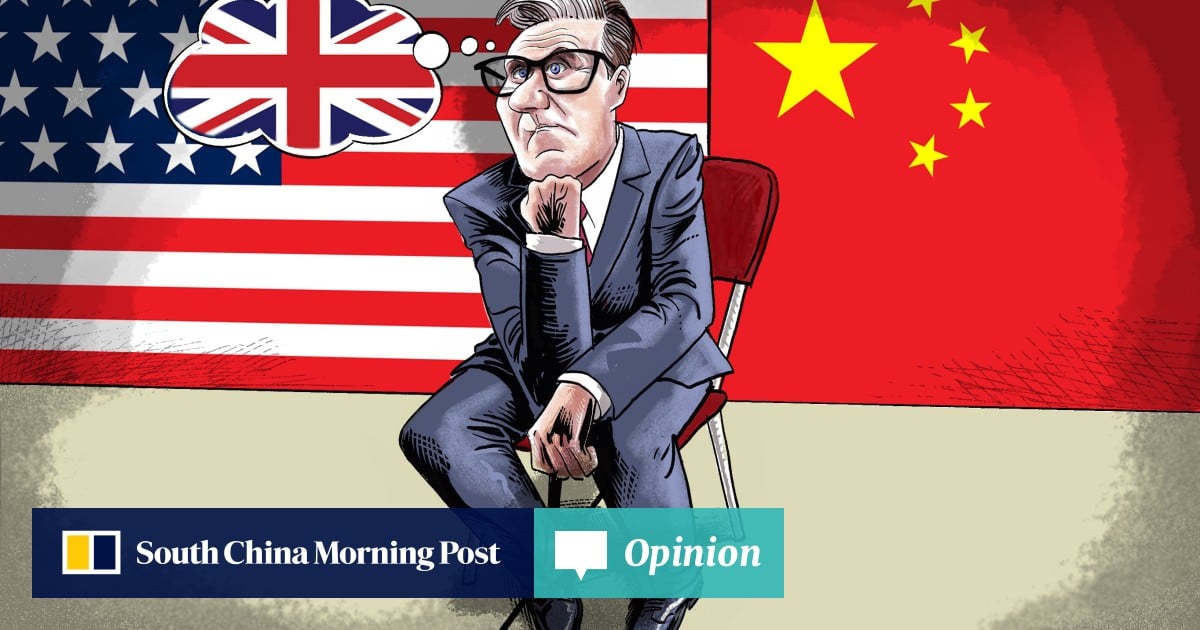
Starmer’s remarks are not diplomatic wordplay, but a declaration the United Kingdom will no longer be a simple passenger in a contest defined in Washington and Beijing.
Advertisement
Starmer’s message that Britain will not be forced to choose is in effect an admission this model has reached its limits. Heading to China is his way of signalling a new posture: the UK as a balancer, not just a loyal follower.
“We’ve got very close relations with the US – of course, we want to – and we will maintain that business, alongside security and defence,” Starmer said. “Equally, just sticking your head in the sand and ignoring China when it’s the second-biggest economy in the world and there are business opportunities wouldn’t be sensible.”
Advertisement
Clearly, the UK wants to stay firmly inside the US security camp while reopening economic and political channels with Beijing. This means trying to separate where it automatically follows Washington from areas it demands room for manoeuvre.