Notably, the increase in births in 2024 may have been due to the auspicious Year of the Dragon. It is believed that babies born in the dragon year will grow up to be smart and successful. This is likely to have affected the timing of births as seen in Hong Kong during dragon years of past 12-year cycles, such as in 2012, 2000 and 1988.
Hong Kong’s total fertility rate stood at 772 live births per 1,000 women in 2021; it is projected to increase to 943 this year. I estimate that in 2025, the city’s fertility rate was 730 and so the projection for 2026 is unlikely to be met, which could have a significant impact on future population projections in terms of school placements and housing needs. We are likely to have a shortfall of 6,000 schoolchildren from the estimate, leading to kindergarten and school closures.
Advertisement
Meanwhile, mainland China recorded only 7.92 million births in 2025, down 17 per cent from 9.54 million in 2024, the lowest recorded figure since 1949. The national population also fell by 3.39 million. Meanwhile, improved life expectancy in mainland China and Hong Kong has accelerated population ageing, rapidly increasing the share of those aged 65 or above and raising the social and healthcare burden on existing systems.
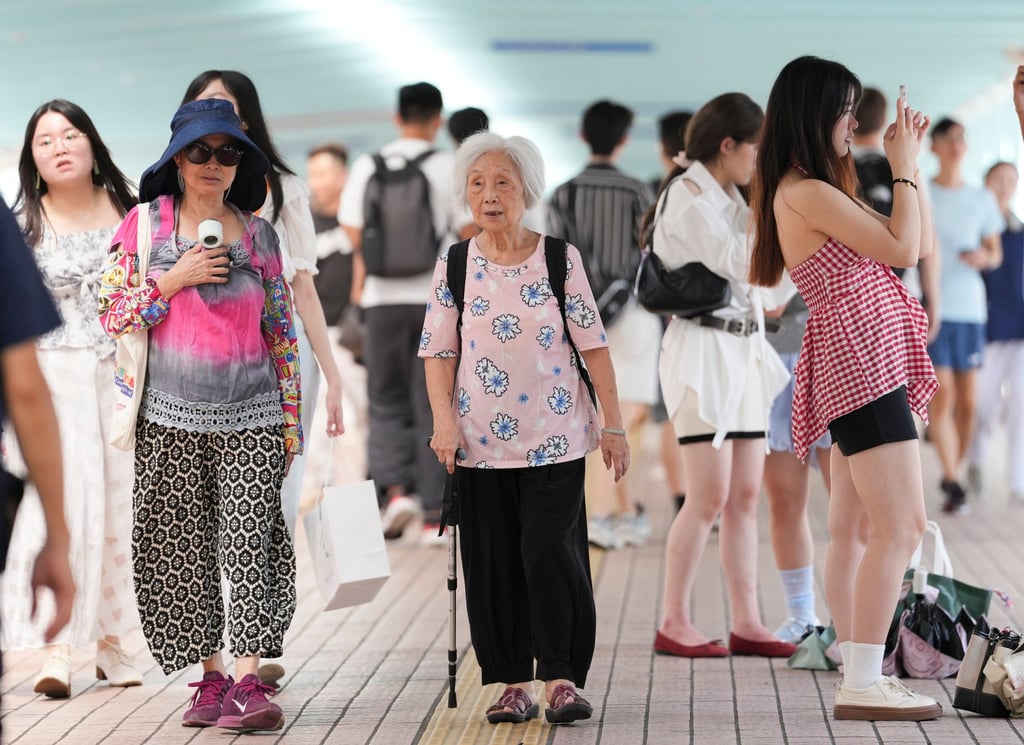
In Hong Kong, the proportion of older adults aged 65 or over hit 23 per cent in 2024; the city has already become super-aged. For mainland China, the corresponding figure was 15.4 per cent in 2023.
The results of a 2022 survey by The Family Planning Association of Hong Kong show that small family sizes are now the norm, with childless families being the most common (43.2 per cent), followed by one-child and two-child families at 27.4 per cent and 25.2 per cent, respectively.