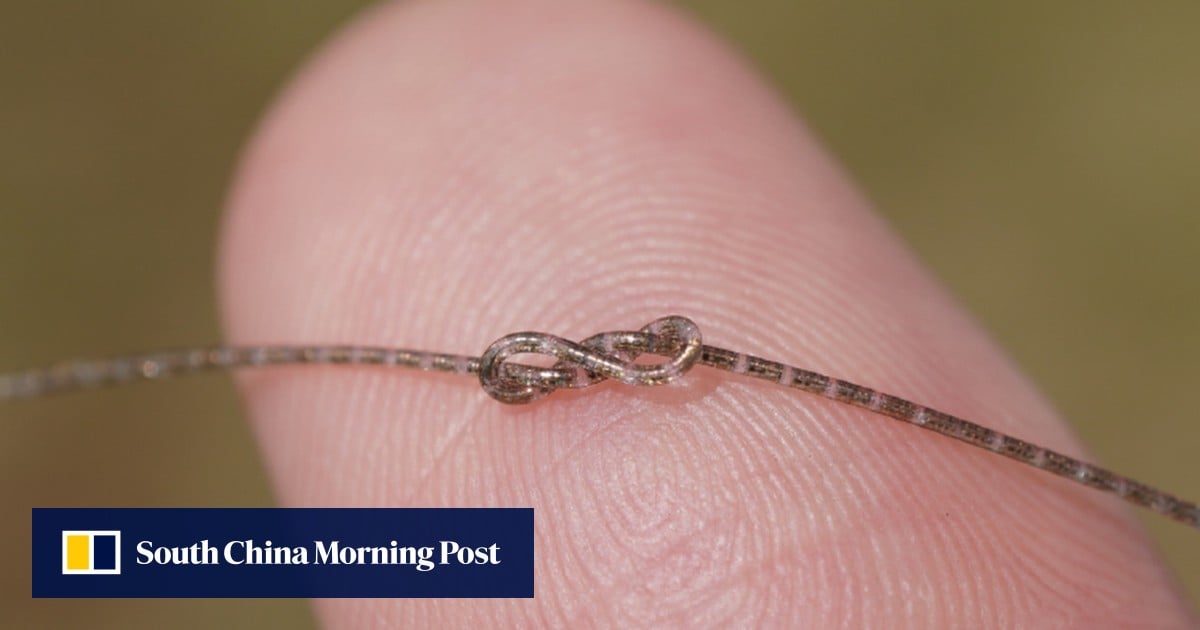
Scientists have now advanced fibre-based electronics that already enable power supply and sensing functions and have spurred the growth of electronic textiles by developing integrated circuits in threadlike form.
This allows the fibres to compute like chips or display information like transistors, effectively enabling machine-washable cloth to work like a computer or television.
Advertisement
The team developed a novel electronic device named a fibre integrated circuit (FIC). Instead of fabricating circuits on rigid planar substrates, the researchers built functional circuits on an elastic substrate, which was then rolled into a thin fibre resembling a scroll.
Advertisement
Although as thin as a strand of human hair, the fibre achieves a transistor density of 100,000 per centimetre, meeting the industry standard of traditional very large-scale integration while remaining fully flexible.