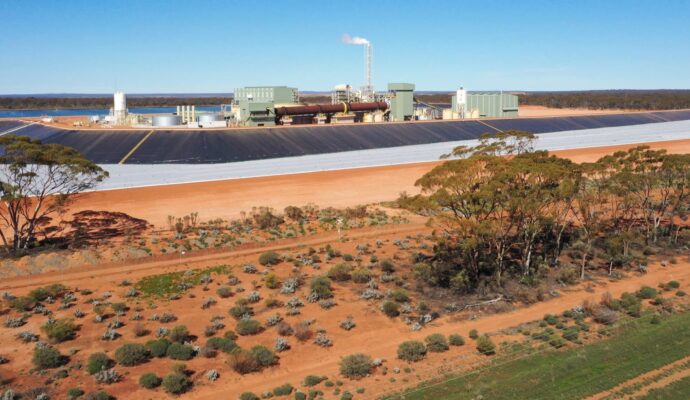
One of Japan’s biggest utilities this month admitted to manipulating data to downplay the effect of a large earthquake on a nuclear power plant under review for reopening.
The admission followed a security failure at Japan’s nuclear energy watchdog, in which an employee lost a work phone with contact details of staff involved in nuclear security during a personal trip to China.
The compliance lapses at Chubu Electric and the Nuclear Regulation Authority threaten confidence in Japan’s safety regime as the country tries to reopen its nuclear plants 15 years after a massive quake caused a tsunami that inundated reactors in Fukushima.
“We have severely damaged trust in Chubu Electric’s nuclear power operations,” chair Satoru Kasuno said this month after the regulator accused the company of “fabricating” data and scrapped a decade-long review process to reopen two reactors. “This is a situation that could undermine the very foundation of our nuclear business.”
The incident at Chubu Electric is not isolated. Japan’s nuclear energy sector has been dogged by six other major incidents since 2008, according to a tally by Nomura, in a nation where safety is paramount because of the frequency of earthquakes.
Since the Fukushima meltdown, academics have praised Japan’s NRA for taking a stringent and methodical approach to regulating the sector. As a result, 15 reactors have restarted — a slow pace that has irked utilities and their investors.
But experts said the incidents showed complacency creeping in as the memory of Fukushima, one of the world’s worst nuclear accidents, faded.
“The institutions are working fine, but the individuals are not,” said Kazuto Suzuki, a University of Tokyo professor who led a 10-year anniversary probe into the disaster. “This is the reverse of Fukushima . . . the bad guy is still the management of the electric companies.”
Chubu’s nuclear plants are crucial because they supply Japan’s carmaking heartland, including Aichi prefecture, home of Toyota. Their restart would be a “bonus” for lowering power costs for the world’s largest carmaker, said Suzuki.
Chubu Electric said staff had selected inappropriate data that deviated from the regulator’s methodology to estimate the maximum potential shaking in an earthquake.
Known as the standard ground motion, the figure is critical to determining whether a plant’s design can safely withstand large seismic events.
It remains unclear whether senior management knew about the inappropriate selection of seismic data. An independent committee will undertake an investigation.
NRA chair Shinsuke Yamanaka said it would be necessary to restart the entire review process and called the provision of flawed data “reckless” and “an outrageous act against safety regulations”.
The restart of Chubu’s two Hamaoka reactors has been thrown into uncertainty, with the review of the applications abandoned last week. Before the incident, analysts had pencilled in Unit 3 restarting in 2029 and Unit 4 in 2032.
“Previous incidents suggest that it will take three years from the suspension of the regulatory review to recommencing it,” said Shinichi Yamazaki, an analyst at Nomura.
Local government officials, however, have suggested they might never allow the plant to reopen. Masaru Shimomura, mayor of Omaezaki, where Hamaoka is located, said this month: “If the reliability of the submitted data itself is called into question, then everything is undermined.”
Prominent seismologists, including Kobe University’s Katsuhiko Ishibashi, have dubbed Hamaoka “the most dangerous” of Japan’s nuclear plants since it sits near the Nankai Trough. The government has warned that a big earthquake on the 900km trench where tectonic plates intersect could kill almost 300,000 people and cause $1.8tn worth of damage.
While some analysts viewed the incident as isolated to Chubu, others expressed concern it could affect the pace of reactor restarts and might reflect deeper cultural issues in Japan’s power companies.
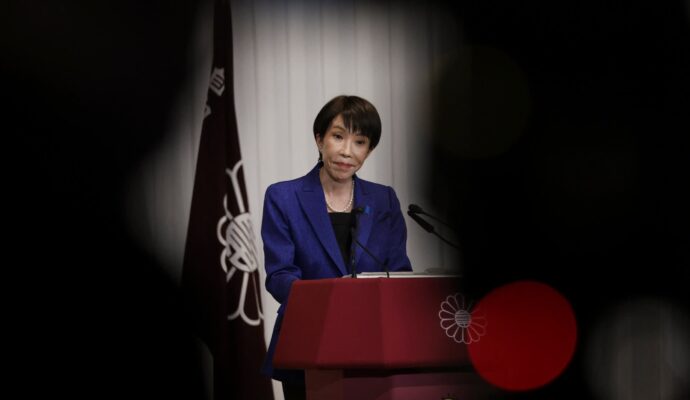
Japan shut down 54 reactors after the Fukushima meltdown, but momentum has gathered under Prime Minister Sanae Takaichi to turn them back on to meet surging demand from AI data centres and to bring down energy bills for households suffering from the rising cost of living.
Last year, the government set a target for 20 per cent of Japan’s electricity to come from nuclear sources by 2040.
Kashiwazaki-Kariwa, the world’s biggest nuclear plant, attempted to restart a reactor on Wednesday evening after it was given the green light in November, a major milestone for nuclear’s revival.
However, it was temporarily shut down on Thursday after a malfunction of electrical components in the control panel that operates the reactor’s control rods triggered an alarm. The restart attempt had already been postponed by a day after problems with the alarm system were detected.
The plant, operated by Tokyo Electric Power Company, which was responsible for Fukushima Daiichi, also faced a set of safety blunders in 2021 that led to the approval process taking about three years longer than expected.
As well as the failure to complete renovations needed to prevent fires, one Tepco employee used a colleague’s ID card to gain access to the main control room and problems were found with intruder-detection equipment.
Norimasa Shinya, an analyst at Mizuho Securities, said the lapse at Chubu Electric would have little impact on nuclear restarts in the short term but could affect Japan’s power supply over a five-year horizon.
“This has a very negative impact on the potential restart of reactors in the 2030 to 2035 timeframe,” he said. “The Chubu incident is extremely serious, and there’s a high risk this affects the company’s credibility.”