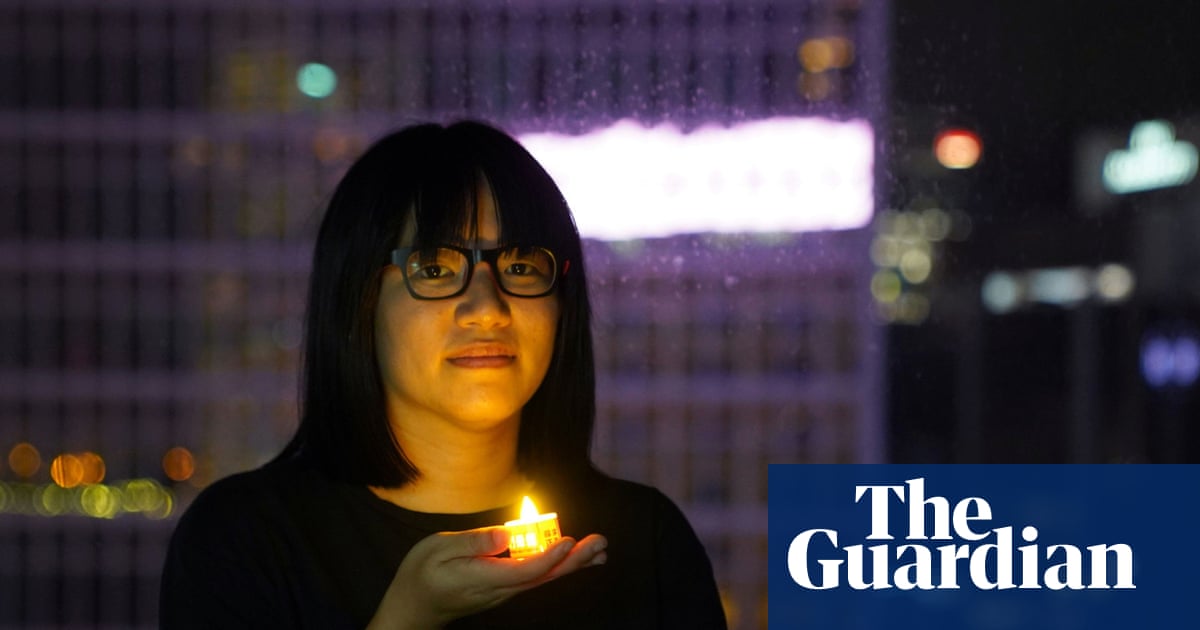
The national security trial of three pro-democracy activists who organised an annual memorial in Hong Kong to mark the Tiananmen Square massacre is to begin on Thursday.
Chow Hang-tung, Lee Cheuk-yan and Albert Ho are charged with inciting subversion under Hong Kong’s national security law. Their trial is one of the most high-profile national security cases to be heard in Hong Kong since Beijing imposed the law in 2020. The defendants face a maximum penalty of 10 years’ imprisonment if convicted. The law has a near-100% conviction rate.
The three defendants were key members of the Hong Kong Alliance in Support of Patriotic Democratic Movements of China, the group that for decades organised the annual vigil for the victims of the 1989 Tiananmen Square massacre in Beijing.
Until the vigil was banned in 2020 during the Covid-19 pandemic, amid a crackdown on free expression in Hong Kong, it was the only mass memorial event for the massacre on Chinese territory. For decades, it was a symbol of Hong Kong’s autonomy from mainland China, an identity that persisted even after Hong Kong was returned from British to Chinese rule in 1997.
Chow, an internationally lauded human rights barrister, has been detained for more than four years awaiting trial. Lee and Ho, former Hong Kong legislators, have also been previously sentenced for convictions of unauthorised assembly in relation to protests and vigils held during the 2019-20 pro-democracy movement.
In 2021, speaking before his sentencing for his involvement in the 2020 Tiananmen Square vigil, Ho said that he was on “the right side of history”.
Ho was part of a group of activists who were convicted for organising and participating in an unauthorised assembly in August 2019. In 2024, that conviction was upheld by judges on Hong Kong’s top court, a panel which included the British judge David Neuberger.
The annual vigil organised by the Hong Kong Alliance attracted tens of thousands of attenders each year. Organisers estimated that 180,000 people attended the 2019 vigil, which was held days before Hong Kong erupted in a series of protests against the Chinese Communist party’s tightening grip on the city.
Under increasing pressure from the authorities, the Alliance disbanded in 2021.
Thursday’s trial will be heard in front of three judges handpicked by the government to hear national security cases, rather than a jury.
One of the judges, Alex Lee, recently presided over the trial of Jimmy Lai, the pro-democracy former media mogul who was convicted on national security charges in December. The British citizen is awaiting sentencing and faces spending the rest of his life in prison.
Other national security cases are making their way through the courts. Wong Kwok-ngon, a political commenter, appeared in court on Tuesday, accused of allegedly divulging details of a national security police investigation in the days after the Wang Fuk Court fire in November that killed more than 160 people. Wong is charged under Hong Kong’s homegrown national security law, known as article 23, which is separate from the Beijing-enacted security law.
Sarah Brooks, Amnesty International’s deputy regional director for Asia, said: “This case is not about national security – it is about rewriting history and punishing those who refuse to forget the victims of the Tiananmen crackdown.”
Mark Clifford, the president of the Committee for Freedom in Hong Kong Foundation, said: “The Chinese regime will stop at nothing to erase history and silence those who seek to keep the truth of Tiananmen alive. Chow Hang-tung, Lee Cheuk-yan and Albert Ho are courageous patriots who have devoted their lives to representing Chinese people denied basic rights. Sadly, they are also symbols of how far Hong Kong’s once-respected justice system has fallen, persecuted for demanding that Beijing keep its promises to the people of Hong Kong.”