Unlock the Editor’s Digest for free
Roula Khalaf, Editor of the FT, selects her favourite stories in this weekly newsletter.
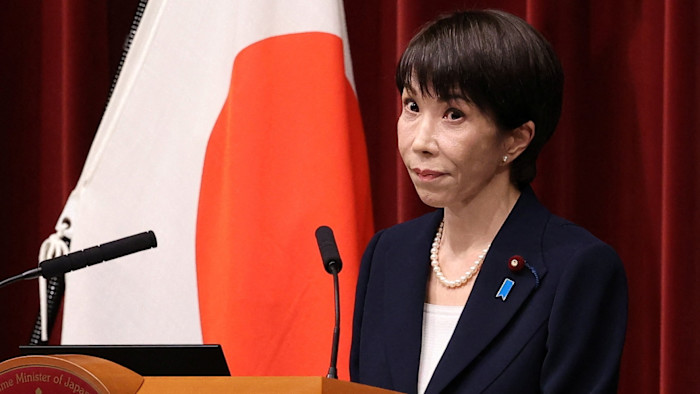
Japanese Prime Minister Sanae Takaichi’s decision to call a snap election after just three months in office is a roll of the dice. If her Liberal Democratic Party does well — and certainly if she can win it back a majority in the lower house of parliament — Takaichi will be the first leader of a Japanese government to enjoy a strong personal mandate since her late mentor Shinzo Abe stepped down in 2020. But if the LDP fails to do significantly better than its disastrous showing in 2024, she will almost certainly become just another name in the long roll of brief and largely inconsequential Japanese premiers.
Takaichi’s gamble reflects strong public approval for her showing since she became Japan’s first female prime minister in October. On the international stage, she adroitly managed a visit by mercurial US President Donald Trump and has made a real effort to strengthen long-prickly ties with Seoul, hosting a strikingly amicable summit with South Korea’s President Lee Jae Myung.
It has not all been easy going. Takaichi’s unusually blunt statement in parliament that Tokyo might consider military action should China attack Taiwan infuriated Beijing, which retaliated with punitive economic measures. But she has wisely not fuelled the dispute further and polls suggest voters blame a more assertive China for the tensions.
Takaichi’s biggest economic move so far, a ¥21.3tn ($135.4bn) stimulus package, included measures to ease public dismay at rising living costs, such as gas and electricity subsidies, rice coupons and cash handouts for parents. But it has only compounded concerns about Japan’s fiscal sustainability. Such worries have been fuelled by her signal of support for a two-year suspension of the 8 per cent sales tax on food. Japan’s ultra-long-term borrowing costs on Tuesday rose above 4 per cent for the first time.
It is a reflection of Japan’s thirst for dynamic leadership that this 64-year-old veteran conservative has felt like such a breath of fresh air. The question is whether Takaichi’s personal popularity will translate into votes for maler and staler LDP candidates around the country. Polls suggest support for her party is little improved.
The election could also hinge on a political realignment prompted by the collapse under Takaichi of the LDP’s long alliance with Komeito, a smaller party founded in the 1960s by the head of the Soka Gakkai Buddhist sect. Komeito opposes the kind of defence spending increases Takaichi wants. It has now agreed to a parliamentary union with the biggest opposition party, the Constitutional Democratic Party of Japan. Komeito previously mobilised supporters to back LDP candidates in single-seat constituencies it did not contest itself. If it can as effectively muster support for its new “Centrist Reform Alliance” with the CPDJ, then the LDP could be in trouble.
If Takaichi’s bet pays off, many will welcome a period of stronger leadership in Tokyo. There are many areas where she could usefully spend increased political capital. Examples include making Japan less reliant on the US for its defence, and restarting idled nuclear power stations or closing them if they are really not safe. She could also focus stimulative spending on those who most need it rather than on broad handouts, and redirect government support to industries with real growth potential.
Yet the rise in bond yields also hints at the potential risks of an emboldened Takaichi. Investors sense she could be more fiscally profligate if unshackled from the restraints of minority rule. A revival of past hostile rhetoric on foreigners would be equally unwelcome, given the importance of immigrants and tourists to Japan’s economy. Takaichi has so far shown a sure political touch, but she still has a lot to prove on policy.