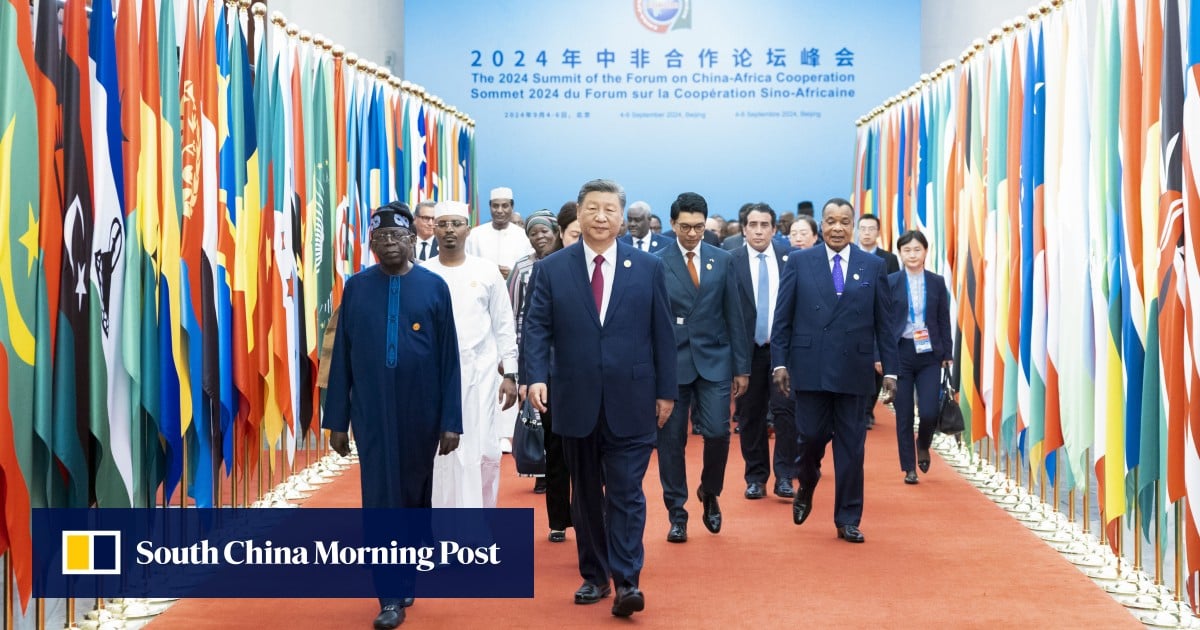
As US President Donald Trump’s tariff increases have roiled global markets and strained America’s alliances in recent months, China has been pursuing the opposite strategy: keeping import duties low and pledging further cuts as a way to secure strategic resources and build ties across the developing world.
China’s average effective tariff rate – calculated by dividing total duties raised by the value of imports – has fallen steadily over the past decade and came to just 1.3 per cent in 2025, according to the Economist Intelligence Unit (EIU).
Advertisement
Meanwhile, the US’ effective tariff rate soared to 11.2 per cent last year – the highest average level since 1943 – according to a January report by the Tax Foundation, a US-based research organisation.
Advertisement
For China, applying low or no tariffs has helped ensure that its importers can find eager overseas suppliers of industrial raw materials and fuel, as neither side is obliged to pay duties, according to Xu Tianchen, a senior economist at the EIU.
“China applies low or zero tariff rates to commodities, which account for the lion’s share of its imports,” Xu said, citing crude oil, natural gas and iron ore as three key inputs. “The effective tariff rate … is low and has been falling.”