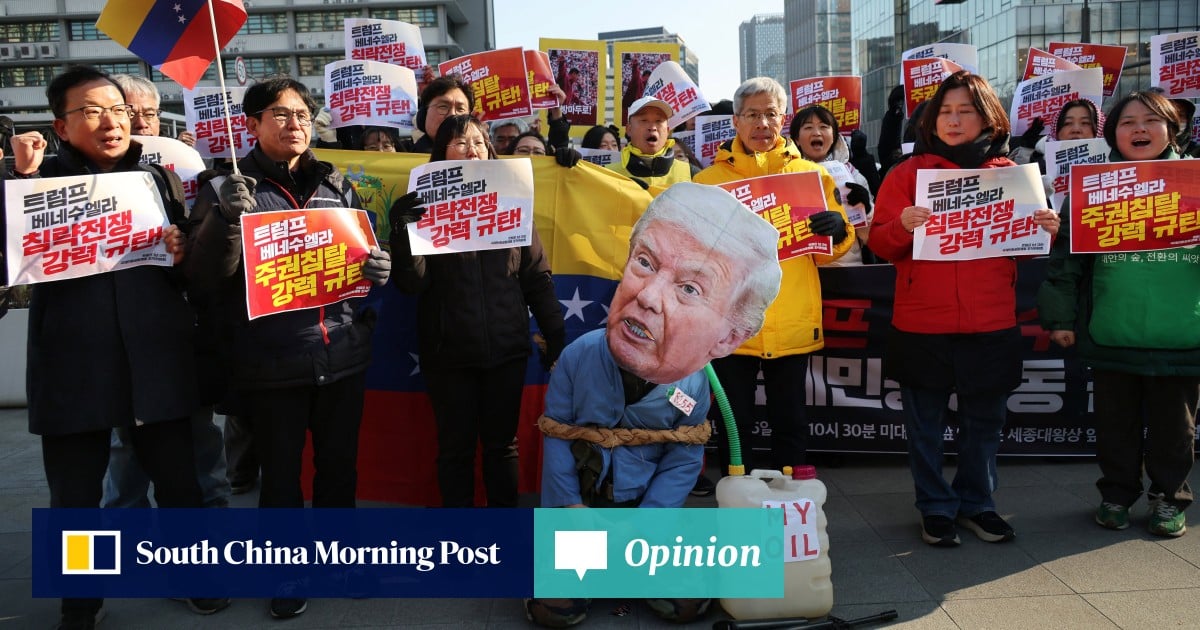
Venezuela ranks among the world’s top countries in terms of natural resources. Militarily, it sits somewhere in the middle of global rankings – its military component is ranked 32nd out of 193 countries in the academy’s index – sufficient for domestic control but inadequate for deterring external pressure. Economically, however, its position is close to the bottom, as its economic system has proved unable to convert its resource wealth into sustainable economic power.
Advertisement
The national power assessments also suggest only two fully fledged systemic cores have effectively formed in today’s world: China and the US. In both, resources, the economy, finance, technology, human capital and military capacity are combined into relatively self-sustaining systems.
Advertisement
The aim is to rebalance resource constraints and strengthen the overall components of national power to compete once again for leadership, this time at the level of a macroeconomic region. In essence, the 21st century is increasingly defined not by competition between states, but between macroeconomic regions.