Unlock the Editor’s Digest for free
Roula Khalaf, Editor of the FT, selects her favourite stories in this weekly newsletter.
The world’s biggest soy sauce producer is looking to dealmaking for global expansion as Japanese food companies seek to capitalise on the cuisine’s popularity abroad amid a shrinking population at home.
The international head of Kikkoman, which supplies more than half of the US’s soy sauce, said the 108-year-old company would consider mergers and acquisitions as it hit the limits of organic expansion abroad.
“Compared to before, I feel the merits of acquisitions are higher,” Osamu Mogi told the FT, citing a tight labour market in the US. “Hiring talent in the US has become very difficult. In that sense, if we acquired a company that has people, we might be able to secure talent.”
While Japanese beverage groups have been a major force of global consolidation in the past decade — including Suntory’s $16bn takeover of Beam and Asahi’s acquisitions of Peroni, Grolsch and Carlton & United — food producers such as Kikkoman, Ajinomoto and Kewpie have traditionally favoured investment to expand into overseas markets.
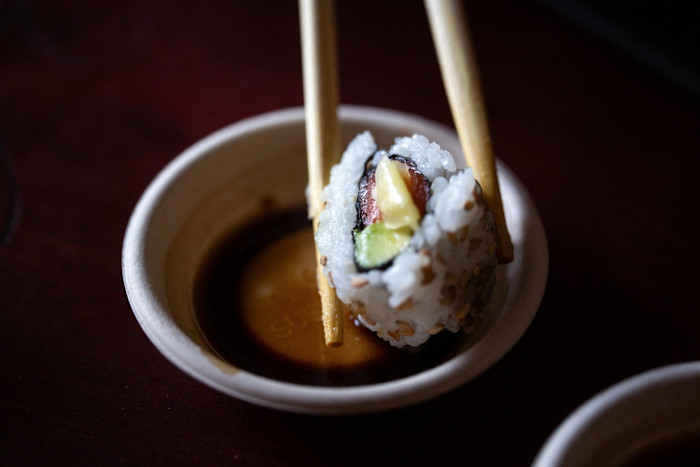
Japan’s food companies have looked abroad for growth as the population at home ages and Japanese cuisine’s international popularity rises. M&A is emerging as a key tool to do so quickly.
“We’re seeing the curtain open on a new world of opportunities for Japanese companies,” said Randy Capocasale, principal at Oliver Wyman, who advises Japanese consumer goods groups. “There’s greater recognition of the ability to use M&A as a tool not just in Japan but abroad and the speed it can give Japanese companies in entering new markets.”
In July, Mitsubishi Corporation struck a $1bn deal to acquire Norway’s Grieg Seafood and extend its global reach in salmon farming.
Dubbed a “global company with a Japanese soul”, Kikkoman generates 80 per cent of its ¥709bn ($4.7bn) in revenue and 90 per cent of its ¥77.3bn in gross profit from overseas, with the majority coming from the US. Mogi said Kikkoman was exploring options to buy companies that could expand its sales channels, product line-up or marketing capabilities.
Japanese food companies’ overseas operations tend to be more profitable than their domestic ones because they can charge higher prices. Japan experienced deflation for about 25 years, but with the return of inflation in 2022, companies have been under pressure to improve margins by raising prices and cutting less lucrative product lines without irking consumers.

Taro Komura, an executive in charge of frozen foods at Ajinomoto, the first company to commercialise monosodium glutamate, said M&A would be necessary to achieve the division’s target of annual double-digit growth in the next five years.
“We really need to accelerate our speed of business development,” he said. But he cautioned that M&A should be “complementary” rather than “big”, as the company’s frozen dumplings, fried rice and fried chicken already had a solid base to expand from.
Capocasale said the M&A push would be “careful, considered and measured” as many Japanese food companies wanted to see a successful example before going ahead with deals.
Profitability in the US is under threat from tariffs of 15 per cent on imports from Japan. Kikkoman’s US wholesale margins slipped in the first quarter of its 2025-26 fiscal year but subsequently stabilised. The company said it could absorb the extra costs through price rises without a big impact, while US soy sauce was made with locally sourced soyabeans.
Even so, Japanese food is going through a worldwide boom in popularity, in part driven by returning tourists and consumers’ taste buds diversifying beyond sushi. Kikkoman is building a $560mn soy sauce factory in Wisconsin, its third such plant in the US and its ninth globally.
Mogi said Americans spent 1 per cent of their grocery shopping on Japanese ingredients, but he saw an opportunity to double that as the company shifted from supplying restaurants to stocking shelves of supermarkets and other retail outlets.