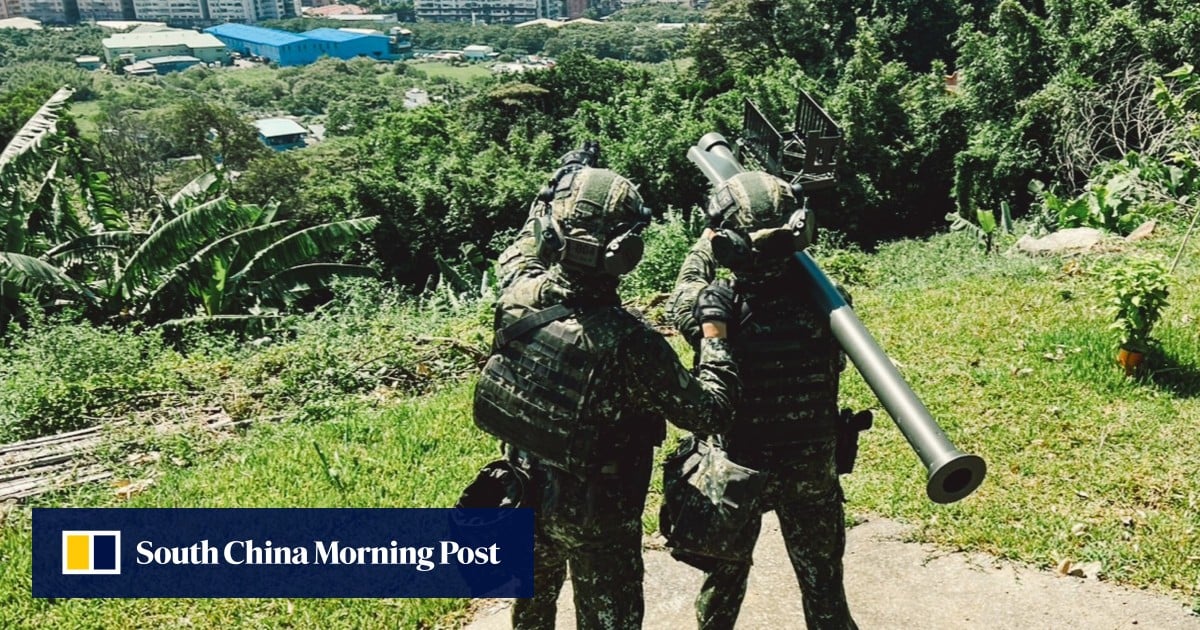
The asymmetric warfare strategy would see Taiwan become like a porcupine – covered in “quills” such as lightweight, shoulder-launched air defence missiles to fend off the much larger and better armed PLA.
Advertisement
Influenced by US military advisers and backed by American arms sales, the strategy relies on deploying a vast number of small and low-cost combat platforms like FIM-92 Stinger portable air defence missiles and Switchblade 300 anti-tank loitering munitions, according to the article.
They would be used to launch “successive waves of attacks” on high-value targets like tanks, warships and radar systems in a war of attrition.
Advertisement
It said the aim was to turn the island into a fortress of layered defence, making use of the urban landscape and geography to drag the PLA into a protracted and costly conflict.
The article said Taiwan’s military was integrating new weapons – specifically Himars rocket systems and M1A2T tanks – with Taiwanese-made equipment like Land Sword II air defence missiles.