The US’s first overt attack on an Amazon nation last weekend is a new phase in its extractivist rivalry with China. The outcome will decide whether the vast mineral wealth of South America is directed towards a 21st-century energy transition or a buildup of military power to defend 20th-century fossil fuel interests.
Although this onslaught was ostensibly aimed at one corrupt dictatorship in a miserably dysfunctional country, the ramifications are far wider.
Venezuela’s oil is the obvious – but not the only – objective. When the former Guardian journalist Seumas Milne and I interviewed Nicolás Maduro in 2014, Maduro warned of the lengths the US was willing to go to “get their hands on Venezuelan oil”. The country’s Orinoco Belt contains easily the biggest reserves in the world – more than 300bn barrels, a fifth of global stock. Donald Trump said US companies would tap these fossil fuels and “start making money for the country”.
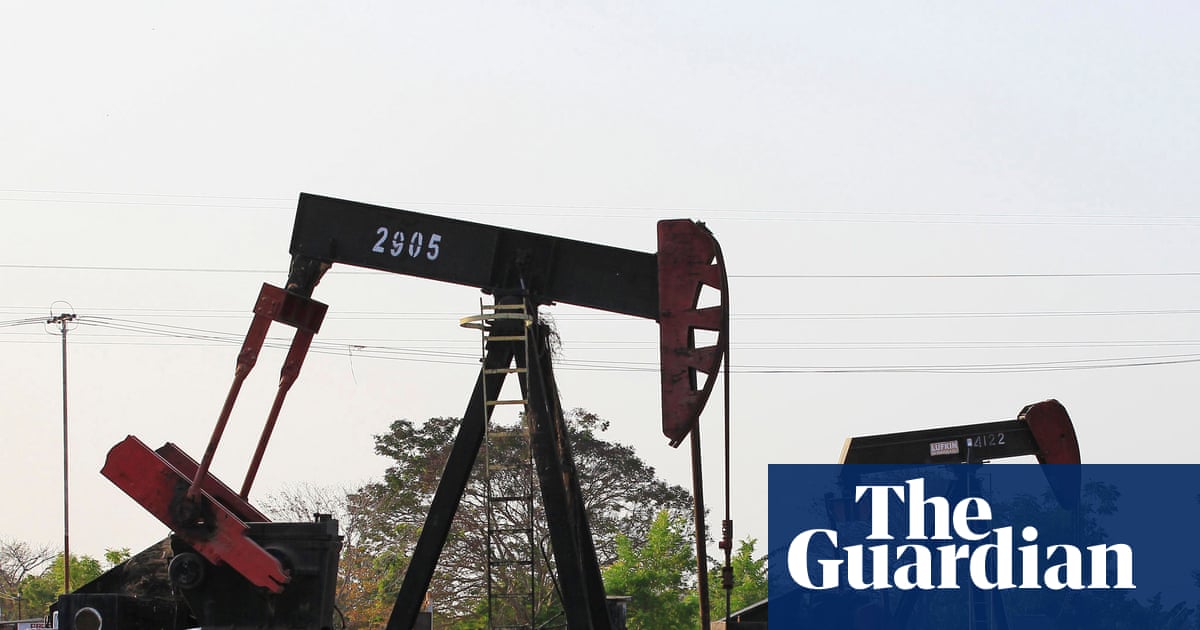
That would worsen the already dire climate crisis. It also makes little economic sense. Venezuela produces heavy, sour oil, which is hard to refine, though it is suitable for asphalt. After decades of sanctions, underinvestment and mismanagement, the industry’s infrastructure is woeful. On a visit to the Orinoco Belt, I saw old, rusting facilities and heard of sharply falling output. Even before the US naval quarantine, this meant Venezuela ranked 22nd among the world’s oil exporters. Fixing that would take many years and cost tens of billions of dollars, an investment that would not easily be recouped at a time when oil prices are low as a result of surging US production and even cheaper wind and solar energy. When much of the world is transitioning to renewables, Washington would almost have to force this oil down people’s throats.
US petroleum majors are already expanding in the offshore oilfields of Guyana, Venezuela’s Amazonian neighbour. Maduro’s efforts to claim those resources may have sealed his fate. But his show trial is also designed to send a message to neighbouring leaders that the region is now in thrall to Washington. In case anyone missed that point, the US state department released a social media post on 5 January declaring: “This is our hemisphere.”
It is also evident in the Trump administration’s latest national security strategy, published in November, which for the first time barely mentioned Russia and focused overwhelmingly on “threats” from the Americas: migration, crime (including narcotics) and supply chain disruptions.
“The United States must never be dependent on any outside power for core components – from raw materials to parts to finished products – necessary to the nation’s defense or economy,” it noted. “We must resecure our own independent and reliable access to the goods we need to defend ourselves and preserve our way of life. This will require expanding American access to critical minerals and materials.”
The strategy explicitly aims to eject foreign rivals from other countries. “The terms of our alliances, and the terms upon which we provide any kind of aid, must be contingent on winding down adversarial outside influence – from control of military installations ports, and key infrastructure to the purchase of strategic assets broadly defined.”
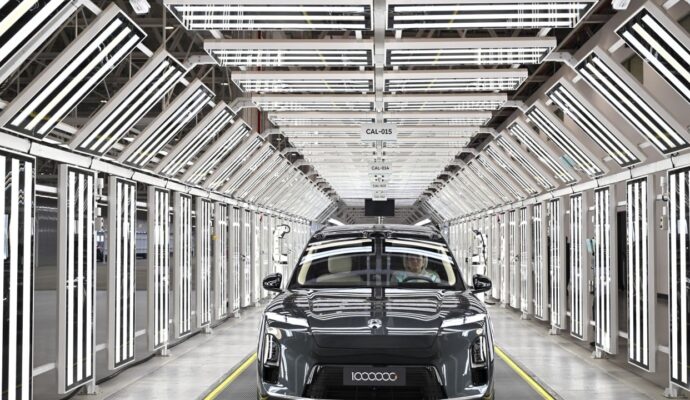
Although this “adversarial outside influence” is not named, it is clearly China, which overtook the US as the main trading partner of Latin America during the commodities boom in the first decade of this century. China now buys more oil from Venezuela, more iron, soy and beef from Brazil, more copper from Chile, Peru and Bolivia, and more ferroalloys from Colombia.
Of particular concern to the US is China’s global chokehold on critical minerals. Last year, China threatened to withhold exports of these commodities, which are essential for renewable energy technology, weapons systems and artificial intelligence. South American nations could reduce that risk. Brazil has the world’s second biggest deposits of critical minerals, according to the US Geological Survey, and is already the leading producer of niobium, needed for high-grade steel. Bolivia has the world’s biggest known deposits of lithium, essential in electric car batteries. Chile, Peru and Colombia are also thought to have important deposits of rare earths.
But so far China has invested the most in processing facilities and transport infrastructure in South America, while the US under Trump has imposed tariffs. This has exacerbated the shift in trade of these future-shaping goods from north-south to east-west.
The US is now trying to reverse that situation with military force and political interference in the Americas, with the biggest US military buildup in the Caribbean Sea in generations.
It has been cheered by a handful of rightwing regional leaders, such as Argentina’s Javier Milei, who relies on US financial support to stabilise his country’s currency, and Ecuador’s president, the tycoon Daniel Noboa, who is trying to weaken limits on extractive activities in his country and wants to construct a US military base on the Galápagos Islands, a Unesco world heritage site and biosphere reserve.
A very different response was expressed by the governments of Mexico, Brazil, Colombia, Uruguay and Cuba, who condemned the US muscle flexing as a challenge to regional stability. Several of their leaders, many of whom are trying to engage in multinational efforts to deal with the climate and nature crisis, have expressed fears that Washington will now try to interfere in their domestic politics.
The Colombian president, Gustavo Petro, a global climate champion, has mobilised armed forces to his country’s border with Venezuela after the US strikes and vowed to take up arms if the threats intensify. He is up for re-election this year, and supporters say he is already the target of a misinformation and intimidation campaign by the White House.
“Colombia is very sick too, run by a sick man who likes making cocaine and selling it to the US,” Trump said in the wake of Maduro’s kidnapping, without providing any evidence of the allegation. “He’s not going to be doing it very long.” Along with Cuba and Greenland, this puts Colombia high on the list of where the US might target next.
Brazil’s leftwing president, Luiz Inácio Lula da Silva, who also faces re-election this year, has already felt Trump’s wrath. Last year, Lula criticised the US leader for behaving like an emperor. Trump responded by raising US tariffs on Brazilian goods to 50%. This backfired. Lula’s popularity rating improved as voters rallied against this threat to their nation. And US industries and hi-tech companies had to remind their president that they needed Brazil’s critical minerals.
This is, of course, not the first time the US has thrown its weight around in this region, but it takes place in a more dangerous context. The world faces an unprecedented threat from climate disruption and nature breakdown, which means it is more important than ever to protect biodiversity and ensure that the world’s limited supply of critical minerals is primarily used for the energy transition.
Many leaders in South America are trying to do this, but Trump is now using armed force to try to push the region in the opposite direction – to open the oil spigots wider and ensure rare earths and other important resources go north to the US, where they are likely to be used to strengthen the world’s biggest military, rather than west to China, the world’s biggest manufacturer of solar panels, windfarms and electric cars.
In terms of the wellbeing of the world and the majority of its people, this is clearly a horrifying mistake. But the Trump administration has narrower goals. Its strategy document says the US priority is to secure the “God-given natural rights of its citizens”. Many of them will probably be appalled by this action, but a powerful elite around Trump is calling the shots. Rather than international cooperation on global challenges, they would rather build walls and asset-strip their neighbours for supplies.
This doomsday bunker mentality will be bad news for democracy, people and the environment. But it is far from certain of achieving its goals. South America will not easily accept being the pantry, mineral deposit and fuel tank of the Armageddon shelter in the north.