Stay informed with free updates
Simply sign up to the Japanese business & finance myFT Digest — delivered directly to your inbox.
Japan’s executives have to change their mindset and exert more pricing power as the country moves on from an era of deflation, one of its biggest independent asset managers has said.
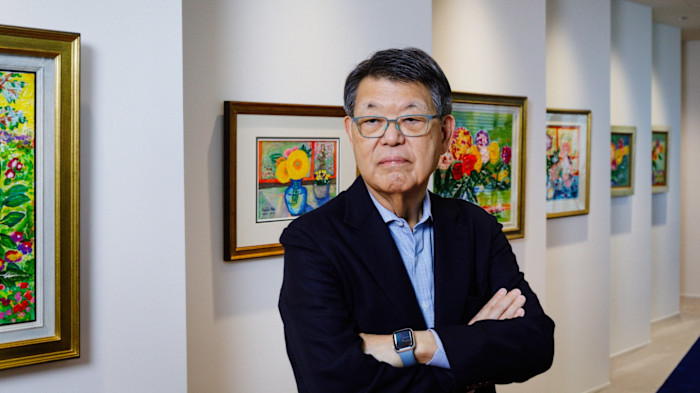
Shuhei Abe, founder of asset manager Sparx, said he was looking to invest in companies and managers willing to emerge from a defensive crouch and raise prices in Japan’s changed economic landscape.
“Investors in this country have waited for years for inflation to return and now the time has come,” he said in an interview in Tokyo. “One of the biggest catalysts for the coming years will be changes of management attitude.”
His comments underline the change of mood among Japanese investors, who for years sought to pick stock market winners in an economy with barely any growth and entrenched deflation following the end of its asset price bubble in 1989.
However, in 2025 Japan’s stock market index has climbed decisively beyond its previous peaks while rising inflation has allowed the central bank to raise interest rates to the highest level in 30 years.
Managers of the previous era “suffered from the trauma of the past bubble” and had it instilled in them to cut debt and hoard capital rather than raise prices, Abe said.
“Most of the top management guys who joined [Japanese companies] during this time were trained . . . to reduce the debt, to not waste capital,” said Abe, a former employee of George Soros. “But finally, now, they have started to understand they cannot continue like they have over the past 30 years.”
Sparx has ¥2tn ($12.7bn) of assets under management. Among its investments Abe cites Morinaga, a confectioner benefiting from Japan’s boom in inbound tourism, and Shoei, a maker of premium motorcycle helmets, as benefiting from pricing power.
Abe is also invested in Pilot, one of the largest pen companies in the world, which has recently moved to satisfy some of Abe’s demands, raising the price of its best-selling pen in Japan by 10 per cent.
Most of Japan’s asset managers are riding the wave of stock price records over the past 18 months. Sparx, which was founded in 1989 just before the end of the bubble, managed in August to exceed its previous peak for assets under management, set 19 years earlier.
Its funds have recorded, over their lifetimes, annualised returns of between 4.7 per cent for its long-short fund and 11.4 per cent for its active long-only strategy. The Topix returned about 4.6 per cent over roughly the same period.
Japan’s average annual growth was less than 1 per cent for more than 30 years, Abe pointed out. “In this environment, it’s not easy to invest in any equity asset. So Sparx did very well in that sense. But, at the same time, no one else could do it, thus there was room for us.”
Before founding Sparx, Abe was funded by Soros in 1985 to invest in Japanese railroad stock, in a bet that the market would start to apply more value to the sector’s vast real estate holdings — a variant on a strategy that some activists and private equity groups are using in Japan today.
It is not just the end of a long period of stagnation that has put Japan back into investors’ sights. Regulators, the government and the stock exchange are pushing companies to pay more attention to shareholders.
The government is also pushing to improve the quality and quantity of asset managers, convinced that they are crucial to improving corporate performance and getting capital flowing.
Abe expects that a wave of retail investors will come into the market, with the side-effect that companies will have a powerful new constituency pushing them to perform.
“Individuals will move the market. Individuals will eventually be . . . a most powerful activist,” he said.