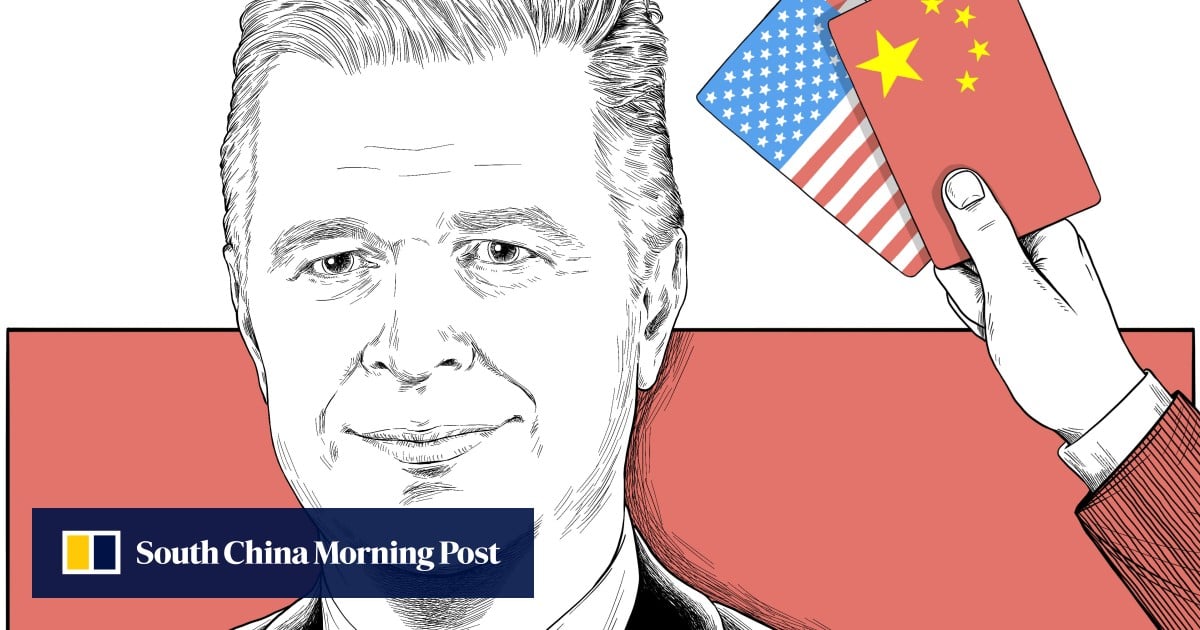
Daniel J. Kritenbrink is a partner at The Asia Group. Previously, Kritenbrink served in the United States government as assistant secretary of state for East Asian and Pacific affairs and ambassador to Vietnam. His diplomatic career spans three decades and includes assignments in Japan, China, Kuwait and Washington.
In this interview, Kritenbrink discusses the many nuances of the US-China relationship, from cooperation to competition to rivalry, and argues both countries should weigh the positives and negatives of ties fairly to avoid a “white-hot” conflict.
Advertisement
At The Asia Group, what we tell our clients is that we are here to help them navigate the intersection of geopolitics and commercial strategy. Under the second [US President Donald] Trump administration, what we found is that geopolitical factors are more important to commercial strategy than any time in recent history.
Advertisement
The US-China relationship is already the world’s most consequential and complex relationship, and on top of that there are some priorities of the administration which have been focused on – trying to reduce the size of the trade deficit, drive supply chains back to the United States. So it is more important than ever before that corporations consider these geopolitical factors.
It has been one of the more extraordinary years in US-China relations, after having fought a pretty bitter trade war, which started as a tariff war then evolved into a supply chain war. It has now stabilised, in perhaps a fragile truce.