Unlock the Editor’s Digest for free
Roula Khalaf, Editor of the FT, selects her favourite stories in this weekly newsletter.
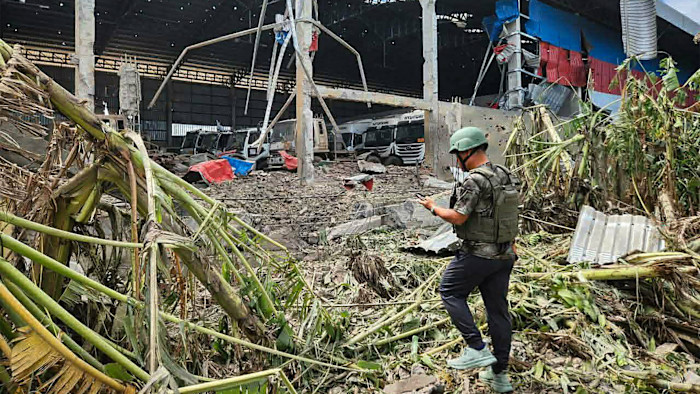
Thailand and Cambodia have agreed to an immediate ceasefire after weeks of renewed fighting along their shared border that has killed dozens and displaced more than half a million people.
The south-east Asian neighbours agreed to a pause in fighting effective from noon on Saturday and a cessation of “military objectives of either side”, according to a statement released by the Thai and Cambodian governments.
Under the agreement, Cambodia and Thailand may maintain current troop levels along the border, but both sides agreed to refrain from any troop movements or reinforcements and “not to undertake provocative actions that may escalate tensions” such as air or territorial incursions.
Thailand also agreed to return 18 captured Cambodian soldiers if the ceasefire is maintained for 72 hours, the statement said.
The clashes erupted after a breakdown in a ceasefire that was signed in July and brokered by US President Donald Trump to bring to an end a five-day conflict that killed at least 48 people and displaced about 300,000.
Cambodia and Thailand signed a peace accord in October in Kuala Lumpur at a summit of the Association of Southeast Asian Nations, in Trump’s presence.
But this agreement broke down last month after Thailand accused Cambodia of laying new landmines along their border, allegations Cambodia denied.
The cessation of hostilities comes after Cambodia and Thailand held talks on Wednesday.
US secretary of state Marco Rubio spoke with Cambodian Prime Minister Hun Manet on Thursday and “reiterated President Trump’s desire for peace and the need to fully implement the Kuala Lumpur Peace Accords”, according to a statement from the US state department.
Tensions along the 800km border between Thailand and Cambodia have simmered for decades over competing claims to a number of ancient temples, as well as the surrounding areas.
Prime Minister Anwar Ibrahim of Malaysia, which holds the rotating chair of Asean until January 1, welcomed the ceasefire, which he said “sets out practical and positive measures” that provide a “basis for stability”, including verification by regional observers and direct communication between Thai and Cambodian defence officials.
The Thai and Cambodian foreign ministers are set to hold additional talks in China’s Yunnan province on Sunday and Monday, according to a statement from Cambodia’s foreign ministry.