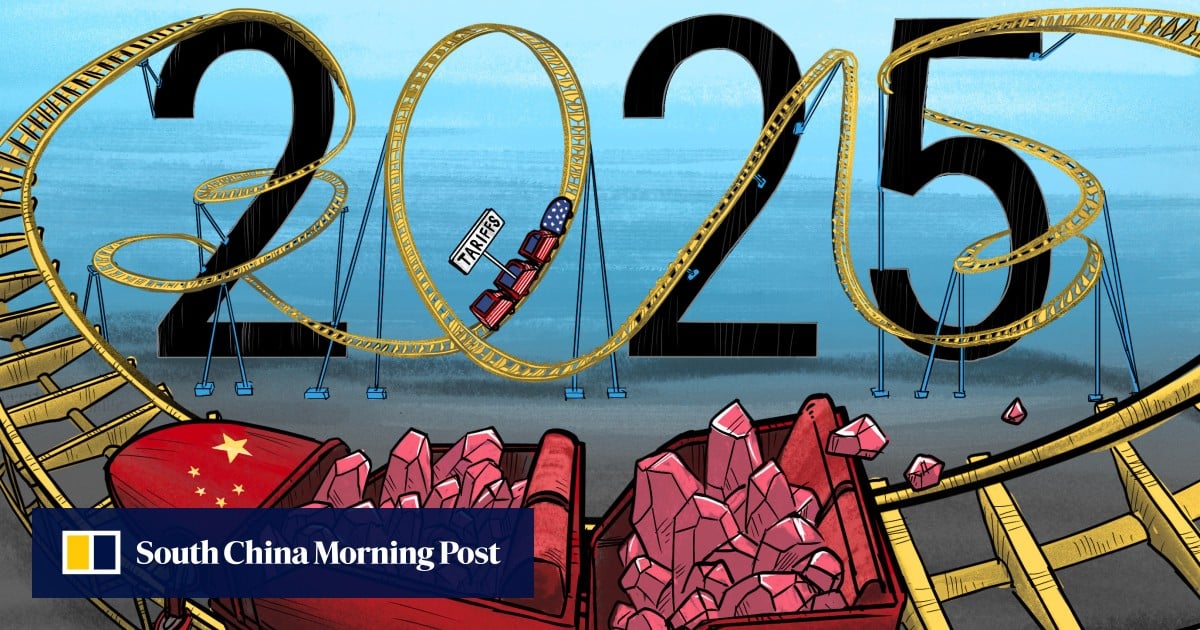
It has been a turbulent year for the fraught US-China relationship. In the second story in this new series, we look back at the events of 2025, examining how the trade war tested policymakers and firms, forcing a rethink in business, strategy and supply chains.
In April, when US President Donald Trump upended global trade by announcing “reciprocal tariffs” on almost all the country’s trading partners, officials in eastern China’s Ningbo – a national export hub – went on a wartime footing.
Advertisement
By autumn, however, officials in Ningbo, a port city in Zhejiang province, were reasonably confident that they had passed the trade war’s stress tests. Executives at Polaris Rare Earth Materials in the US city of Indianapolis also felt slightly calmer, even as they weighed their options amid a volatile environment – underscoring how individuals and firms have felt the pain.
“Business needs predictability, and that’s not the story of 2025,” said Doug Barry, an international trade adviser and former US Department of Commerce official.
Advertisement
“Night sweats were more the norm as business owners and CEOs with China exposure wrestled with ridiculous tariff levels, few exemptions, draconian licensing requirements and China retaliation,” he added.
“Different industries suffer differently. But suffering is widespread.”