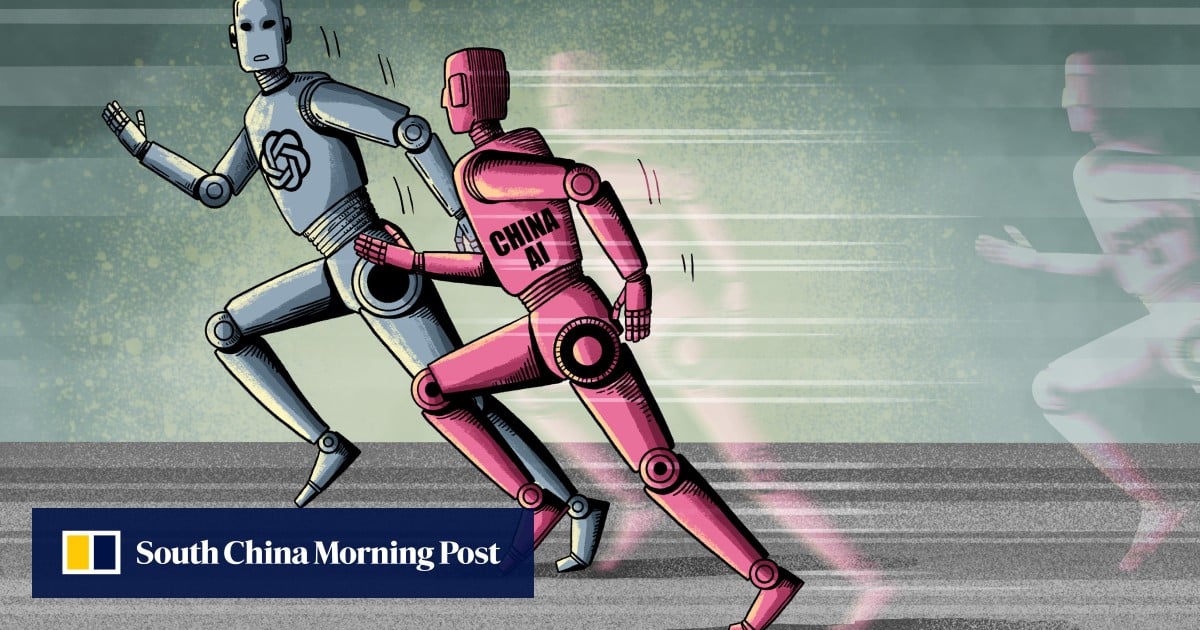
Chinese government authorities sent urgent requests to various experts, including professors from Tsinghua University, to provide briefings on the implications of generative AI technology, according to people with knowledge of the matter.
China’s Big Tech firms and ambitious start-ups rushed to roll out their own versions of AI chatbots and large language models (LLMs), as well as register them with the government, as part of efforts to keep American AI services away from the country’s more than 1 billion internet users.
Advertisement
In the first few months after ChatGPT’s release, maintaining a walled garden approach on AI services was thought to be China’s best strategy until domestic tech firms could develop products that effectively competed against those built by Western AI providers.
Advertisement
Zhu, known for his early investment in ride-hailing giant Didi Chuxing, asked rhetorically: “How do you make money out of just developing an LLM?”
Fast-forward to the second half of 2025, and expectations about the technical capabilities of Chinese AI companies and the LLM business have changed.