Unlock the Editor’s Digest for free
Roula Khalaf, Editor of the FT, selects her favourite stories in this weekly newsletter.
Columbia Road in east London is home to many emporia. But in Ishkar the wares have a richer backstory than most. The delicate gold necklaces, heavy cotton shirts and hand-knotted rugs are arranged with panels revealing their origins in Afghanistan or Pakistan. “Our goal is simply to place the artisans we work with on the same pedestal as artist-makers in the UK,” says Edmund Le Brun, who founded the business with his wife, Flore de Taisne in 2016.
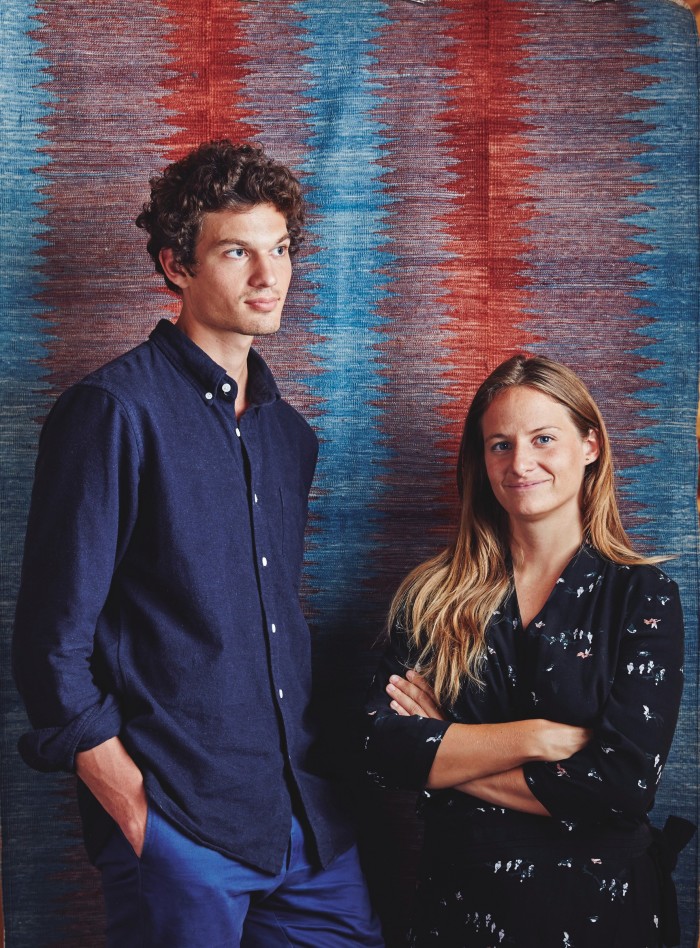
The idea to open a fashion, textiles and homeware shop was born while the couple were working in Afghanistan. De Taisne was a consultant for various aid agencies in Terat and Le Brun was working for Turquoise Mountain, the restoration NGO founded by King Charles III. There, they came across the glassblowing workshop of Ghulam Sakhi, one of two remaining glass artisans creating pieces in a mudbrick kiln. “We wanted to come back to Europe and bring a side of Afghanistan that was rarely seen in the news,” says Le Brun. And so the couple invested their savings into thousands of glasses to sell at pop-ups or online.
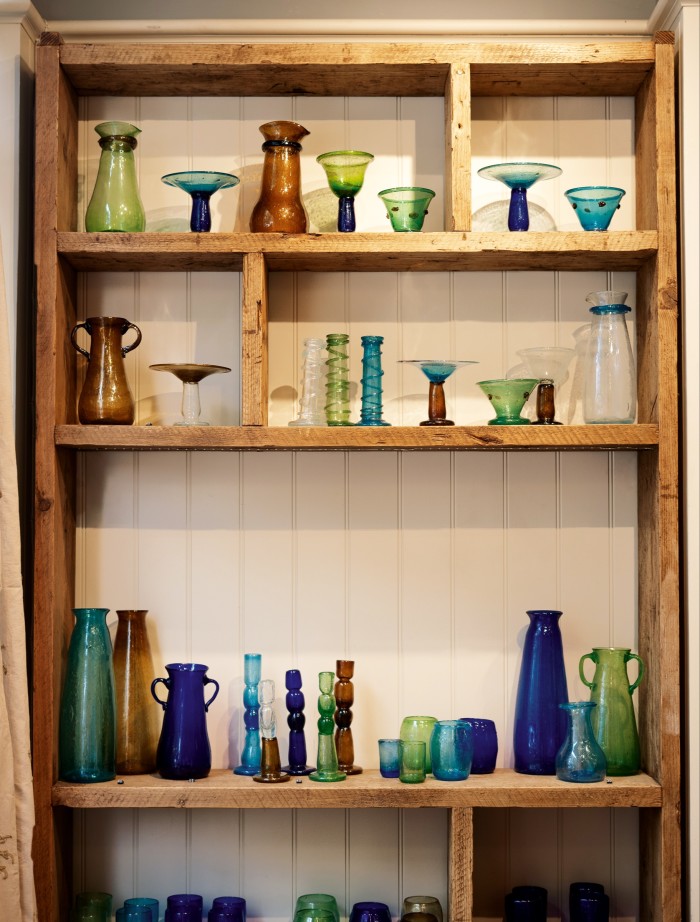
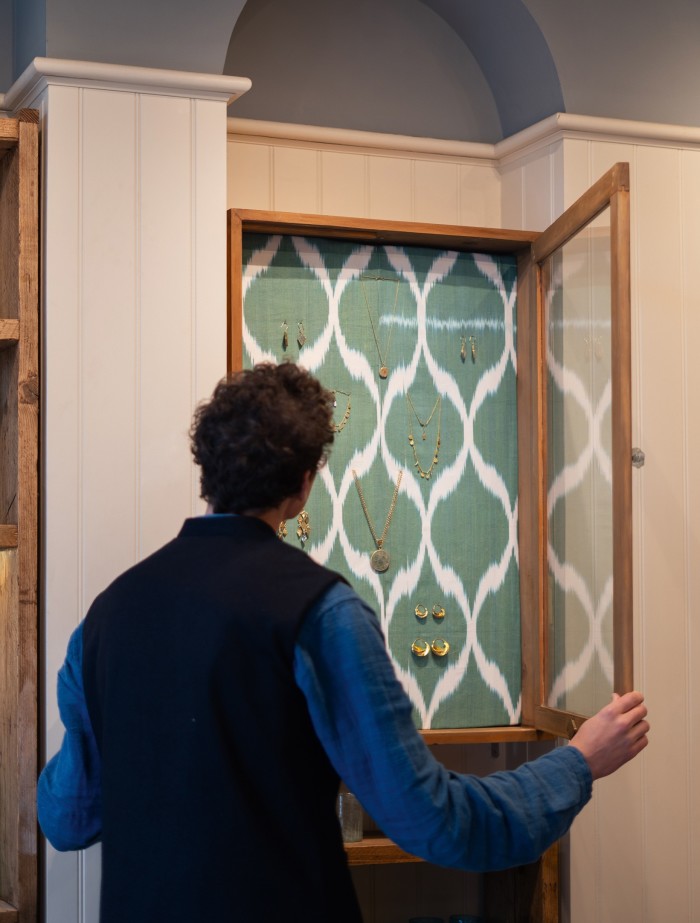
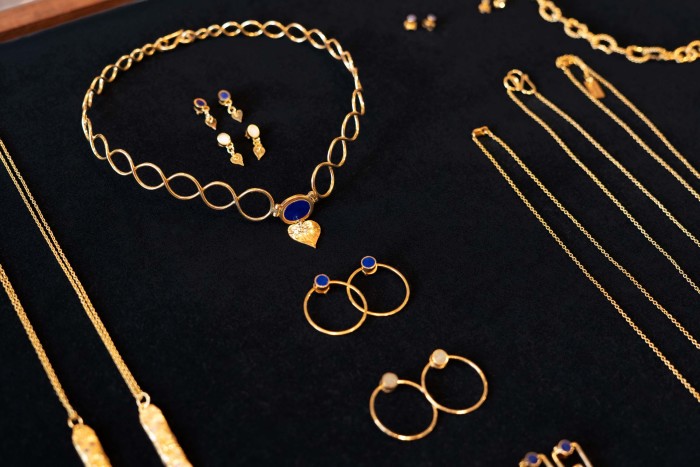
Now the glassware (from £60) lines the shelves of Ishkar’s permanent shop, which opened in 2023. It’s named after a desert shrub found in northern Afghanistan that is ground up and mixed with dyes to bring vibrancy. Glasses are accompanied by minimal, hand-worked jewellery made in Kabul’s old city using indigenous gemstones such as Bamiyan turquoise and lapis lazuli. The pieces are often made in collaboration with UK artists. A blue agate ring etched with a silhouette of a horse (from £235) was designed with photographer Skye Jones. A choker featuring a small golden heart (£320), inspired by jewellery excavated from the Tillya Tepe tomb in northern Afghanistan, was conceived with photographer Louise Follain.
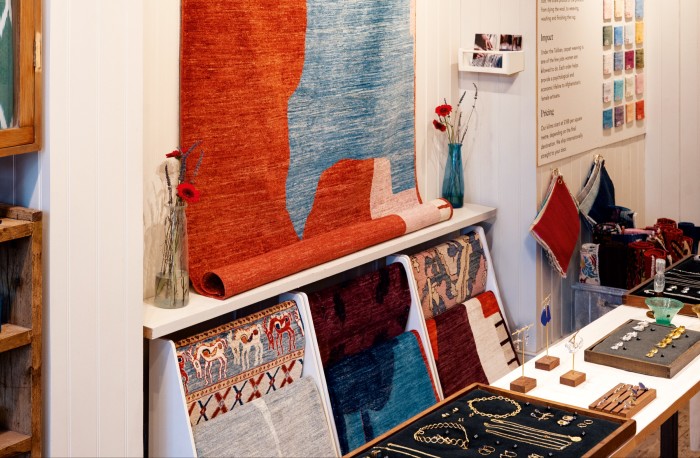
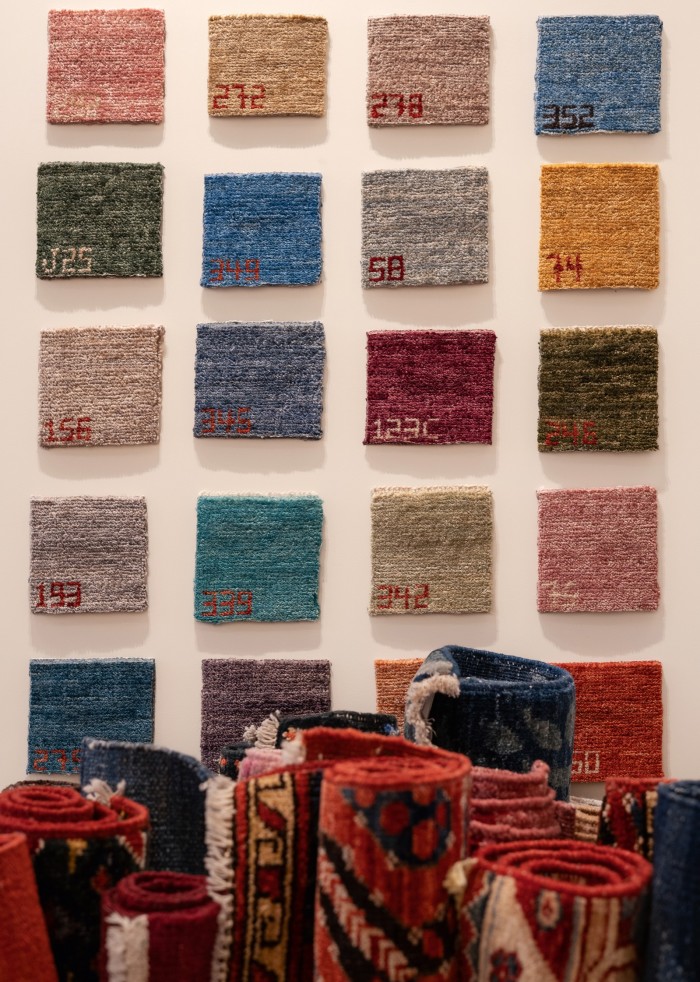
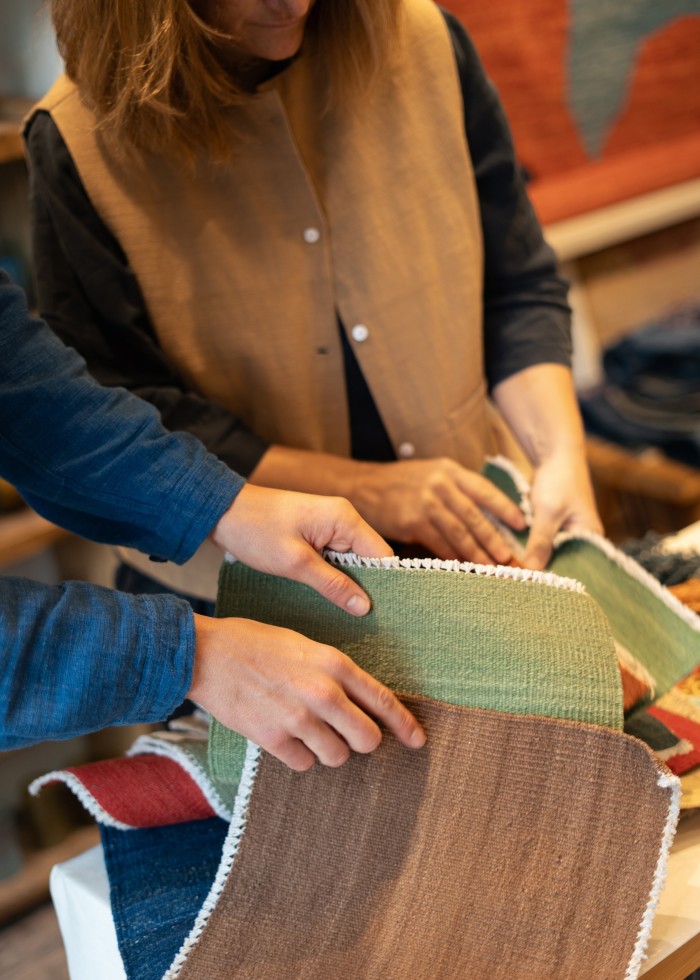
Rails are hung with handwoven shirts from Karachi (from £150) and traditional woollen waistcoats (from £150), and there are embroidered fabrics for drapery and light upholstery. An enormous range of rug designs, both contemporary and traditional, can be made to order in three to six months. Thanks to the natural sheen of Ghazni wool, even the simplest colour field rugs in shades of “pomegranate” and “basil” (from £490) can be “complex and nuanced”, Le Brun says. They have recently launched four special-edition rug designs in collaboration with the Kabul-founded charity Skateistan; 30 per cent of proceeds from each rug will fund the charity’s work empowering at-risk youth.
Each of Ishkar’s rugs is hand-knotted in the home of one of their network of more than 300 Afghan women weavers, who have been excluded from other forms of employment since the Taliban returned to power in 2021. “Since that time, craft has become not just an economic lifeline but a psychological one,” says Le Brun. It’s one of several ways that the shop has made an impact. They also work with upholstery embroiderers who have been forced to flee to Pakistan due to conflict. And thanks to the shop’s support, Sakhi now works from a modern atelier and has been able to take on two apprentices.
Ishkar enters its 10th anniversary year in 2026. Le Brun reflects that “we’ve done a lot to help raise the profile of craftsmanship” from Afghanistan and Pakistan, but there is still some “cognitive dissonance” around craft exports from these places. His ambition is that they become “known for luxury production”. He’s confident. “Our favourite reactions are when people are just amazed at the quality of the products.”
94 Columbia Rd, London E2; ishkar.com