Sexually explicit letters and “lonely housewife” posters about high-profile pro-democracy Hong Kong exiles have been sent to people in the UK and Australia, marking a ratcheting up in the transnational harassment faced by critics of the Chinese Communist party’s rule in the former British colony.
Letters purporting to be from Carmen Lau, an exiled pro-democracy activist and former district councillor, showing digitally faked images of her as a sex worker were sent to her former neighbours in Maidenhead in the UK in recent weeks.
It is the first time that people on the Hong Kong police’s bounty list, wanted for national security offences, have been directly targeted with this kind of explicitly sexualised harassment, highlighting the heightened risks faced by female activists and their associates.
At least half a dozen of Lau’s former neighbours in Maidenhead received letters showing fake, sexualised images of her. They were posted from Macau, a semi-autonomous Chinese territory near Hong Kong. The letters have five deepfaked images of Lau, with her face superimposed on women’s bodies either naked or in underwear. One image shows the fake Lau performing a sex act, which has been pixelated.
The text on the letter states Lau’s name and supposed body measurements. It includes her former home address in full and states: “Welcome to visit me! You have the right to choose me, and I also have the right not to accept you. Just want the process to be gentle. We can become close friends in the future!”
In Australia, Ted Hui, a former Hong Kong legislator, and his wife have been targeted with a fake poster advertising his wife’s services as a sex worker. The poster shows an old photograph of Hui and his wife under the headline “Hong Kong lonely housewife”.
Underneath the picture there is a menu of sexual services with prices in Australian dollars. The poster also includes an address, which Hui said was not connected to him. The poster was emailed to his boss over the summer and posted to people in Adelaide at and around the address listed on the poster.
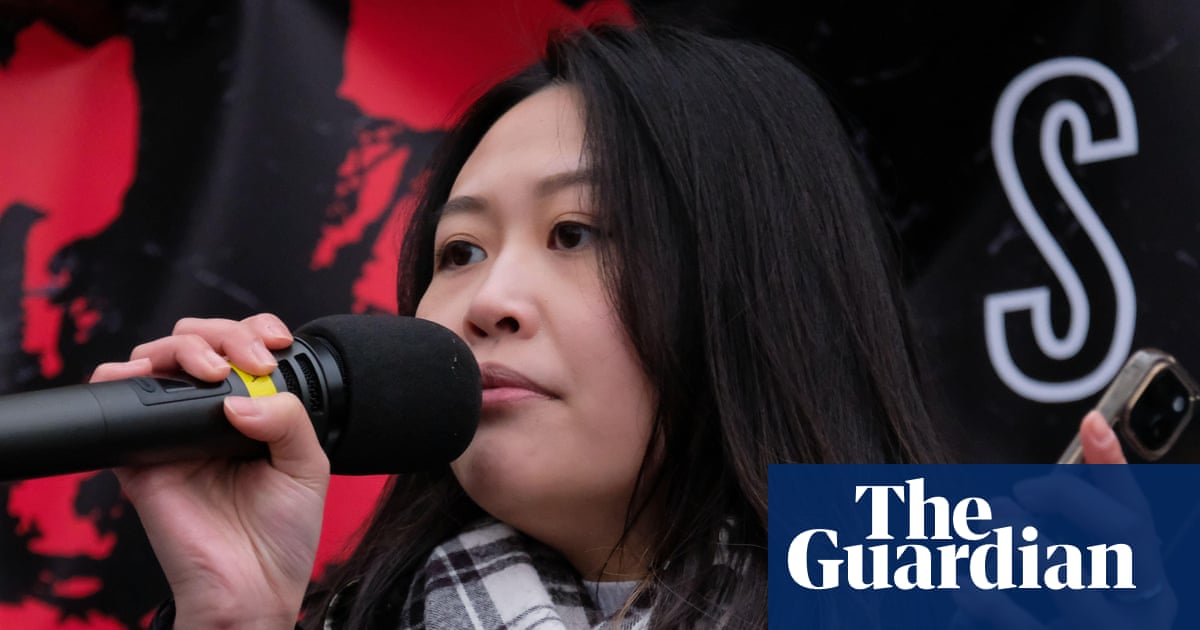
Lau said she was “terrified” when she learned of the letters. “I am a woman, and they threaten me like this,” she said. Lau said the letters represented “an escalation of transnational repression” where AI or digital tools were used to specifically target women.
Hui said he had “expected something like this to come”. His wife was “speechless”, he said. She is not a public figure and it is the first time she has been included in the harassment against her husband.
Hui said he reported the poster to the police who said the IP address from which the email was sent could be traced to Hong Kong.
A resident of the address in Adelaide listed on the poster about Hui said he had never heard of the exiled Hongkonger. He said his wife had been scared by the poster turning up in their letterbox.
“How did they get our address? Why did they pick us? It just doesn’t make sense,” the resident said. He said a neighbour had asked him if his house had become a “knock shop”, slang for a brothel.
The letters were reported to the police. A South Australia police spokesperson said they could not comment on individual cases.
In March, Lau’s neighbours received “wanted” posters offering a reward of HK$1m (£96,000) for any member of the public who could provide information about her or take her to the Chinese embassy.
Neighbours of Tony Chung, a young Hong Kong activist who was granted asylum in the UK this year, received similar letters about him.
In Australia, similar letters were sent about Kevin Yam, an Australian-Hongkonger lawyer who is subject to a Hong Kong arrest warrant for his pro-democracy activism, and about Hui.
But this is the first time anyone wanted by the Hong Kong authorities has been targeted with sexually explicit material.
One of the people who received the letter in Maidenhead said it showed “graphic images of her sexual acts … basically offering services”.
“It’s obviously unfortunate for the person who it’s targeted at,” said the resident, who asked to remain anonymous. They had also received the previous letter offering a reward for Lau’s whereabouts.
Lau moved house after the bounty reward letters were sent in March. She said the experiences made her feel uneasy in public. “If I ever go out, I try to wear a cap or a face mask to avoid being recognised,” she said. “The psychological burden is heavy.”
Lau has previously criticised Thames Valley police for their handling of the original letters sent in March, after they asked her to sign an agreement requesting that she “cease any activity that is likely to put you at risk”.
The latest letters have also been referred to the police. Lau said she had been told there was a slim chance of finding out who was responsible for them.
Joshua Reynolds, the MP for Maidenhead, said the letters were an act of transnational repression “without question” and called on the government to take decisive action, including imposing sanctions on officials involved in raising bounties on activists living in Britain.
“It’s the point now where it’s Beijing’s efforts to intimidate and to threaten pro-democracy Hongkongers,” Reynolds said. “It’s utterly grotesque what they’re doing, and now is the point where the government can’t stick their head in the sand when it comes to the safety of Hongkongers in our country.”
It is not clear who sent the sexually explicit letters. The Chinese embassy previously said the bounty letters were faked.
Responding to the latest letters about Lau, a spokesperson for the Chinese embassy in London reiterated their previous comments. “000[who] fled overseas seeking to destabilise Hong Kong,” the spokesperson said.
“It is legitimate and reasonable to pursue wanted fugitives. Rather than cheating and sadfishing, those anti-China rioters who fled overseas should surrender themselves to the police as soon as possible.”
The Chinese embassy in Canberra did not respond to a request for comment.
Thames Valley police said: “We are investigating reports of a malicious communications offence. The malicious communications are believed to be digitally altered images. We are engaging with the victim and, at this time, no arrests have been made.”
A UK government spokesperson said: “The safety and security of Hongkongers in the United Kingdom is of the utmost importance. We encourage anyone to report concerns to the police.”