Good morning. As predicted by nearly half of you, on Friday the Reserve Bank of India cut benchmark interest rates by a quarter of a point. The central bank also revised its growth forecast up by half a percentage point to 7.3 per cent. Trade winds, on the other hand, are less favourable.
This week a US delegation is in India for talks on the much-delayed trade deal. It is unlikely that India’s reaffirmation of its strategic partnership with Russia during Vladimir Putin’s high-profile visit last week will go unmentioned. Despite the foreign and commerce ministry’s reassurances that a deal is on its way, it is not looking like it will get done anytime soon.
IndiGo’s chaos
India’s aviation regulator is investigating IndiGo over the chaos it unleashed in Indian airports over the past few days. The airline has cancelled more than 2,000 flights since last Thursday, after it was unable to comply with new rules aimed at ensuring pilots were well rested. Airlines had been notified of the regulations on rostering staff as early as May last year, giving IndiGo at least 17 months to recruit and properly allocate staff.
Ironically, the airline’s much publicised and often lauded obsession with “efficiency” looks likely to be the cause of this mess. IndiGo has built its business on the basis of quick turnarounds, allowing it to squeeze more flights out of each aircraft. But the tight scheduling meant that when its processes failed on Thursday, each flight that was delayed had a ripple effect, triggering more and more delays until the airline was forced to cancel most flights to reset the scales.
IndiGo’s stock has lost nearly 15 per cent of its value since the disruptions began. What will happen next? The government will probably mete out some punishments but for now it has given IndiGo time until February to implement the new pilot rostering system. In the coming quarters, the company will take a hit from having to temporarily cut operations on some routes to comply with the rules. This will result in some revenue loss.
However, it is unlikely that anything more substantial will happen to the airline, which has nearly 65 per cent of the domestic market. It is awaiting delivery of 900 aircraft and has plans to expand its operations both domestically and internationally. Frustrated customers, who have sworn off the airline these past few days, have few other options considering the Indian aviation sector is in effect a duopoly.
The aviation minister himself has said there is room for at least five more players in the sector. But market forces and aviation policies have in the past destroyed more airlines than nurtured them. It is not a sector in which quick money can move in, and unless the government is proactive in supporting new companies, a multiplayer airline sector is only wishful thinking at this point.
My bet is that this whole fiasco will be forgotten in a few months and everyone will have moved on. If IndiGo learns any lessons from this and does better, that’ll be great for both the airline and passengers. But the unfortunate truth is that even if they don’t, they will be OK.
Do you think IndiGo will suffer any serious consequences? Let me know what you think. Hit reply or email us at indiabrief@ft.com
Recommended stories
Despite tariffs, China’s trade surplus has topped $1tn for the first time.
America’s widening economic divide endangers Trump’s midterm hopes. Also, here’s why Americans are feeling poorer even though they’re not.
The FT Influence List 2025: who are the people who shaped the world this year?
Paramount gatecrashed Warner Bros-Netflix deal with $108bn all-cash bid.
Inside F1 travelling circus: the grind of a 24-race season.
What stand-up comedy can teach us about work.
Roll with it
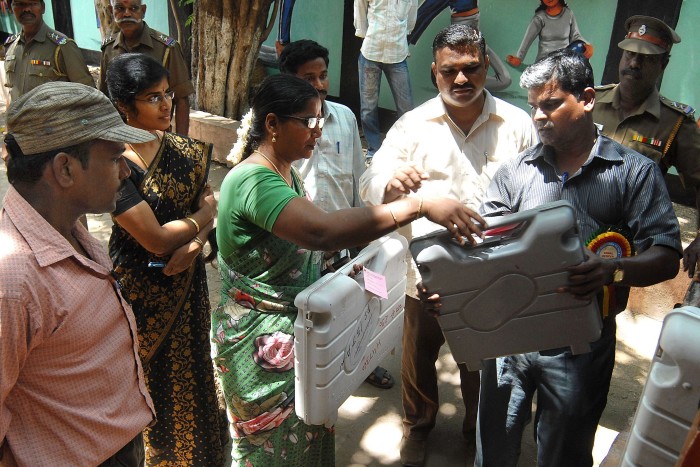
After a tumultuous start to its winter session, parliament will today take up the contentious issue of updating the electoral rolls in several parts of the country. The first part of the exercise was conducted ahead of the polls in the state of Bihar. In October, the election watchdog extended this to nine more states and set a challenging deadline of December 4 for the first of three stages.
In this first stage, poll officers have to visit every household and distribute a partly filled form, which then has to be completed by the voter and resubmitted. The tricky part is that voters have to establish a link with their details from the last time the exercise was undertaken — more than 20 years ago. In the second phase, a draft of the new roll will be published, and voters must check this and make sure their names and details are correctly reflected.
The process is not for the weak. Election officials are expected to make three attempts at visiting each house. The magnitude and complexity of the work involved, and the tight deadline, have driven some officers to the edge. According to media reports, up to 40 officials have died by suicide in the past few weeks, prompting the election commission to ease deadlines. The process has also wreaked havoc on the lives of voters. To stay eligible to vote in the next election, migrant workers have to return home for scheduled visits, often at the expense of their wages.
The opposition parties, led by Rahul Gandhi, had fought the Bihar state election arguing that the exercise had disenfranchised a large number of voters, whose names had disappeared from the rolls. The supreme court is also hearing several cases regarding this issue.
The politics around this notwithstanding, it is safe to say that the exercise by the election commission, while necessary, has been executed in a rather clumsy manner. It is hard to understand why it believed such a massive exercise could be undertaken in so little time, especially since the commission has extensive experience with the social, geographical and infrastructural complexities of the country. I’m curious to hear what the members’ arguments will be in parliament today. After all, it should be in everyone’s interest that the process be both accurate and humane.
Go figure
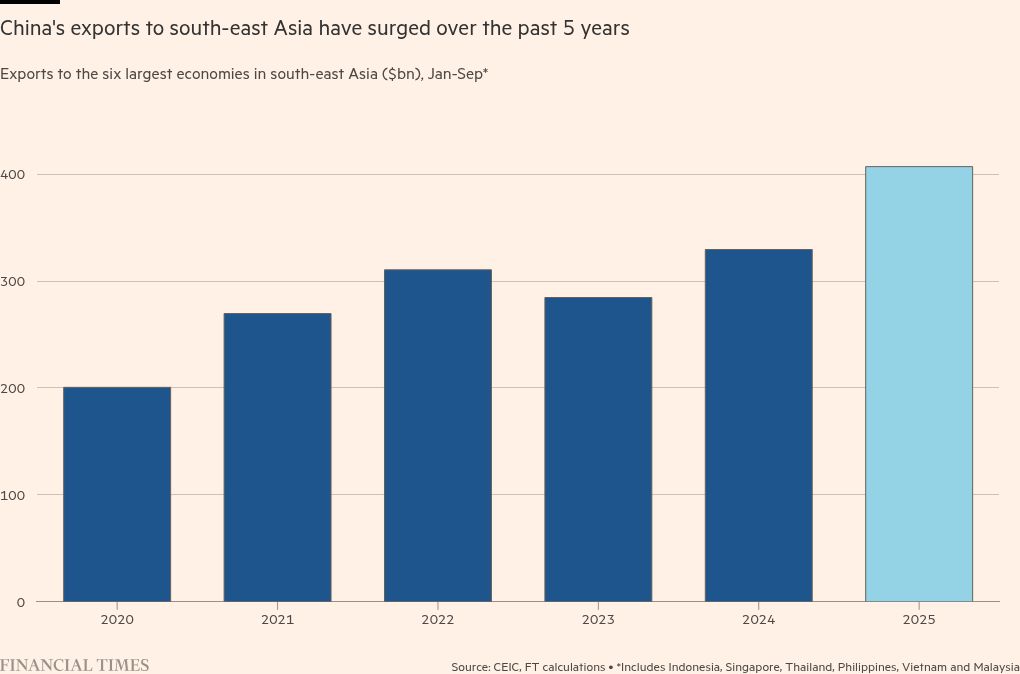
US tariffs have led to a surge in Chinese exports to south-east Asia. This year, Beijing’s trade with its neighbours has grown at almost twice the rate of the past four years, as Trump tariffs push countries to look for newer markets.
My mantra
“If you have a great team, setting the bar of what is a great outcome becomes the founder’s only job. The bar of what is great output and outcomes needs to be articulated in a crystal clear manner, enabling the team to rise to the occasion.”
Farooq Adam, Founder, Fynd

Each week, we invite a successful business leader to tell us their mantra for work and life. Want to know what your boss is thinking? Nominate them by replying to indiabrief@ft.com
Quick question
Many key sectors in India have only a handful of key players. Do you think the Indian economy has a conglomerate problem? Tell us here.
Buzzer round
On Friday, we asked: Which former head of state has started a 27-year sentence for plotting a coup after losing an election?
The answer is Brazil’s Jair Bolsonaro.
Ram Teja, who seems to be back after a break, was first with the right answer, followed by Prasanna Venkatesh, Aniruddha Dutta, Mahithi Pillai and KaranAvtar Singh. Congratulations!
Exciting news — we are starting a leaderboard this month. And for the next six months, we also have a prize for the person who tops the table at the end of the month!
Thank you for reading. India Business Briefing is edited by Tee Zhuo. Please send feedback, suggestions (and gossip) to indiabrief@ft.com.