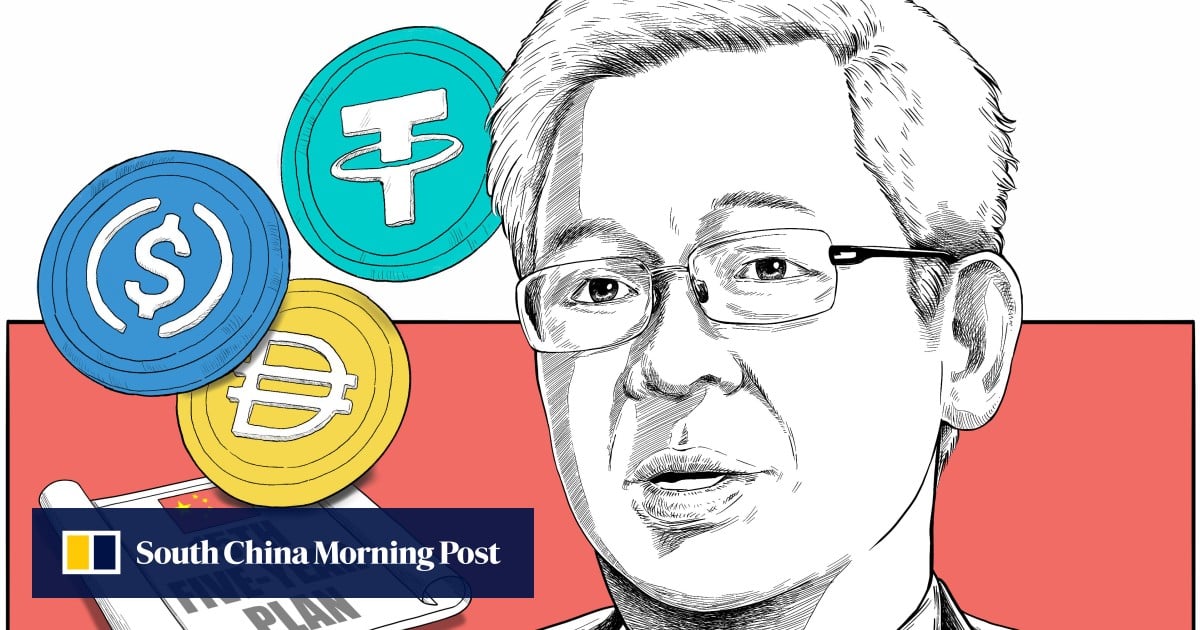
Huang Yiping is the dean of Peking University’s National School of Development and a member of the Monetary Policy Committee of the People’s Bank of China, the country’s central bank. He also sits on the Hong Kong stock exchange’s Mainland China Advisory Group.
Advertisement
AI, if better utilised, may present a historic opportunity for China to narrow its gap with the US. The global AI story is more or less about the rivalry between the two countries.
Advertisement
China still trails the US in zero-to-one innovation, but our advantage is applying AI and new technologies into real, practical use. We have rich application scenarios. If we look at the history of industrial revolutions, the countries that benefited most may not necessarily be the countries that made most of the original inventions. It is about how to put tech to good use.
I would also like to draw attention to the Solow paradox, which was coined by [the late] American Nobel laureate Robert Solow. [In 1987] he said, “you can see the computer age everywhere but in the productivity statistics.” He meant the wide use of computers was not leading to higher productivity.