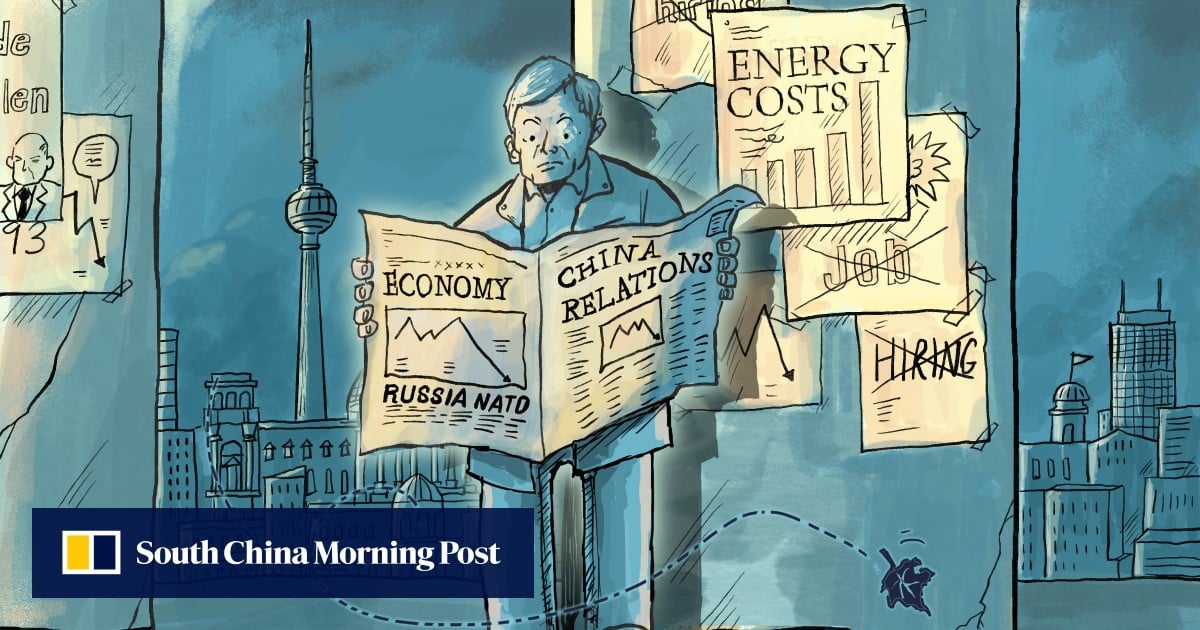
It is not unusual for Berlin to be cloaked in a blanket of grey on the brink of winter. What hangs over the city this year, however, feels heavier.
This new shade of gloom cuts through conversations about everything. Germany’s coalition government is just six months old, but already some are wondering how long it can last. The economy is no larger now than it was five years ago and is being pummelled by a heady brew of structural problems and external threats.
Advertisement
“I was not prepared for the kind of pessimism that I come across here,” said Joerg Wuttke, once Europe’s top business lobbyist in China, now a partner at US business strategy firm DGA-Albright Stonebridge Group.
When listing the many problems facing Germany, it is difficult to know where to start. On the economic side, the industrial economy is haemorrhaging 10,000 jobs a month, the government’s employment agency says. For the first time since records began, manufacturing in Europe’s production heartland contributed less than 20 per cent to Germany’s economy last year, according to Eurostat data.
Advertisement
Industrialists gripe that working cultures, energy costs and bureaucracy are killing the country’s competitiveness. International Labour Organization statistics show that the average German works 29.6 hours a week, compared with 36.1 hours in the United States and 44.8 hours in China.
Studies show that industrial electricity prices in Germany are around three times higher than those in the US and China, amid the dual shock of the nuclear phase-out and the collapse of Russian gas supplies.