Stay informed with free updates
Simply sign up to the Russian business & finance myFT Digest — delivered directly to your inbox.
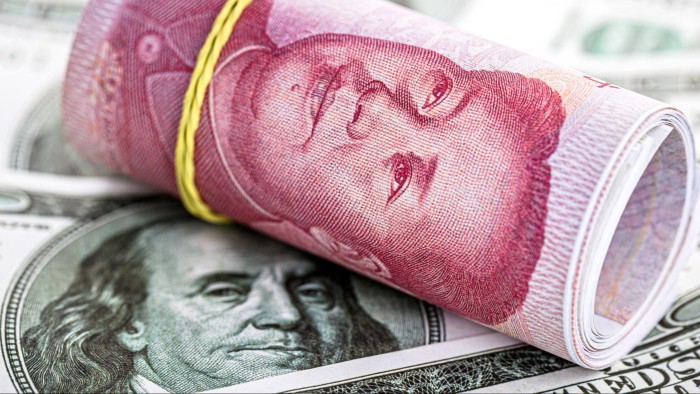
Russia has sold its first bonds denominated in Chinese renminbi, raising almost $3bn as it seeks to fund its invasion of Ukraine and deepen its financial ties with Beijing.
Russia’s finance ministry said it had issued Rmb20bn ($2.8bn) of government bonds in the Chinese currency, opening a route for Moscow to tap China’s low interest rates for domestic funding. The ministry sold Rmb12bn in bonds maturing in 2029 at a yield of 6 per cent and Rmb8bn in bonds maturing in 2033 yielding 7 per cent.
“We have succeeded in creating a liquid sovereign benchmark that will serve as a pricing guide for corporate borrowers and will contribute to the deepening of bilateral co-operation between Russia and China in the financial sector,” said Anton Siluanov, Russia’s finance minister. More than half of the bonds were bought by banks, the finance ministry said.
Russia’s debt sale is by far the largest of a wave of countries that have shifted to renminbi borrowing this year, as Beijing seeks to promote greater international use of its currency and challenge the dominance of the US dollar. Hungary issued a Rmb5bn bond in China in September and the emirate of Sharjah sold Rmb2bn in October.
The renminbi has become a de facto new reserve currency for Russia, particularly after its access to dollar and euro funds was severed and the Russian central bank’s overseas assets were frozen following the 2022 invasion of Ukraine.
Russia’s economy is battling high domestic interest rates of more than 16 per cent and inflation of 7 per cent driven partly by the high cost of producing goods it would otherwise import. International sanctions that have cut off access to dollar financing are also increasingly constraining oil and gas exports that bankroll the Kremlin.
The bond will help finance a growing fiscal deficit and “gives the Chinese more confidence that Russia is aligned with their geoeconomic agenda of internationalisation of the yuan”, said Maximilian Hess, founder of Enmetena Advisory, a political risk consultancy.
“I do think this is something that Beijing would have given a nod of approval towards,” he added.
Countries such as Indonesia and Pakistan are considering whether to sell renminbi debt in China’s own market — known as panda bonds — next year, but others like Russia have recently borrowed in the currency abroad using so-called dim sum bonds.
Russia has paid higher interest rates than other issuers of offshore renminbi debt this year, such as Kazakhstan’s development bank, which sold central Asia’s first dim sum bond at a yield of 3.3 per cent.
Some of Beijing’s biggest borrowers in Africa and Asia — such as Kenya, Angola and Sri Lanka — have also made deals to refinance dollar loans from Chinese banks into renminbi this year.
It is still rare for foreign governments to issue renminbi debt in China itself because they need high credit ratings to sell to Chinese investors and face hurdles in converting the proceeds abroad.
China has grown a trade deficit with Russia this year after Moscow throttled imports of cheap Chinese cars with tariffs while keeping up exports of oil, coal and other fuels to Beijing.
China has bought nearly half of Russia’s oil exports since the end of 2022, including almost $7bn worth in October, according to the Centre for Research on Energy and Clean Air. This was just before US sanctions on Rosneft and Lukoil targeted the producers of about half of Russia’s export barrels.
Much of the $50bn liquid assets in Russia’s National Wealth Fund, a fiscal reserve, are now in renminbi.
Opening a route to renminbi debt for Russian companies could offer a cheaper form of financing than rouble debt, which is expensive given Russian interest rates are 16.5 per cent as of October.
Hong Kong-listed aluminium producer Rusal was the first Russian company to sell panda bonds in 2017. It issued renminbi debt in Russia in 2022. But regular dim sum bond sales are yet to take off.
“Russian companies have been borrowing in Chinese yuan for some time, but there is still a lot of room for that to grow,” Hess said. “One day, Chinese yuan borrowing in Russia could be as large as dollar borrowing once was.”