Unlock the Editor’s Digest for free
Roula Khalaf, Editor of the FT, selects her favourite stories in this weekly newsletter.
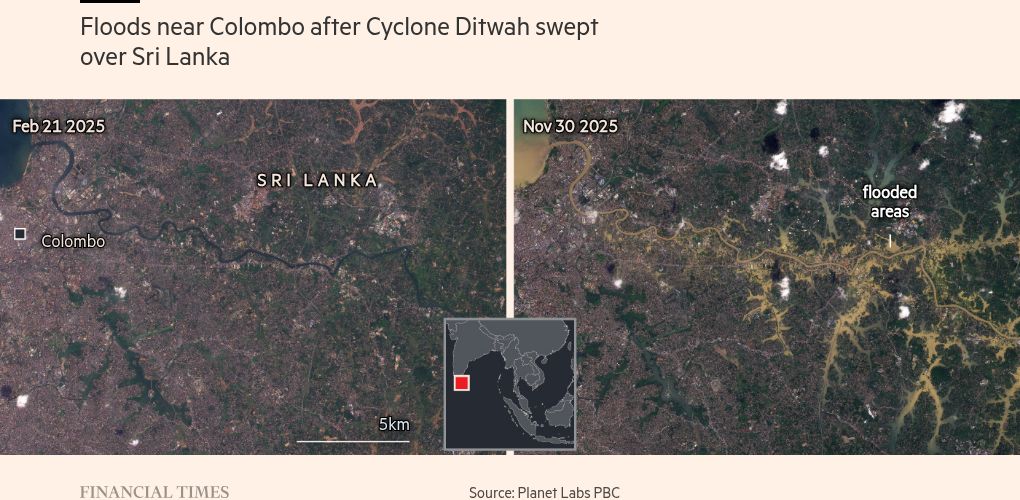
Flooding across much of south-east Asia fuelled by a rare cluster of three tropical storms has claimed the lives of more than 1,300 people in five countries, with Indonesia and Sri Lanka the worst hit so far.
Meteorologists say the region’s most recent extreme weather appears to be driven by the interactions between Cyclone Senyar over the Malacca Strait and Typhoon Koto over the South China Sea. Cyclone Ditwah also formed over the Bay of Bengal towards the end of the week.
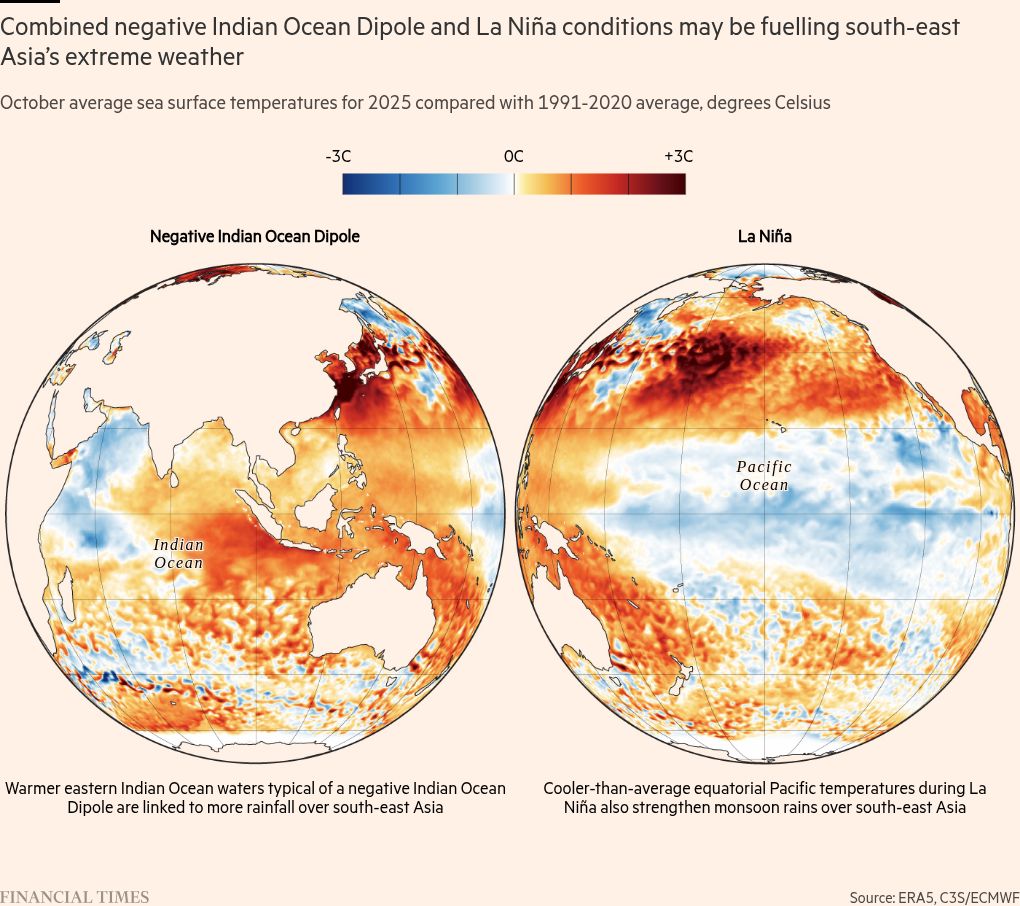
Exacerbating these weather patterns, meteorologists said, was the coincidence of two naturally occurring phenomena — La Niña in the Pacific Ocean and the Indian Ocean Dipole.
In addition, sea surface temperatures in parts of the world have remained unusually warm this year. The rise in global average temperatures reached a record last year of more than 1.5C since the pre-industrial era, as a result of human-caused climate change.
Oceans absorb about 90 per cent of the world’s excess heat trapped by greenhouse gases in the atmosphere, while warmer air holds more moisture.
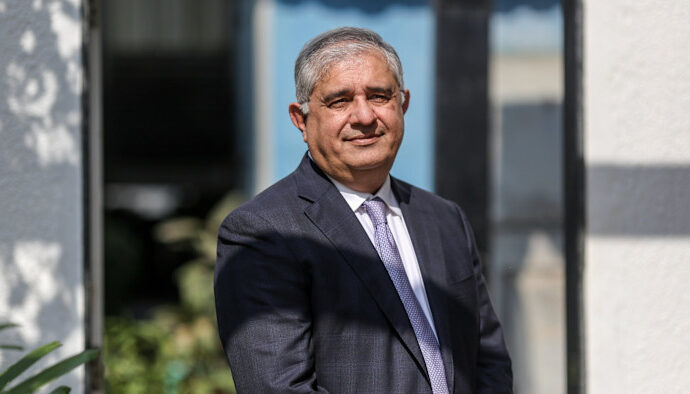
Richard Nugee, a retired lieutenant-general in the British Army and a national climate and security adviser, was among nine experts at a briefing in London this week to warn about the consequences of climate change.
“What concerns me most is not any single crisis. It’s crises cascading together,” he said. “Multiple crises, food, health, infrastructure, migration, energy, extreme weather . . . all hitting at the same time; eroding trust in government by slow or failed responses.”
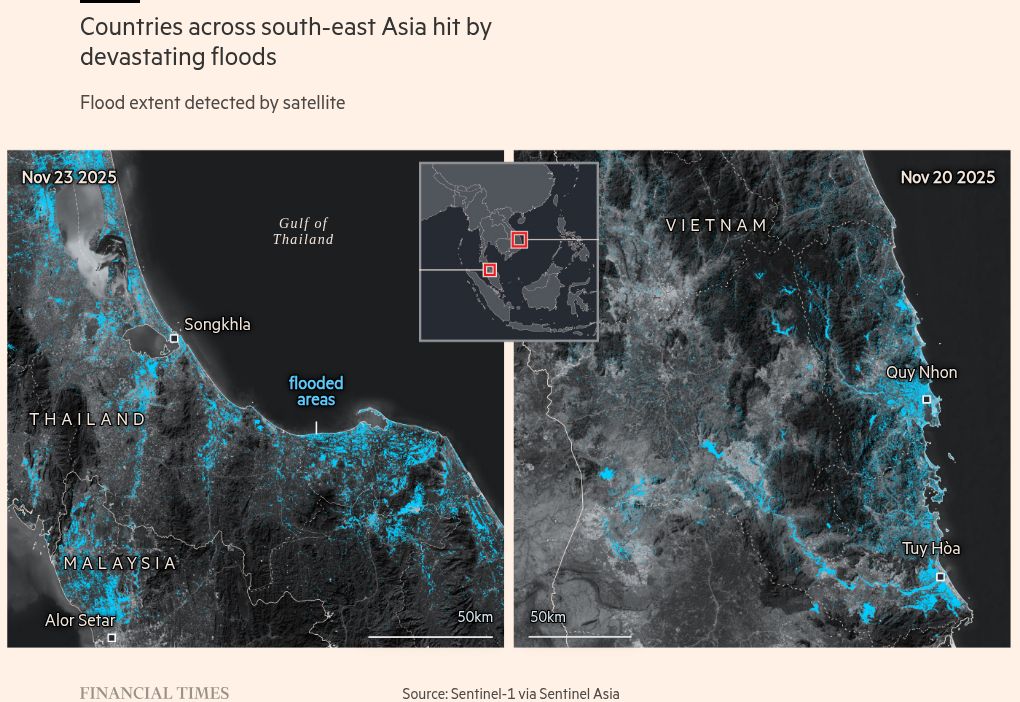
Across south-east Asia, the incessant rains during the monsoon season have led to floods and landslides because of already saturated ground.
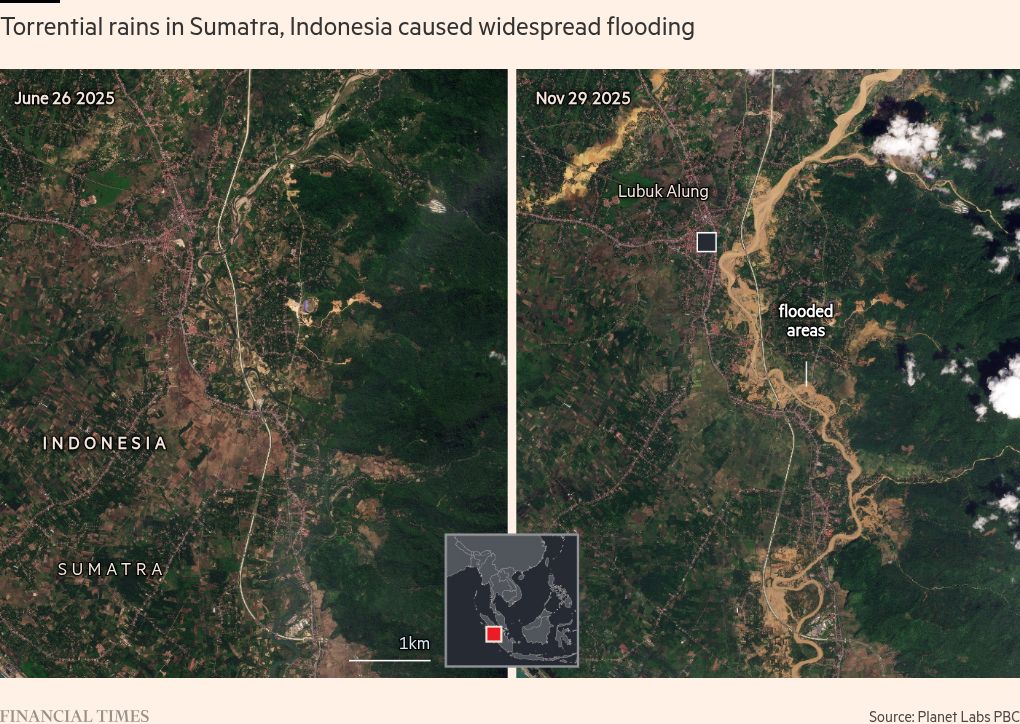
In Indonesia, rivers burst their banks on Sumatra, swept away villages and submerged tens of thousands of houses. Authorities said the death toll in the country by Tuesday had risen to more than 700, AP reported.
Indonesia’s President Prabowo Subianto pledged to rebuild communities while visiting Sumatra island. “We need to confront climate change effectively,” he said. “Local governments must take a significant role in safeguarding the environment and preparing for the extreme weather conditions that will arise from future climate change.”
In Thailand, the heaviest single rain event in what has been estimated to be three centuries was recorded. Severe flooding across nine southern provinces had killed at least 180 people and affected more than 3.2mn people, officials said. A mass evacuation was ordered around the southern city of Hat Yai and a disaster zone was declared.